 By asserting, repeating, and defending that the Sunnis and Shiites have just been killing each other off for the past 700 years. Good thing we've got such an experienced foreign policy expert on the Democrat ticket.
Turns out the Sunnis and Shiites, while not always fans of each other, have mostly gotten along for most of the last 700 years. Under the Ottoman empire, they were united against outsiders--despite not having strong or brutal leadership out of Turkey. Their primary disagreement comes in whether it is more important to follow the current religious leadership and keep societal cohesion, or to be right--the Shiites think that they have a responsibility to overthrow or at least disobey the religious leadership if they are corrupt or incorrect, where Sunnis think that is a mandate for a widespread undermining of Islamic society. That's the base of it.
They're not different religions. They're not even different like the Catholics and Protestants. All it takes to be a Muslim is the declaration that Allah is the one true god and Mohammed is his prophet. Boom, done. Islamic states don't officially differentiate between Sunnis and Shiites, even if one is a majority--they recognize that Muslim is Muslim. Even in Sharia societies, the different approaches of Sunni and Shi'a Islam lead to surprisingly similar results. Sunnis and Shiites in Iraq got along relatively well, even before Saddam took power.
Part of the problem is that before the First World War, nation-states didn't exist in the Middle East--there were various Islamic empires, and provinces, but Islam was the organizing force in society, rather than political states. The creation of the nation-state in the Middle East made things more complicated, but most states chose
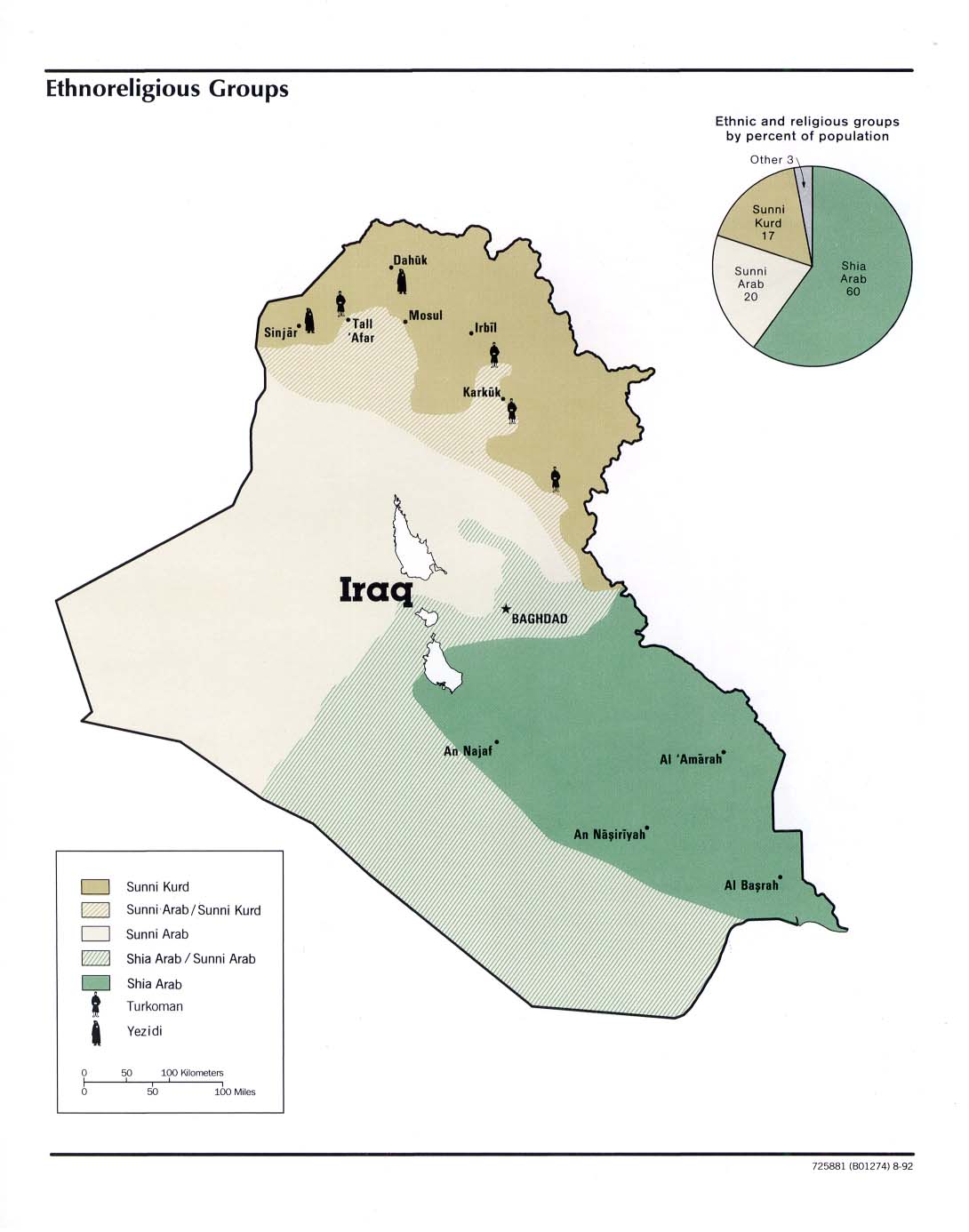 whether or not to incorporate Islam (with Turkey being the only major state that didn't) into the government. But the growing strength of the nation-state meant that being a minority stuck in a bunch of arbitrary boundaries with a majority sometimes meant that the state denied you adequate protection, opportunity, or access, which led to contention. Therefore, Sunni-Shiite disparate identity led to security dilemmas. Iraq, the state with the smallest majority of either sect (in this case, Shiites hold a mere 60%) in the Middle East, has the strongest prerogative for that kind of security dilemma when the security apparatus of a country disintegrates and future resource-allocation is highly unclear.
 While the Sunni-Shiite sectarian civil war should have been foreseen, that does not mean it had been happening over the past 700 years. Obama may have slipped when he said that it had, but Biden's firm repeating and defending of that position to attack McCain just simply means that he has no idea what he's talking about, despite years of experience on the Foreign Relations Committee. Luckily for Biden, being wrong has never stopped him from sticking to his guns before.

