Showing posts with label Obama. Show all posts

Wednesday, December 2, 2015

US Strategy in Syria is Just Insane

As I've been writing my other book, I've been taking breaks and reading a lot about Syria and Iraq because I keep hoping we're going to do something different.

We're not.

I'm not going to talk here about why the US might be choosing such a terrible strategy, but simply outline the ways in which it is so terrible in light of surprisingly limited criticism.

(It has helped me to replace "President Obama" with "President Bush" whenever I read articles about Syria to get a sense of how the public would be reacting if it was making stronger connections to the initial Iraq invasion and that goofy Texan everyone loves to hate.)

So let's tell the Syrian story in some context.

The Arab Spring

Early 2011, a whole bunch of countries in the Arab World start protesting their heavy-handed secular governments. These protesters tended to be some combination of:
  • Western-looking, clean-shaven, tee-shirt wearing liberals (not "progressives" but "liberal" in the sense of "a liberal democracy") that wanted a liberal democracy of their own
  • Oppressed ethno-religious minorities or majorities
  • Hard-core Islamists that wanted to replace these very secular regimes with some form of Sharia
(First, I'll leave it as an exercise to the reader to determine which of these groups are most and least likely to form powerful, long-term militias if anarchy begins in the state.)

Western media mostly portrayed the protests of the first group in places like Benghazi, Homs, Cairo. The protests of ethno-religious minorities in places like Bahrain that were put down by Saudi military action got much less attention.

Libya

In 2011, Qaddafi decided to put down the protests before they could become a rebellion, so he began a pacification campaign from Sirte going east towards Benghazi.

The US and some of its EU allies decided to intervene with air support to keep tanks from rolling in and slaughtering Benghazi, which seemed like a nice thing to do.

Scope creep took over, and the West decided that really the only way to keep the people  of Benghazi and elsewhere safe was to provide air support to militias to defeat the Libyan army and overthrow the regime.

That happened quite successfully, and Obama was clever enough to not get on a giant aircraft carrier with a "Mission Accomplished" banner because he is better at managing the media than Bush was, but the US decided we were done.

Immediately after Qaddafi fell, we left, and the militias that had fought against him looted army bases and armories as the army dissolved.

A democracy was formed, but it was plagued by well-armed militias and now-unemployed (and pariah) former army and government personnel. Violence and skirmishes plague the country for 3 years.

(Again, I encourage the reader to replace "Libya" with "Iraq" and "Qaddafi" with "Hussein.")

The story evolves a bit in 2014 as elections are won by Islamists who are pretty terrible, who then immediately get voted out but--oops--decide not to respect the election and use their militias to hold Tripoli. Libya dissolves into a (very slow) civil war between the new Libyan army and the Islamist militias. In the meantime, a whole bunch of different Islamist militias (called the Shura Council) take over half of Benghazi and the Islamic State decide to move in because the place is such a mess that they can get a foothold in there; ISIS takes over Derna and Sirte. And then some other local militias, who are tired of everyone, carve out their own territories. There are now 6 groups fighting each other in Libya. 

(Libya also makes for strange bedfellows: the Tobruk gov't is supported by the US, Russia, UAE, Algeria, Jordan, and Egypt; the Islamist government in Tripoli is supported by Qatar, Sudan, and Turkey.) 


It's been a stalemate for the past 2 years.

"Fogg, what does this have to do with Syria?"

While one could give the US the excuse of thinking that "the intervention in Syria will totally be different from Iraq because we're not putting boots on the ground and trying to run the show from Washington," the lessons from Libya leave no such excuse, even for so inexperienced a foreign policy team that led the State Department when the US got involved in Syria.

(When I say Libya's civil war is slow, I mean slow. About 5,000 people have died since the beginning of 2014. 

Syria, on the other hand, has led to probably 300,000 deaths, 130,000 captured or missing, 8 million internally displaced people, and 4 million refugees. )

The one thing that the US and Western allies did right in Libya was support the rebels decisively, which at least knocked Qaddafi out of the fight. This has led to far fewer deaths and a much more "soft" civil war. 

Syria

Syrian protests started in 2011 because Assad has ruled with an iron fist as a pretty terrible dude, oppressing the Arab majority, generally putting his cronies in charge, having a Gestapo-like secret police make people disappear, etc. 

Things really blew up when he decided to torture a kid that spraypainted some critical stuff on a wall. Homs quickly got basically taken over by protesters. Assad reacted just like Qaddafi would have, had the US and allies not provided decisive air support: he's been bombing the heck out of rebel strongholds to try to end the rebellion as quickly as possible, and sending in troops with that air support wherever he can.

So what are we doing in Syria? The US has been supporting "moderate rebels" since 2011. But the word "supporting" is an odd one. We are funneling some weapons and supplies to them (which we did in Libya), but we are not bombing Assad. This is probably to keep from open conflict with Russia. 

Just as a reminder, the US and allies like Germany have been steadfast that Assad has to go before any political settlement can be reached. The US considers a totally dysfunctional patchwork of Syrian rebel representatives to be the "government of Syria," which is at least as silly as insisting for 22 years that the Taipei exile government was the "legitimate government of China" and that the Communists were just upstarts that would go away someday. 

Back to Assad. Assad knows that if he "goes," he faces a chopping block, and so do his cronies. The West is too ideologically pure to cut a deal and say, "look, we'll buy you guys a sweet island and grant you immunity." Dictators like Assad face "justice." So the US has pretty explicitly said, "Assad, you have to win this war or you and your family will die."

So there's a lot of motivation for Assad to keep fighting, even as Syria crumbles.

The US' half-hearted supported for Syrian rebels is just enough to keep the fight going. They have enough armaments to keep shooting and not collapse.... at least as long as they're allied with the al-Nursa Front, who is literally al-Qaeda. These guys are the really intense, zealous fighters that are really sticking it to the Syrian regime. Also, just in case we forgot, ISIS was classified as "part of the rebels" early in the war and between 2011 and 2013 we were still arming them. 

Sure, we tried to train some new "moderate" Syrian rebels so that they'd be more powerful, but we managed to train four or five of them before giving up. 

So now we're basically allied with al-Qaeda against Assad, because the "moderate" rebels are really kindof just the hood ornament. 

Imagining Victory

Let's imagine for a moment that we provided air cover and gave the rebels enough support to actually topple Assad. (This is possible if we support the southern front of Rebels with serious air cover, knock out Syrian bases and air power and supply lines, etc.) We could have done this with the "red line" excuse: back in 2013, Obama promised a big thick red line of Assad used chemical weapons. He went ahead and used them about 17 times, and we said, "er, well," and kept up our current strategy.

Anyway. Let's say the Syrian regime collapses, and let's say it collapsed before ISIS took over half the country. You've got Kurds in the northeast that want their own country, and then you've got the moderate rebels that number 40,000-50,000, and a bunch of al-Qaeda-and-friends (which includes a lot of groups) that number between 100,000 and 160,000. 

They duke it out. Guess who wins?

Basically, I don't see how the US imagines any outcome of the collapse of the Syrian regime besides al-Qaeda or ISIS or both taking over Syria.

But Forget That, Because Victory Ain't Happenin'

The Syrian regime is very, very different from the Qaddafi government and the Hussein government: it has pretty broad popular support, decisively controls the fertile heartland of Syria, and has the steadfast support of heavy-hitters like Iran, Hezbollah, and Russia (who are willing to put troops on the ground and are willing to bomb the heck out of the rebels, unlike the West). So we're not the only guys parachuting weapons and providing intel: the Syrian government is getting it, too. This is an all-out proxy war, which was not the case in Iraq, Libya, Afghanistan.

So these groups have been tearing each other to pieces. Guess who gets to step in and fight at their convenience wherever these two groups are weak? You guessed it: ISIS. Remember that Obama called ISIS "the JV team" of al-Qaeda and we grossly under-estimated their potential strength (which he later lied about). 

But now ISIS has taken over tons of oil resources and is actually constructing some semblance of a functional state--something that no radical Islamist militia has been able to do since the Taliban emerged out of US support for the mujaheddin back in '89.  Now that they've more or less decided not to mess with the Kurds (who are a very united force thanks to their long history of shared ethnic oppression), they get to pick their battles and operate with a great deal of impunity.

The Syrian regime and the Rebels are too concerned fighting each other to be able to oppose ISIS with any serious fervor. Each hopes it's going to win and can then turn its attention against ISIS with united support from the international community. The Kurds aren't going to come in and save Syria--they have no interest in shedding their blood for that. 

(Wikipedia. Note the green "rebels" are the loose alliance of the "moderate" and Islamist rebels.)


The US and allies are bombing ISIS, yes, but ISIS is highly resilient. Remember when we bombed the Viet Cong and North Vietnam for 13 years and the North Vietnamese totally just gave up? Me neither.

So This is Officially Pretty Insane

The depth of delusion at the highest levels of the US government--and the utter refusal to learn and adapt--is frustrating and frankly mind-boggling. 

To summarize:
  • The US is half-heartedly supporting rebel troops just enough to extend a war, but definitely not win it, which gives ISIS plenty of room to grow
  • Oh right, we also armed ISIS for a few years
  • The US is currently allied with al-Qaeda and a bunch of other Islamist groups and that totally won't be just like the Mujaheddin in Afghanistan 
  • If the US decided to whole-heartedly take down the Syrian regime, al-Qaeda-and-friends would almost certainly smother the fractured moderate rebels and take over the country
All scenarios here lead to utter disaster, for decades.

The only way one can support the Syrian rebels and even hope for them to come out on top is to commit Iraq-level troops and support for probably just as long and just as bloody a conflict. And even then, you might just end up with the same kind of corrupt, fractured government that you have in Afghanistan and Iraq. 

But what we're doing right now is just terrible.

Enter Russia

Before I get started, readers should know by now that I'm generally extremely critical of Russia's foreign policy and territory-grabbing, to the point where I sometimes have to re-write posts to keep my frustration to a minimum.

At the UN, basically looking right through to the US Ambassador towards the White House, Putin says, "Do you now realize what you've done?"

For once, I've got to hand it to the guy. 

Russia has actually decided to end the war. It's putting troops in Syria and providing air cover to help Assad's troops carve back territory from rebels and ISIS alike. Russia's aim is to keep Assad in power, yes, but ending the war decisively will bring the nightmare of Syria to an end. 

Russia is actually the best opportunity the US has to get out of this. I know I said I wouldn't speculate on why we insist on such a stupid Syrian policy, but I think some of it is an attempt to "be consistent" and generally save face: we're not going to suddenly start supporting our named "bad guy" in the fight. And we've already backed down once on a line we drew in the sand (chemical weapons). We're probably resistant to coming out and admitting we're wrong.

But we're wrong, and it's killing lots of people.

Russia has proposed a political solution: the rebels ally with Assad to take out ISIS, and in 2 years after everything has settled a bit (which is pretty ambitious), you have elections. If the Syrian people want Assad, he stays, even if he's awful.

"Erik, are you saying we should change policy and prop up Assad?" Absolutely. We should have done it years ago, before each army was beat to snot, but while the best time to plant a tree is 20 years ago, the 2nd best time is now.

The way out is to work together with Russia and Iran, withdraw our support for the Syrian rebels, and tell them they get no more weapons or air cover unless they stop fighting Assad and turn all their guns on ISIS, full-stop. Any group that doesn't becomes our enemy.

It would be embarrassing to admit. But diplomacy is weird: everyone can know we're doing something stupid, but we somehow save face by not admitting it.

But what we're doing in Syria is immoral. 300,000 people have died, the country is a giant pile of rubble, 12 million people have left their homes (only 1/3 of which have made it to the tent-camps of other countries). The moral move in Syria is to end the war. The only way to do that--excepting an Iraq-style commitment that risks direct conflict with Russia--is to support Assad. Full-stop. 

This is Way, Way Worse than Iraq

Hopefully you have been reading this with my instruction to draw parallels to Bush and Iraq.

Syria's worse. Way worse. It has led to the deaths of maybe half of Iraq's 600,000 (and led to the deaths of more than 3x Afghanistan's 100,000) body count, but Iraq also has twice the population of Syria--so in much less time, as much of the country has been killed. Far more have lost their homes.

And unlike Iraq, there is absolutely no end in sight, and the destruction of Syria has been far more thorough than the destruction if Iraq. Iraq has cities, and an economy. Its GDP per capita (PPP) is about $15,000 per year and has been growing every year since the Hussein regime fell. Syria's GDP per capita (PPP) has dropped to maybe $2,000 after having lost more than 60% of its economic output (without the war, it would probably be about $7.000). Its HDI is hard to measure, but basically imagine that everyone in Aleppo, Homs, Hama, Derna, Idlib, Palmyra, etc, is living in bombed-out concrete husks without access to basic supplies, and 10% of the population is stuck under ISIS. 

The Syrian war's human toll--and long-term consequences--make Iraq pale in comparison. And it's the way it is because of US policy since 2011.

The Controversy over Syrian Refugees is Comically Depressing

The outrage over some in the US not wanting to take 10,000 Syrian refugees is not wrong, but it's completely misplaced. The idea that our moral duty here is primarily to 10,000 people currently in Turkish or German or Greek camps, and not to the 17,000,000 Syrians we're subjecting to a protracted, nightmarish war so the current administration can try to save face, is absurd.

Why the same Americans that protested Iraq aren't in the streets now protesting Syria is beyond me, but my current guess is that the guys in charge are wearing the Blue Team jersey rather than the Red Team jersey.

Screed over.

Tuesday, July 14, 2015

The Iran Deal is a BFD

Joe Biden was famously caught on camera calling the passing of the ACA a "BFD;" I suspect he said something similar as Secretary Kerry came back with news that a deal had been inked with Iran.

This is a pretty BFD. As you can see, Secretary Kerry certainly thinks so. (These guys are probably really, really tired.)


I read through CNN and the NYT's summaries of the deal; I then decided to skim the full-text.


Immediate Implications of the Deal:
The deal looks a lot like what was hammered out in April, and we discuss the key points in an earlier post. In the new version, Iran is actually restricted for 15 years (rather than 10), but gets a greater number of centrifuges (giving up 2/3 of them rather than 4/5 of them). It keeps its stockpile to 300kg (which is a 98% reduction of its current stock), ships out all spent material, and can't enrich beyond a pretty low number.

The deal still looks good. A look at the full-text suggests the inspection protocols are pretty solid: the IAEA gets to maintain permanent access, and can visit facilities "daily."

If Iran starts breaking the deal, the sanctions can "snap back" with a quick vote from the Western powers. The Western powers are banking somewhat on Iranian domestic support for trade with the West--Rouhani was elected president riding on promises to lift the (very painful) sanctions from Iran, and if they snapped back due to Iran breaking the deal, it could lead to more unrest (like the Green Revolution).

Could Iran still hide some activity and create a bomb? Sure. But their break-out period (amount of time required to build a bomb) for the past 2 years has been 2-3 months, and now it'll extend to 1 year. Iran's had the capacity for a long time to sneak around and build a bomb; this sets them farther back from being able to do so, and increases IAEA presence (from essentially none, currently) to look for any such clandestine activity. In short, I think any objections that this is a tacit thumbs-up for Iran to build a bomb are just unfounded. 

Credible Objections:
Probably the big credible objection is by Sunni allies worried about Iranian power. Saudi Arabia was hoping that Iran's foray into Yemen would become a quagmire that drove it into financial ruin. The Saudis have also been intentionally keeping oil prices low (by keeping supplies high) in order to strain Iran further: they're engaged in economic warfare designed to "break" Iran's capacity to project power, and the lifting of the sanctions will undermine that.

That's not untrue, but it's also unlikely that the sanctions were preventing Iran from projecting power into Iraq and Yemen. The key goal of the sanctions wasn't to grind Iran into insignificance--that was not going to happen with this package. The key goal was to hurt Iran enough to make a Western-friendly deal, and that worked.

Why This is a BFD:
If we model Iran more like a Soviet Union than a large mob of irrational terrorists (and I think the former is a more accurate model), we can think about Iran's self-interest, and what a self-interested power (even one opposed to the US) would want.

The lifting of sanctions means foreign investment and an alleviation of inflation (currently 18.2%); Iran's economy stands to gain a lot. Iran's been very clear that it wants trade with the West.

As this investment pours in, as Europe starts buying Iranian oil and Iran starts buying European food and goods, we start to see two big things happen:
1) The US and EU will become bigger trade partners for Iran than Russia and China (this will take a few years but less time than this deal's restrictions)
2) Iran will start to become a source of oil for the EU

#1 is important because Iran is going to ally with those that serve its interests. It is currently allied with Russia for that reason--not out of any weird ideological alignment. The Western powers want to steal Iran out of Russia's sphere of influence and put it in the West's. The West has many more carrots to offer Iran, and this is a key first step to being able to do that. (To anyone who believes this is impossible, I suggest a reading of the history between the US, Soviet Union, and China throughout the cold war to see how friendships shifted based on interest, despite ideology. Remember also that Saudi Arabia, a close ally, is a religiously extremist, oppressive monarchy.)

#2 Is important because it changes incentives for Iran with respect to the Strait of Hormuz: if Iran is exporting oil to Europe, it would hurt itself by closing the Strait of Hormuz and, per #1, would have less interest in doing so as a favor for Russia. This alleviates some of Europe's dependence on Russia for oil, and means they're more likely to have alternate sources from Qatar, UAE, Iran, and Iraq if conflict with Russia ever arises. And that means hamstringing Russia in Europe.

So as odd as it may sound, the reason the Iran deal is so important is that it helps the West increase its leverage over Russia, which is a much larger, scarier, more menacing, and more aggressive threat than Iran. The Great Game in Europe is back, and this move by President Obama and Secretary Kennedy may be seen by history as a truly brilliant stroke.

Tuesday, June 16, 2009

The Recount

The Guardian Council announced today that they would be recounting "Contested" districts, but that Iranian constitutional law does not allow them to annul the vote. This is entirely possibly true, and I really have little enough interest in studying Iranian Constitutional Law to figure this out. Either way, it won't be annulled, which leaves a few options from here.

1) Recount supports status quo. If the Guardian Council wants Ahmedinejad to win, and only really cares about dampening the blow of stealing the election, then they will close the gap a bit, admit some mistakes, but let him squeak by. This, I think, is the most likely outcome.

2) Recount leads to re-vote. If the recount puts Ahmedinejad under 50% and nobody over 50%, then he and Mousavi will face off in a re-vote. The Guardian Council here would have to be either seriously dedicated to honesty or seriously terrified of unrest to go this path. It is possible this will happen if they recount (by which I mean, "accurately report in") enough districts, especially urban areas.

3) Recount leads to Mousavi victory. This is pretty unlikely. One of Mousavi's big complaints was that his districts had problems of intimidation, extortion, and woeful under-balloting--the Guardian Council is ignoring all of these problems by ordering a recount, and not an annulment. Such an outcome would also be pretty obviously admitting massive fraud, rather than just a bunch of mistakes/irregularities, and the Guardian Council would very much like to avoid that. Even if they decide Mousavi should win, they're going to send it to another vote to do that.

If option 1 is chosen, the options for the Mousavi crowd are acquiescence or revolution--the latter being particularly tough given the brutal, fanatical, and gun-toting nature of the Revolutionary Guard (and the "progressive" curtailment of citizens owning weapons in Iran). But they can make enough trouble to seriously cripple the administration in the eyes of the West and even much of the Arab world, but they're going to need to do a lot of dying to do so.

If option 2 is chosen, there is some hope, but Iran continues to block phone service, pro-Mousavi websites, etc, and continues to jail reformist politicians. Organization will be difficult, but it can be guaranteed that anyone that stayed home in the last vote will come out this time as part of the Green Revolution. This is the option where the Guardian Council gets to gain (rather than burn) some popularity by appearing to save the country from some corrupt lower bureaucrats, or something similar.

But, now all one can do is sit back and wait. The US' decision not to publicly denounce the election may be working in their favor--Iran is making a big fuss over the EU having done it, and if there's anything that can kick up Ahmedinejad support, it's the US or Israel appearing to try and interfere with Iranian politics. I give the Clinton/Obama crowd a lot of credit for that level of discretion and wisdom.

Tuesday, December 2, 2008

Gen. Petraeus to Put US Forces in Back Seat

Before Mr. Obama takes office on the 21st of January, Iraq is going to go through a fair bit of wrapping up. As the DoD map below shows, all but Baghdad (18 of 19 provinces) will have been transitioned to full Iraqi control soon: according to the DoD September Report to Congress, the ceremonies will all happen in early and mid-Jaunary. Baghdad's ceremony will be in May--though it should be noted that its ceremony has been continually pushed back from October 2008.


With Iraqi Security Forces at the front in all of these provinces, Petraeus is likely trying to train them by fire--US forces will be in the back (notably, taking far fewer casualties than when in the front) provoding logistical support and giving advice. This "school for hard-knocks" is going to get Iraqi forces pretty chewed up over the next few months, but it will mean high-speed learning. So far, only a small percentage of Iraqi military forces are capable of full independent operations--logistics, supply, planning, and execution. Most need planning help from the US. Many need US logistics or even military backup. They must wean this dependence by 2011, or they will falter when the US withdraws.

Another reason for the speedy handover is the terms of the Status of Forces Agreement (SoFA). While US forces don't leave until 2011, they have to get off the streets of Iraqi cities and villages by the end of 2009--during 2010 and 2011, US forces can only act at the behest of the Iraqi government. They will continue to train, but will only get militarily involved when the Iraqis need the cavalry to come in.

The handover involves more than military control. It also signals full administrative control on the part of the Iraqis, with the State Department playing a purely supportive role. With Gates remaining head of the DoD and Petraeus keeping his post as head of CENTCOM, Bush appointees will be at the forefront of Iraq's endgame through 2011 (barring anything strange). Obama and Clinton will have surprisingly little influence over the Iraq situation, as policies being made now (namely the SoFA and handover timetables) have mostly sealed any questions on the remaining US role. This will free up the "team of rivals" to deal with more pressing crises--Afghanistan, Pakistan, and India are the main points of worry.

Sunday, November 16, 2008

New Pieces in Place in Iraq

Two major events have happened in the last day that are going to make Mr. Obama's life significantly easier when he enters office. The first is the passing of the Status of Forces Agreement (SoFA) in the Iraqi Cabinet. The second is the setting of a date for provincial elections in 14 of 18 provinces of Iraq.

The Status of Forces Agreement is a treaty that the US has tried to acquire for many months, granting US forces some form of extended stay in Iraq (after the UN Mandate runs out on Dec 31, 2008). The issue has been hotly debated and altered many times; US troops will have less freedom to operate, a tighter Rules of Engagement (ROE), more oversight, and more deadlines than before. Earlier, Shiites in parliament had stated that they would not agree to the previous version of the pact, which granted US troops too much leeway. Most parliament members will probably publicly oppose the pact, but vote for it anyway, and claim that there was little else they could do--ultimately, Iraqi parliament knows that it needs the US for security more than the US needs Iraq for its reputation and values. This has become very clear in the past two weeks, which have carried a rise in violence.

In its first major step towards ratification, the pact got 27 of 28 votes in cabinet to be moved on to the legislature for approval. The legislature is unlikely to be as one-sided as Maliki's hand-picked cabinet--parliament is indeed made up of many factioned parties--but the near-unanimous approval of the cabinet will be a push for any fence-sitting legislators. In addition, Maliki has managed to forge a comrpomise with Cleric Al-Sistani, the most powerful religious figure in Iraq, to avoid openly opposing the pact. This should put most Shiites on board with the Kurds in parliament and, along with pro-US Sunni forces, they should likely make up a majority.

Provincial elections are complicated. In 2005, boycotts led to very lopsided victories, which led to Sunni worries of domination, which led to bombing a few mosques here and there, which led to reprisals, which led to civil war. Today, the provincial appointments remain lopsided, but the new elections aim to change that. Currently, Tamil and the three Kurdish provinces will not be voting on January 31, when everyone else votes. There are not yet sufficient rules for Kurdish semi-autonomous provinces for parliament to be able to deal with their vote, and Tamil's status is under contention by Arabs, Turkmen, and Kurds as to whether it should be semi-autonomous or not. Because no agreement on rules for these 4 provinces could be made, the elections--originally slated for October--were pushed back. The compromise so far has been to allow for elections in 14 provinces and figure the other ones out later--probably a pretty good idea. Of the 4 left-our provinces, only Tamil has serious potential for the ethnosectarian makeup of its leadership to change--the Kurdish provinces are mostly happy with their leadership.

After the 31st of January, 2 effects should be seen: First, an increased confidence rating by local citizens about their government's ability to act fairly and effectively. Disproportionate election results have meant a sense of oppression for many Iraqis, and that is likely to change. Second, a sense of compromise is likely to take hold in Iraqi leadership. Previously, parties with a disproportionate majority had incentives to try and brute-force their interests, and disproportionate minority parties had an incentive to block anything trying to go through. With more pluralistic representation, decisions will require multi-party support, and the incentive will be to start by compromising.

Both decisions will make President Obama's life easier. The first means he has a guide to troop withdrawal, and can avoid doing anything politically risky by making serious decisions one way or the other. The second will lead to long-term political reconciliation in Iraq, which will reduce violence and leave a more functional country upon US withdrawal--and he will be able to take all the credit.

Saturday, November 15, 2008

Sarkozy Comes to Obama's Rescue

Nicholas Sarkozy, Diplomatic Rock Star, has made an appearance to reduce Mr. Obama's list of foreign policy challenges by at least one--to great effect.

Hours after McCain conceded the American Presidential election to Obama, Russian President Medvedev announced that Russia, in response to US anti-missile shields in Poland , would be building offensive missile capabilities right outside of Poland.

Allow me to first digress into how silly this is as a foreign policy scheme. "If you install anti-missile technology in Poland, we will install offensive missiles next to Poland!" seems unnecessarily bellicose. Of course Russia can overwhelm almost any missile shield with sheer volume--which means it's rather unlikely the missile shield was meant to defend against Russia, rather than Iran. But anyway.

Sarkozy led an EU-Russia meeting that caused the Russians to agree to back off of the claims--giving Obama some much-needed pressure relief. The Russians are asking Mr. Obama to attend an EU-Russia security meeting in the summer, but it may be a largely face-saving measure on their part--the longer that these missile shields are the norm, the tougher it will be for the Russians to overturn their existence (even though they are not yet installed).

Sarkozy's meeting and convincing has helped Obama avoid an early bout of brinksmanship, in which he would have to act in a way that might either be perceived as aggressive on one hand or weak on the other. This double-bind was probably the intent of Mr. Medvedev, who would benefit from either. Mr. Sarkozy has bought Mr. Obama some much-needed time to make a consistent foreign policy materialize before he faces any serious great power challenges. The Americans owe the French some thanks on this one.

Tuesday, November 11, 2008

Taiwan's Independence Movement Takes a Blow

Chen Shui-Bian, former Taiwanese president and proponent of independence from China, has been jailed on charges of embezzlement of millions of dollars of public funds. His anti-corruption credit (and his survival of a possibly-staged assassination plot) was a big reason his party won elections in the 1990s--but along with pro-Chinese sentiment, these charges (especially if they lead to a conviction) will cast a dark spectre over the DPP for many years to come--and give the KMT enough seats to act as they please.

In short, these corruption charges are the final blow to an already-sick and weakened DPP. KMT hegemony--and a slow leaning back towards China--will dominate the next many years of Taiwanese politics. Luckily, it is likely to make US-Chinese relations a whole heck of a lot easier for an inexperienced Mr. Obama.

Monday, November 10, 2008

So Long, Gitmo

Obama has put his project to restore the US image in the West into action, less than a week after election. He's announced that he'll order the closing of the Guantanamo Bay detention facility as soon as he is sworn in.

The move will almost certainly help Bush in negotiations with Iraq. There remains a 3-week gap between the end of the UN Mandate for US presence in Iraq and Obama's first day in office, which means they won't be able to make the pact with him--but knowing he'll be around is likely to soften the edge on the negotiations a bit.

Worries from the right that things will get too soft are, of course, worth thinking about.

Wednesday, November 5, 2008

Ahmadinejad Under Fire

The Iranian election (in 8 months) has been, and will continue to be, overshadowed by the American and Israeli elections. Ahmadinejad is up for re-election then (after a 4-year term); his election will be (in part) a referendum for his very brinksman-style policies on Israel, the West, the US, and nuclear "power." It looks like things are not going to go his way.

First, religious conservatives in Iran don't really like him. They're relatively insular, and more concerned with Islam and the Shia Ummah than with regional power-grabbing and conflict. He's faced pressure from the unelected religious leadership to tone down and look inward. International sanctions have hurt him with these groups.

Parliament has started targeting his allies. A cabinet member was dismissed for having faked his educational credentials, by large margin in parliament.

Finally, and perhaps most importantly: Ahmadinejad has depended in large part on the fact that the US is seen as an enemy, as unreasonable, as controlled by war-corporations. Whether merited or not, the election of Obama has changed the perspective of many Iranians about the US attitude, its democracy, etc. This is in large part due to the fact that Obama's black--if a black man can win, then the democracy must be real. The results are undermining years of messages by Tehran state media, trying to reinforce beliefs of US corruption, capitalism-evil, white dominance, etc etc. Tehran's anti-Westerners are going to struggle in the next election as people catch onto the fact that state media has been lying.

From the LA Times: "“Let me tell you that now I believe in American democracy,” [a man in Tehran] said excitedly. “Honestly, I did not think that Obama would be president. I thought that the invisible hands of the big trusts and cartels would not allow a black man to be president of the United States.”" Iranians tuned into Voice of America to hear Persian translations of Mr. Obama's victory speech.

Even Obama's reaching-out to Tehran might undermine Ahmadinejad. If the US appears to be open-minded and diplomatic in the Middle East, moderate, pro-West parties will begin to look more attractive (because warming up to the West will have fewer cons than previously thought).

All this means that Ahmadinejad has a tough 8 months in front of him. Expect a moderate alternative to start looking popular in the next few months in Iran.

Tuesday, November 4, 2008

Another Election Digression

I must apologize for not getting this out earlier, but I was busy watching the election.

It is clear at this point that I'm a Libertarian, so I have no shame in publishing the following picture, made by the wonderful Kathleen Clark-Adams:

Monday, November 3, 2008

Ballot Box Special: Candidate's Foreign Policies

This isn't a terribly exciting post--what I'll mostly be telling you is that both candidates have approximately the same foreign policy plans.

The Washington Post provides an excellent summary.

Differences:

Trade: McCain wants more Free Trade Agreements, Obama doesn't. That said, the Democratic majority in congress wouldn't let McCain sign a free trade agreement with North Carolina, so none of that is going to happen in the near future, anyway.

Iraq: Notable differences here include rhetoric, largely, but not much else. McCain thinks Iraq is a battleground for terror, Obama thinks it's a distraction. McCain thinks the surge worked, Obama... didn't, but then quietly stopped commenting on it when he saw the polls were going the wrong way. Obama wants a 16-month withdrawal timeline, McCain... wanted to stay long-term (like South Korea, Germany, etc), but quickly voiced his support for an Iraqi-proposed 2011 deadline for withdrawal.

Iran and Russia: John McCain's unmasked hate for both countries means diplomatic relations would sour. McCain wants to even boot Russia from the G8, push hard for expansion of NATO, and generally relegate Russia to a permanently castrated former power. Obama wants to hold hands and talk. It's actually somewhat unclear what's a better idea, as far as I can tell.

Similarities:

Afghanistan: Both want to add 2 combat brigades to Iraq, and use their fresh mandate as a new president to improve ties with Pakistan, helping build Pakistan's economy and democracy. Interestingly, both support attacks into Waziristan without consulting Pakistan, first. While I may have a lot of criticisms of such a seemingly mutually undermining policy package, I'll save that for later.

Georgia: Both supported Georgia in its war with Russia, but both are letting it fade into the background.

Energy Security: They both want it, neither will get it. Really, the way to be energy-secure in the near term is to mandate CO2 catchers on power plants and use clean coal--we've got lots of it, and it's really darn cheap. But the word "coal" terrifies people. McCain wants more drilling, but probably wouldn't get any more than he already got in this last year, so both would be pushing renewable energy, electric cars, etc. It's a bit more complicated as to exactly what tax breaks and incentives and subsidies would go where, but it'll mostly work out in the wash.

Ethics: Both want to close Guantanamo Bay, end torture as a US-sponsored practice, and repeal other nastier aspects of the Bush regime. Bravo, gentlemen.

Ground forces: Both want to increase them, but with what money, and what recruits? The Iraq war has sucked the country dry of potential warriors and has crushed demand. Maybe their charm and charisma can lure more young rural kids into the armed forces.

Climate change: Both want to fight it. Hello, Kyoto; goodbye, US manufacturing industry.

So if you're sweating foreign policy, don't. It'll mostly be the same either way. And if the Democrats get their unbreakable majority in Senate, which is possible, then the president (either way) won't do much but hold pom poms or pitchforks for whatever they decide they're doing.

Sunday, October 26, 2008

The Great Middle East Limbo

The US Election is zooming in quickly, but even after Senator Obama wins (let's face it), he won't have the authority to do his own peace-brokering quiet yet. Arabs abroad love him, and would probably give him an opportunity to try his hand at mediation.

But right now, there's a more limiting factor that will keep him sidelined for even the first month or two of his presidency. Tzipi Livni, the head of the Kadima party and their candidate for Prime Minister, has failed to create a coalition government in Israel's Knesset (parliament). She's citing "political blackmail" by potential coalition partners; unable to reign in their allegedly unreasonable demands (especially because some of them stand to gain in an early election), she moved to an election.

Her decision to have an election likely means there just wasn't another option. Kadima does not want to delay the peace process with Palestine, nor does it want to open the door for Netanyahu's Likud party to gain power again. Likud is polling well, and if they won, would probably expand (not contract) Israeli settlements in the West Bank and Gaza, and probably even in the Golan heights. Peace talks with Syria and the Palestinian Authority would break down. This is not an illegitimate or summarily bad position for Israel to have, but it will unquestionably frustrate the EU and US, who have been beating their heads against brick walls to make this happen--and who saw, just before the fall of Olmert, a glimmer of hope in the open-mindedness of Palestine's Abbas and Syria's Assad to shift West. Before Olmert's fall, a fair number of international political analysts were predicting a surprisingly happy Middle East by 2011. That optimism has all but vanished.

If Kadima manages to win the election, it will have been after serious delays--delays in which a coup may take down Assad, or an assassination might take down Abbas. The Israeli election will probably occur in February, putting at least 4 more months of delay on talks. It's something that has lots of people nervous.

That said, Likud brings up some serious points to the discussion table. Israel is in a position where, after 60 short years, it has learned many times over that land-for-peace often does not work in the Arab world. If the Palestinian Authority cannot control its own people (hint: it can't), then summarily pulling out from PA territory would greatly increase the operations capabilities of the more Hamas-leaning Palestinians. Would extremism go away quickly in the PA? Certainly not. And concessions in the light of terror attacks in Israel might send the message that continued terror attacks will eventually lead to more concessions--or more thoroughly disrupt the Israeli government. Until all but a few Palestinians can either be A) convinced that Israel is there to stay, or B) suppressed by a strong Palestinian government, Israel puts its citizens at serious risk by giving up the PA territories.

The Golan Heights are less critically disastrous, but similar. In theory, if Israel gave the Golan Heights back to Syria, Syria would stop funding Hamas and Hezbollah operations in Israel, greatly increasing Israel's security. Some have mentioned that the Golan Heights are militarily advantageous, and they are--but not by much. The Israeli army is far superior to Syria's, and Syria will never again get the help of Iraq, Jordan, or Egypt if it tried to pick a fight with the Israelis. Syria would be crushed in any head-to-head battle with the Israelis. Besides--Blue Helmets would probably line the heights for a fair while after the handover, to keep it demilitarized.

But those Blue Helmets might be Israel's bane in such a handover deal. If the Syrians don't hold to their promises--and keep funding anti-Israeli terrorist organizations--then the Israelis can't do much about it. Referring to a recent post of mine, Israel has a lot of power with de facto control over the Heights, and if it agreed to a new status quo, it would face a heavy burden to overturn it--especially if UN troops would be hurt in the process. Syria might be able to do whatever it wants when Israel's bargaining chips are gone--especially if Israel couldn't afford the political cost of taking them back.

The situation's sticky. But it's about to get even stickier--hopelessly so--if Israeli elections get messy. Lame-duck and incoming presidents alike are going to be frustrated and disheartened. But it's just another day in the life of the Middle East peace process.

Sunday, October 19, 2008

The Iraq Snag

After months of tough negotiating over a pact that Bush thought would be pretty easy, it looked like a deal would come out a few days ago. The Iraqi executive branch had agreed to a 2011 withdrawal timeline with the ability to renegotiate and extend the timeline every year.

The announcement of the basics of the pact by the Iraqi government led to a wave of protests--mostly by Al-Sadr supporters--against the pact, complete with American flag-burning and other anti-American slogans. Soon after, hardcore extremist sections of the Iraqi parliament declared they'd vote the bill down without new concessions--an elimination of the ability to renegotiate, and less legal protection for US troops in Iraq (from Iraqi law). The bill won't pass without their support. The US government will have to negotiate again.

It is unclear to me whether the Shiites are going to stop here or not. The US must have a pact by December, and the Shiites know that. Many of them (including the influential Al-Sadr) would be happy to see the Americans go. But if they said that they'd be unwilling to vote for any sort of security pact with the US, they would likely appear too extreme to work with the Iraqi government. They may simply stall until December comes. They may also be stalling until they get a very-temporary pact, one that extends the US stay for 6 months while negotiations continue. Why? If the pact is signed on time, it will be before the new US president. But with all signs pointing to a win by Mr. Obama, who is well-known in Iraq for his anti-war voting and rhetoric, Iraqi Shiites may try to game the pact such that President Obama is the final negotiator on the US side in order to maximize their concessions. They may also be trying to use brinksmanship on the pact, and push it until December before they agree to it, hoping to milk the current US administration for concessions as they desperately try to get something reasonable signed before the deadline passes and the administration loses power.

It's also possible this is the extent of Shiite expectations. It's tough to tell.

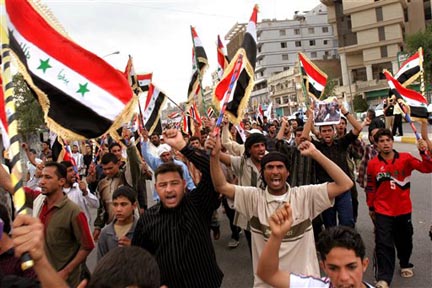
There's one good sign in all of this: much of the rhetoric by lawmakers and marchers is very pro-Iraqi. They are emphasizing their desire for sovereignty and national freedom, which will ultimately be a uniting factor. Hopefully, a big party will happen all over Iraq when the last US troop goes home, complete with Iraqi flags flying out windows. Nationalism is key to the success of a nation-building effort, and key to heal the wounds of a tough civil war. The US, which has done a wonderful job of absorbing blame in the past few decades, can stand to be the big-bad-wolf figure that creates an Iraqi nationalism that keeps the country together during its formative infant-democratic years.

Monday, October 6, 2008

Biden Reaffirms Dem Ticket Has No Idea How Islam Works

By asserting, repeating, and defending that the Sunnis and Shiites have just been killing each other off for the past 700 years. Good thing we've got such an experienced foreign policy expert on the Democrat ticket.

Turns out the Sunnis and Shiites, while not always fans of each other, have mostly gotten along for most of the last 700 years. Under the Ottoman empire, they were united against outsiders--despite not having strong or brutal leadership out of Turkey. Their primary disagreement comes in whether it is more important to follow the current religious leadership and keep societal cohesion, or to be right--the Shiites think that they have a responsibility to overthrow or at least disobey the religious leadership if they are corrupt or incorrect, where Sunnis think that is a mandate for a widespread undermining of Islamic society. That's the base of it.

They're not different religions. They're not even different like the Catholics and Protestants. All it takes to be a Muslim is the declaration that Allah is the one true god and Mohammed is his prophet. Boom, done. Islamic states don't officially differentiate between Sunnis and Shiites, even if one is a majority--they recognize that Muslim is Muslim. Even in Sharia societies, the different approaches of Sunni and Shi'a Islam lead to surprisingly similar results. Sunnis and Shiites in Iraq got along relatively well, even before Saddam took power.

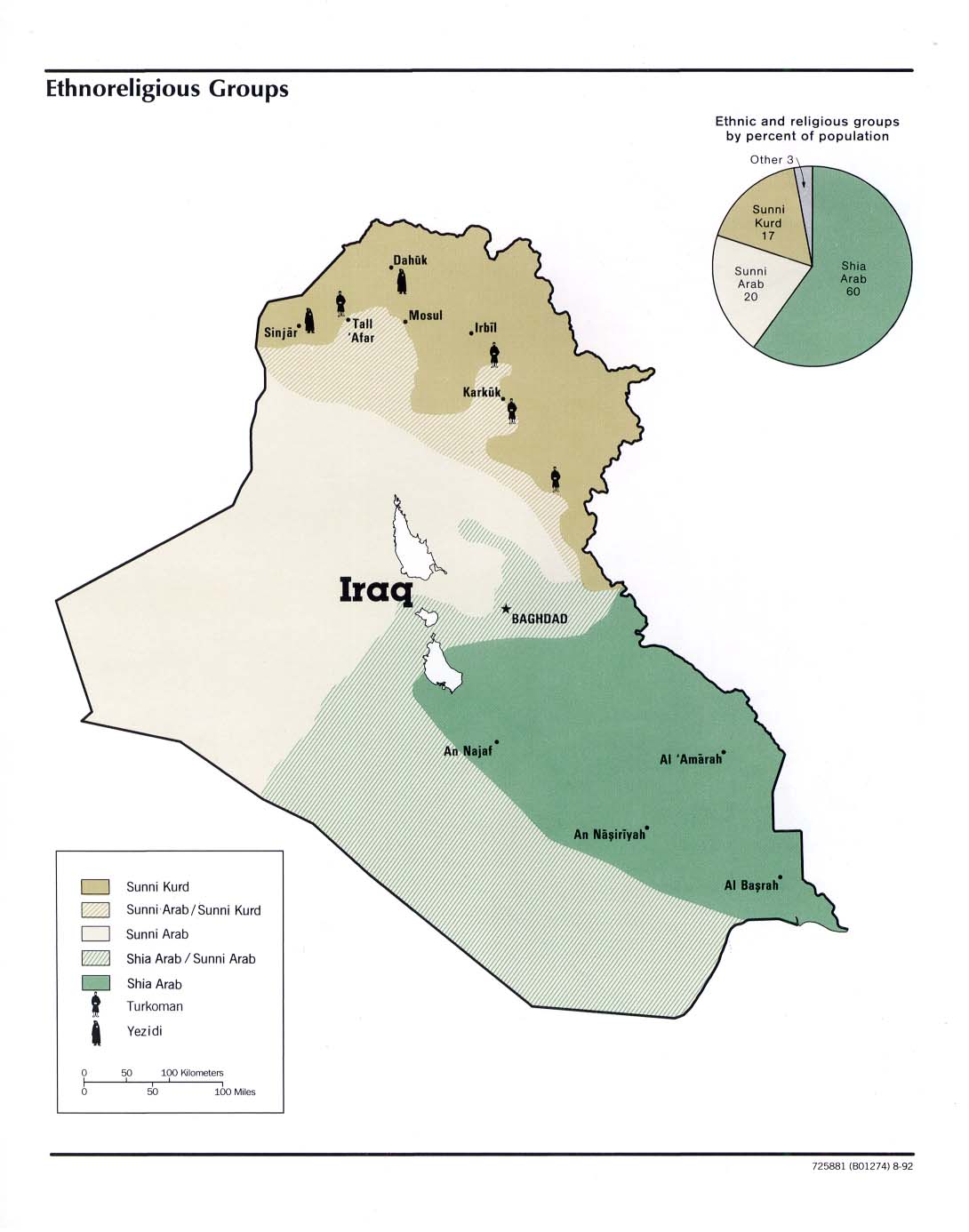
Part of the problem is that before the First World War, nation-states didn't exist in the Middle East--there were various Islamic empires, and provinces, but Islam was the organizing force in society, rather than political states. The creation of the nation-state in the Middle East made things more complicated, but most states chose whether or not to incorporate Islam (with Turkey being the only major state that didn't) into the government. But the growing strength of the nation-state meant that being a minority stuck in a bunch of arbitrary boundaries with a majority sometimes meant that the state denied you adequate protection, opportunity, or access, which led to contention. Therefore, Sunni-Shiite disparate identity led to security dilemmas. Iraq, the state with the smallest majority of either sect (in this case, Shiites hold a mere 60%) in the Middle East, has the strongest prerogative for that kind of security dilemma when the security apparatus of a country disintegrates and future resource-allocation is highly unclear.

While the Sunni-Shiite sectarian civil war should have been foreseen, that does not mean it had been happening over the past 700 years. Obama may have slipped when he said that it had, but Biden's firm repeating and defending of that position to attack McCain just simply means that he has no idea what he's talking about, despite years of experience on the Foreign Relations Committee. Luckily for Biden, being wrong has never stopped him from sticking to his guns before.

Monday, September 15, 2008

What the Heck is the Bush Doctrine?

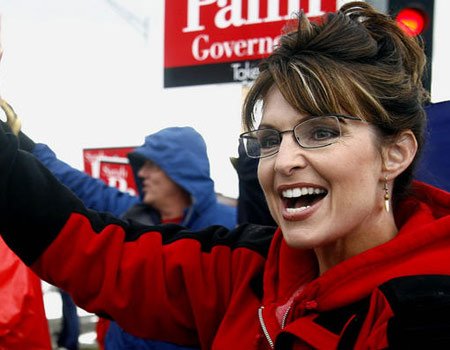
Charlie Gibson certainly thinks he knows, and he certainly thinks it's pretty clear. In a recent interview, he ripped into her for not knowing quite what he meant. The left, by golly, is quite relieved: with Obama's poll numbers currently low enough to lose him the presidency, Democrats are rejoicing that they've got a new weakness to pick on.

Nonetheless, after seeing the interview, watching Charlie Gibson very confidently enunciated the finer details of the Bush Doctrine (that it was "anticipatory self-defense"). I listened, and thought, "wait, really?" I know a thing or two about the Bush Doctrine, and I wasn't entirely sure I agreed with Mr. Gibson. But surely, he'd done his research, and sometimes even I am wrong. Now, I do expect the Vice President of the United States to know a bit more about foreign policy than, lo, even I do.

But then I was sent an article written by the guy that first used the term. Mr. Krauthammer gave vindication to my intuition--despite Gibson's arrogance in being smarter than Palin, he was wrong for two reasons. Reason the first is that there are four separate meanings of the Bush doctrine from four different time periods, all of which have been called the "Bush Doctrine" in literature. These are:

1) Pre-9/11 unilateralism, including withdrawing from treaties;
2) Post-9/11 "if you harbor terrorists we will consider you hostile"-ism;
3) March 2002 pre-emptive defense-ism (what Gibson cited);
4) Later "aggressively spread Democracy through the world"-ism.

The last one is the one most cited and most encompassing of all of Bush's doctrinal statements. It's no wonder Governor Palin was confused when Mr. Gibson threw the phrase out there and expected her to pick up exactly what it meant. It's not quite an excuse for the level of Palin's fumbling during the foreign policy section of that particular interview, but (like most things in politics), this is nothing as it seems. And, like most things in politics, the media has again taken the position of impatient sage, and has told you and the Governor what to think.

In truth, all this reveals about the McCain ticket is its failure to market correctly. No, of course Palin is not an expert in foreign policy. No, she hasn't met with world leaders (which Gibson asked about). Why the heck would she? She's a governor, not a diplomat. Unlike Mr.'s McCain, Obama, and Biden, she has not been custom-tailoring her position as governor as a springboard, and so doesn't yet know much about foreign policy. Will she learn? Sure; Governor Clinton did, Governor Carter did (although his foreign policy was admittedly quite naive), Governor Reagan did. And for all the clamoring about John McCain's imminent departure from the earthly world, she doesn't have to be ready to fight the war-on-terror on day one, without any mentoring.

Mr. Obama himself, while running against Clinton, said that "experience is only a proxy for judgment." Those without experience will be wild cards in their decision-making. But for all their experience in foreign policy, Mr.'s Obama, Biden, and McCain lack any executive experience whatsoever. Further, have the foreign policy experiences of Mr.'s Obama and Biden culminated in proof of sound foreign policy judgment and good understanding of how to grace America's diplomatic and military might upon the world stage? More about that, later.

Wednesday, July 30, 2008

Well, Maybe the Surge is Working

On today, the last day of July in Iraq, the US troop death toll has rung to 12, after
Staff Sgt. Faoa L. Apineru died of a wound suffered on July 2. If this holds (barring some terrible event today or wounded soldiers dying later), it would be a death toll less than 2/3 of the previously lowest month in Iraq (May: 19 deaths). So the by-far two lowest death tolls since the beginning of the war have been in the past 3 months, and this most recent one has come after the end of the surge.

Recorded Iraqi deaths are also at an all-time low: 393 (lower only than June, at 450, which was lower only than May, at 506). A pattern is emerging, and it's one of steadily, reliably increasing security and safety.

It is thus time to face a simple fact down a dark alley that most of us have been trying to avoid: The Surge worked, General Petraeus is not an unpatriotic, treasonous Bush lackey, and the Iraq war is winnable.

Now, Mr. Obama's campaign boat has a lot of wind behind its sails right now, because even Mr. McCain is agreeing to the sixteen-month timetable for withdrawal. This vindicates Mr. Obama, right? He was right all along?

No, not at all. Mr. Obama has spent the entire surge saying that it was not working. In July, his website was smart enough to remove his consistent, zealous opposition to the Surge from their Iraq page, but he has not come out to say that it has worked. Does he still think that it hasn't? Or is he simply as stick-to-your-guns consistent in his ideological stances as Mr. Bush?

Mr. Obama has not only opposed the surge since the beginning, but his 16-month withdrawal plan came around not because of successes in Iraq. His withdrawal plan has been the same, from the absolute worst conditions in Iraq (in 2006 when the violence was over 10 times what it is now) to today. The 16-month timetable was a strategy for easy defeat, not one for actually winning. But, quite luckily for Mr. Obama, he was wrong about the surge. His being wrong about the surge makes his 16-month timetable look entirely reasonable, as long as you are not willing to think about it too hard.

Unfortunately for the future of US foreign policy, Obama's political stars-and-moons lining up is nothing but luck, and has absolutely nothing to do with his ability to make judgments and decisions as Commander in Chief. He was wrong--and still is wrong--about the Surge, and his being wrong about the Surge is the only reason his years-old 16-month withdrawal timetable looks like anything more than a bloody white flag strategy. His policies and stances have not changed at all, regardless of wildly varying conditions in Iraq. This would mean an even more inflexible and ideological foreign policy than that of Mr. Bush, who was at least smart enough to consider Mr. Petraeus' plan for changing strategies.

But, even more unfortunately for the future of US foreign policy is that the McCain campaign camp is completely incompetent, and will not be able to capitalize on this glaring flaw in Mr. Obama's shining moment. If they can't, then Mr. Obama will win this election, and the American people will spend at least four years knowing that they truly had no idea what they meant when they spent the last 8 years complaining about idealistic and inflexible foreign policy. I have yet to see an Obama foreign policy point that shows any shred of good judgment or consideration for earthly realities, particularly in regards to military matters.

Tuesday, July 22, 2008

Iraq Goes to Obama

Months ago, McCain called on Obama to go to Iraq to educate himself on the ground situation, in a mark of criticism against his 16-month withdrawal plan. He probably hoepd to put Obama in a double-bind: if Obama did not go, he could be painted as ignoring facts. If he did, he might be painted as admitting ignorance.

Obama went with the second option, and the plan has backfired for McCain in ways he could not have previously imagined.

Contrary to my previous thoughts on the subject, it looks like Bush and al-Maliki are actually in a very deep row over the status of American troops in Iraq.

Obama has visited Iraq, and met with Gen. Petreaus and top Iraqi officials. In open acknowledgment that "the Surge worked," the Iraqis have shortened their proposed timeline from 2012 to 2010--right in line with Mr. Obama's 16-month withdrawal plan. The quick change is a bit surprising, but it's possible the Iraqi government is actually trying to use its own fate as a bolster for Obama (Mr. Obama has found himself quite a warm welcome in Iraq so far, and they may be looking forward to 8 years of working with him). In addition, a photo-op by General Petraeus' side is just what Obama needed to extend his run to the center.

The last few days have been a crippling defeat to McCain, whose Iraq policy centered on being a practical solution for Iraqi security, even if it was tough on Americans. But now, with the Iraqis siding with Mr. Obama, even McCain has to give a bit: he has admitted he could imagine US troops in Iraq for only 2 more years.

Now Mr. Obama has won the initiative on foreign policy--an area that he has seemed weak, before. Such a victory is likely to win him key undecided moderates and make Mr. McCain's bid for the White House become a long shot.

Obama's race towards the center is likely to work for him, as long as he is able to shake from his tail his involvement with the American ultra-left:

Monday, July 14, 2008

Obama and McCain's Delicate Dance with Contradiction

Obama's line about Iraq has been: It is a failure, a disaster, and the Iraqi Army will be on its feet next year, and the country will stable--we should pull out as soon as possible.

McCain's line about Iraq hs been: It is a slow, tough success, and the Iraqi Army will be on its feet next year, but it's not ready, won't be ready for a long time--let's wait to pull out.

The arguments for each of them have self-defeating qualities. For Obama, insisting that Iraq will stand and that the Iraqi Army can take over during a 16-month pullout defeats much of the punch in his claims that the war has been a disaster. He admits serious success and progress in saying that the Iraqi Army will be able to take over next year, and hampers his own ability to criticize the Republicans.

McCain, on the other hand, contradicts his own calls for an extended stay by saying the situation is good and improving, that there has been success. Why keep the troops there, if the Iraqi Army is almost ready to go? McCain's stance is a bit more "flexible--" he wants to keep troops there "based on conditions," but this largely means he is largely dodging the problem of having a position altogether.

And Obama, of course, is sticking to his timeline, even before meeting with Iraqi commanders. McCain refuses to have a solid answer, and Obama is back to refusing to alter his based on pretty much anything.

Maybe that's why the Iraqis are taking matters into their own hands.

Thursday, July 3, 2008

Obama "Preparing the Battlefield" for a Good Iraq Policy

Obama's earlier remarks on Iraq have been highly political and devoid of much consideration of actual military/political force in the country. His high-speed withdrawal plans came without a single conversation with a US military commander involved in the theatre, and has had no good answer (that I can find) for media that have proposed the question that a quick withdrawal may lead to a surge in violence.

But Obama his changing his tune. He actually plans to sit down with military commanders, and might "refine" his Iraq stance in light of evidence. What a novel idea!

But an idealistic young senator running for president is not going to change his long-defended Iraq stance before the election--even if it is a good idea--unless there is a public opinion reason involved. Obama's remarks are preparing the base of the Democratic party--many of them ardently opposed to any coninued US presence in Iraq--for a shift away from telling them what they want to hear, and a shift towards some deeper thought on the subject.

Is Obama trying to make sure he does not end up on the wrong side of the Iraq debate? Maybe, but polling is currently in favor of his old stance--70% of Americans either want troops removed right away or within a year.

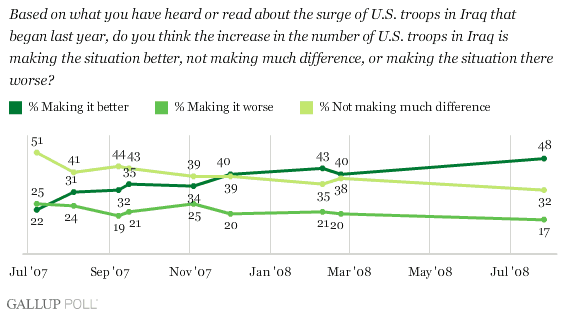
Interestingly, Americans are starting to change their idea of just how effective the surge has been:


Does this change in assessment mean a change in opinion is also coming? Why does Obama now want to soften a hard stance that has seemed to work for him so well? Is he simply looking to try to catch moderate Republicans without losing his left-wing base?

Or is he simply so confident in his victory (he shouldn't be--old "comeback McCain" still has a few tricks up his sleeve) that he can actually afford to ignore politics and pursue a more rational strategy in Iraq?

Sunday, June 15, 2008

A Busy Week Abroad

With the US major party noiminations intact, Mr. Obama and Mr. McCain have been presented a number of opportunities in the last week in which to differentiate themselves:

The Irish rejection of the EU's complicated Lisbon Treaty suddenly means that the European Union is likely to be significantly weaker and more confused than either party could have predicted it would be in the next few years. This gives either president a much freeher hand to pick-and-choose among which EU leadership it wants to embrace. Though the very cozy relationships between Bush and Merkel, Sarkozy, and Brown mean that both Mr. Obama and Mr. McCain are likely to get along with all of Europe's power players unless they try something radical.

Karzai is threatening to send troops across the Pakistani border into the Northwest Frontier Territory, where the Taliban and allied insurgents are operating largely unmolested--far too sparse for the Pakistani Army to take head-on, and too large for government-allied Militias to decisively defeat. The Pakistani government is likely to view this with great hostility, particularly given their distrust of the Bush-Musharraf alliance, as well as anger over the accidental US bombing of 11 government-allied Militia soldiers. Pakistan is likely quite border-sensitive, and a tough-talking Afghanistan unconcerned with Pakistan's territorial sovereignty, along with a US that is bumbling diplomatically as well as militarily in its war against the Taliban, may eject Pakistan from the US informal anti-terror alliance, even if the ruling DPP hopes to eradicate the Taliban. McCain's passion for the War on Terror is likely to cause him to put on a diplomatic blitz with the DPP in Pakistan, in hopes of creating some sort of military cooperation in the northwest--Pakistan's army has been all but useless in the region. Mr. Obama is likely to take a less direct approach, hoping to create a sense of brotherhood and goodwill, hoping that military cooperations will come in time out of a friendship. Either way, both will have to choose their way of holding on to Pakistan.

In Iraq, the Iraqi Army seems to be confronting its last great security challenge: Shiite Militias, mostly Al-Sadr. In its 4th such operation in the year (the first three in Basrah, Sadr City, and Mosul), the Iraqi Army is moving troops into Amara to gain security control, though locals say the militants have already fled. While ethno-sectarian civil war is all but history, and as Al-Qaeda in Iraq continues to be ground down by American troops and government-loyal Sunni militias, Shiite militias battling for supremacy in Iraq, as well as their resistance to continued US presence in Iraq, stand as the last great pillar of unrest in the country. Petraeus' optimistic timeline for transferring the other 9 provinces of Iraq by the beginning of 2009 looks like it will be delayed by at least a few months due to violence, though Qadisiyah will be handed over in July, on schedule. Obama and McCain look to stand firm on Iraq; Obama continues to plan to pull one brigade per month until (almost) all US troops are out of the country, where Mr. McCain hopes to establish a long-term US presence in Iraq, like its presence in South Korea, Germany, and Japan. Negotiations for US bases in Iraq are faltering, though, and Bush may drop the ball completely, giving McCain few options but scrambling in this goal. The executive branch of the Iraqi government continues to support some US presence in Iraq, and worries about relapses in security in a quick American pull-out scenario.

With Chinese talks with Taiwan going extremely smoothly, a Taiwan Straits crisis is unlikely to emerge in the next presidency. In fact, the ruling Taiwanese GMD is unlikely to purchase much in the way of arms from the US, in hopes of relaxing military tensions with the Chinese. Furthermore, an earlier visit from Hu Jintao to Japan, as well as a deal on an oil dispute in waters between China and Japan, have led to greatly reduced tensions between China and the long-time American ally. With China increasingly getting along with US allies in East Asia (including South Korea, where protests to ban US beef imports are turning violent), the US is going to have few bones to pick with China besides economics.

Mr. Obama has mentioned regulation to try to stem outsourcing and the trade gap, which may hurt the Chinese market and create irritations that Mr. Obama will have to massage quite a bit. Mr. McCain's more free-trade policy is likely to keep hot economics between the US and China, but he will face increasing pressure over the trade gap, and is likely to take a tough stance against China for human rights issues, as well as spying (especially information attacks against the DoD). Both are likely to irritate China some, but China's "strategic partner" view of the United States leaves room for minor irritants if the long-term prospects look good. Hopefully, both are open to engaging a China that is likely to surpass Germany and Japan as the second-largest economy in the world by the time their first term is through.

I will write a full article on the differences in the two Senator's foreign policies, and what that means, later (when I get more time). For now, some statistics from Pollster.com on support for each candidate nationally and in swing states:

National:
Obama: 47.4%
McCain: 46.2%

Ohio:
Obama: 43.6%
McCain: 43.4%

Pennsylvania:
Obama: 45.9%
McCain: 41.3%

Virginia:
McCain: 46.5%
Obama: 43.1%

Iowa:
Obama: 44.9%
McCain: 39.9%

New Hampshire:
McCain: 45.1%
Obama: 43.3%

Florida:
McCain: 47.4%
Obama: 40.1%

Maine:
Obama: ~50%
McCain: ~38%

Michigan:
McCain: 42.5%
Obama: 42.0%

Missouri:
McCain: 44.5%
Obama: 44%