The Status of Forces Agreement (SoFA) has passed Iraqi parliament, with 75% of parliament approving. This sounds like a pretty darn big number, but it's about as low a number as the US can politically get away with--a substantial majority against the bill would give a lot of legitimacy to continued anti-American resistance, continued factionalization, etc.
Iraq's fate is sealed; Petraeus and Gates (locked in for the next while at least) should be able to handle the situation quite well. And with this agreement (which must be finalized by the 3-person Iraqi Presidential Council--it will), Obama has no Iraq policy left to make. He need only say, "stick to the plan, Mr. Gates," and the troops will come home in a timeline he can appreciate. It should be a weight off the new president's shoulders.
But with Russian challenges, Somali pirates, Afghanistan falling apart, and now a major, in-progress anti-US/UK terror attack in India, Mr. Obama needs all the relief he can get.
And now, Turkey.
Showing posts with label Security Pact. Show all posts
Showing posts with label Security Pact. Show all posts
Thursday, November 27, 2008


Sunday, November 16, 2008
New Pieces in Place in Iraq
 Two major events have happened in the last day that are going to make Mr. Obama's life significantly easier when he enters office. The first is the passing of the Status of Forces Agreement (SoFA) in the Iraqi Cabinet. The second is the setting of a date for provincial elections in 14 of 18 provinces of Iraq.
The Status of Forces Agreement is a treaty that the US has tried to acquire for many months, granting US forces some form of extended stay in Iraq (after the UN Mandate runs out on Dec 31, 2008). The issue has been hotly debated and altered many times; US troops will have less freedom to operate, a tighter Rules of Engagement (ROE), more oversight, and more deadlines than before. Earlier, Shiites in parliament had stated that they would not agree to the previous version of the pact, which granted US troops too much leeway. Most parliament members will probably publicly oppose the pact, but vote for it anyway, and claim that there was little else they could do--ultimately, Iraqi parliament knows that it needs the US for security more than the US needs Iraq for its reputation and values. This has become very clear in the past two weeks, which have carried a rise in violence.
In its first major step towards ratification, the pact got 27 of 28 votes in cabinet to be moved on to the legislature for approval. The legislature is unlikely to be as one-sided as Maliki's hand-picked cabinet--parliament is indeed made up of many factioned parties--but the near-unanimous approval of the cabinet will be a push for any fence-sitting legislators. In addition, Maliki has managed to forge a comrpomise with Cleric Al-Sistani, the most powerful religious figure in Iraq, to avoid openly opposing the pact. This should put most Shiites on board with the Kurds in parliament and, along with pro-US Sunni forces, they should likely make up a majority.
Provincial elections are complicated. In 2005, boycotts led to very lopsided victories, which led to Sunni worries of domination, which led to bombing a few mosques here and there, which led to reprisals, which led to civil war. Today, the provincial appointments remain lopsided, but the new elections aim to change that. Currently, Tamil and the three Kurdish provinces will not be voting on January 31, when everyone else votes. There are n
 ot yet sufficient rules for Kurdish semi-autonomous provinces for parliament to be able to deal with their vote, and Tamil's status is under contention by Arabs, Turkmen, and Kurds as to whether it should be semi-autonomous or not. Because no agreement on rules for these 4 provinces could be made, the elections--originally slated for October--were pushed back. The compromise so far has been to allow for elections in 14 provinces and figure the other ones out later--probably a pretty good idea. Of the 4 left-our provinces, only Tamil has serious potential for the ethnosectarian makeup of its leadership to change--the Kurdish provinces are mostly happy with their leadership.
After the 31st of January, 2 effects should be seen: First, an increased confidence rating by local citizens about their government's ability to act fairly and effectively. Disproportionate election results have meant a sense of oppression for many Iraqis, and that is likely to change. Second, a sense of compromise is likely to take hold in Iraqi leadership. Previously, parties with a disproportionate majority had incentives to try and brute-force their interests, and disproportionate minority parties had an incentive to block anything trying to go through. With more pluralistic representation, decisions will require multi-party support, and the incentive will be to start by compromising.
Both decisions will make President Obama's life easier. The first means he has a guide to troop withdrawal, and can avoid doing anything politically risky by making serious decisions one way or the other. The second will lead to long-term political reconciliation in Iraq, which will reduce violence and leave a more functional country upon US withdrawal--and he will be able to take all the credit.
Sunday, October 19, 2008
The Iraq Snag
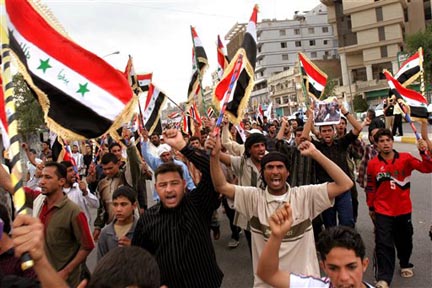 After months of tough negotiating over a pact that Bush thought would be pretty easy, it looked like a deal would come out a few days ago. The Iraqi executive branch had agreed to a 2011 withdrawal timeline with the ability to renegotiate and extend the timeline every year.
The announcement of the basics of the pact by the Iraqi government led to a wave of protests--mostly by Al-Sadr supporters--against the pact, complete with American flag-burning and other anti-American slogans. Soon after, hardcore extremist sections of the Iraqi parliament declared they'd vote the bill down without new concessions--an elimination of the ability to renegotiate, and less legal protection for US troops in Iraq (from Iraqi law). The bill won't pass without their support. The US government will have to negotiate again.
It is unclear to me whether the Shiites are going to stop here or not. The US must have a pact by December, and the Shiites know that. Many of them (including the influential Al-Sadr) would be happy to see the Americans go. But if they said that they'd be unwilling to vote for any sort of security pact with the US, they would likely appear too extreme to work with the Iraqi government. They may simply stall until December comes. They may also be stalling until they get a very-temporary pact, one that extends the US stay for 6 months while negotiations continue. Why? If the pact is signed on time, it will be before the new US president. But with all signs pointing to a win by Mr. Obama, who is well-known in Iraq for his anti-war voting and rhetoric, Iraqi Shiites may try to game the pact such that President Obama is the final negotiator on the US side in order to maximize their concessions. They may also be trying to use brinksmanship on the pact, and push it until December before they agree to it, hoping to milk the current US administration for concessions as they desperately try to get something reasonable signed before the deadline passes and the administration loses power.
It's also possible this is the extent of Shiite expectations. It's tough to tell.
There's one good sign in all of this: much of the rhetoric by lawmakers and marchers is very pro-Iraqi. They are emphasizing their desire for sovereignty and national freedom, which will ultimately be a uniting factor. Hopefully, a big party will happen all over Iraq when the last US troop goes home, complete with Iraqi flags flying out windows. Nationalism is key to the success of a nation-building effort, and key to heal the wounds of a tough civil war. The US, which has done a wonderful job of absorbing blame in the past few decades, can stand to be the big-bad-wolf figure that creates an Iraqi nationalism that keeps the country together during its formative infant-democratic years.
Subscribe to:
Posts (Atom)