What frustration. Certainly I was pretty geared up for the 2009 parliamentary elections in Israel, hoping Kadima would hang on to power, allowing Livni and Abbas to ride off together into the sunset and create the Palestinian state. In retrospect, this was pretty optimistic, and I don't just mean that Kadima lost power to Likud. It probably wouldn't have worked out all that well even if Kadima had taken power, as Palestine still seems to not be in a place where it can run a respectable state, especially in Gaza.
So, first thing's first: the Middle East will be a nasty and inhospitable place for US interests until Palestine gets its own state, period. And yes, I understand that such a goal is highly complex and wrought with problems, many of which are directly the faults of the Palestinian people. But ultimately, it is in the interest of the US and Israel alike to have a Palestinian state with a healthy economy. If I had my druthers (and I rarely do), we could hand Gaza to the Egyptians and merge Palestine and Jordan back into Trans-Jordan and make it the problem of some already-relatively-stable governments to keep a lid on Palestine, but that's not going to happen.
But an independent Palestinian state (and one that, in particular, is content with its borders, which is going to be pretty tough to come by) will mean relative security for its people, and a situation in which aggression on border issues or whatnot with Israel would make life sufficiently worse as to not be worth it. Palestine, as a stable and economically viable state, would have nothing-to-gain-and-everything-to-lose by fighting with Israel, and would therefore have a strong interest in keeping a tighter lid on its more fanatical rocket manufacturers.
And this last decade looked like we were making pretty good progress! The election of Abbas, who should have been seen as a godsend to the West, gave the distinct impression that the Palestinian people were tired of intifadas and ready to sit down, talk, draw some lines on the map, and move on with their lives. The moderate Labor party in Israel showed similar promise. Both sides looked ready to take the risks necessary (and probably suffer through the ensuing pain necessary) to get to that key treaty that we've all been waiting for. But what the heck happened?
The big clincher was probably the Olmert scandal. His loss of moral authority castrated him from being able to drive the necessary treaties through parliament; serious delays popped up. By the time Livni was in a position to do the negotiating, Obama had been elected and the Palestinians wanted to wait around for him (perhaps hoping to gain a strategic advantage from losing an American president that they perceived to be pro-Israel). The elections came, Netanyahu won, settlement-building ramped up, and everybody got very angry at each other again.
Not, of course, that the war in Gaza helped things any--had Israel successfully "dismantled" Hamas, life might be a bit different. But in failing to do so, they were left with only a battered reputation.
At this point, Netanyahu is barely humoring the idea of an independent Palestinian state: he wants it to be fully demilitarized, and wants Israeli settlements to grow into the West Bank "naturally," with the population (and has not made it clear as to what would happen to those settlements if a Palestinian state gets built). Further, he's insisting that all of Jerusalem would stay in Israel. It's a tough stance to negotiate with, even for Abbas. Perhaps the strategy is to try to squeeze more to the Israeli side in a compromise, but at some point, one's demands are so high that the other side is incentivized to walk away from the negotiating table at all.
And so I think that Israel and Palestine are now significantly farther from where they were in, say, 2007, as far as being close enough in official policy to negotiate a compromise and create a Palestinian state. The moderates made key mistakes that blew their opportunities to make serious headway in the 2000s, and they will probably have to wait through another relatively painful cycle before they can make another reach for some sort of steady-state solution.
Showing posts with label Bush. Show all posts
Showing posts with label Bush. Show all posts
Friday, February 5, 2010


Sunday, October 19, 2008
The Iraq Snag
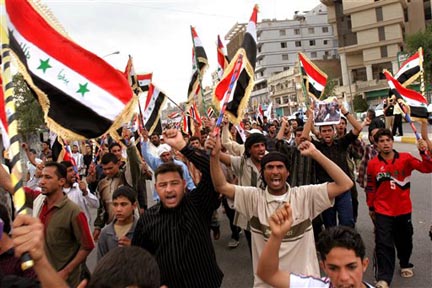 After months of tough negotiating over a pact that Bush thought would be pretty easy, it looked like a deal would come out a few days ago. The Iraqi executive branch had agreed to a 2011 withdrawal timeline with the ability to renegotiate and extend the timeline every year.
The announcement of the basics of the pact by the Iraqi government led to a wave of protests--mostly by Al-Sadr supporters--against the pact, complete with American flag-burning and other anti-American slogans. Soon after, hardcore extremist sections of the Iraqi parliament declared they'd vote the bill down without new concessions--an elimination of the ability to renegotiate, and less legal protection for US troops in Iraq (from Iraqi law). The bill won't pass without their support. The US government will have to negotiate again.
It is unclear to me whether the Shiites are going to stop here or not. The US must have a pact by December, and the Shiites know that. Many of them (including the influential Al-Sadr) would be happy to see the Americans go. But if they said that they'd be unwilling to vote for any sort of security pact with the US, they would likely appear too extreme to work with the Iraqi government. They may simply stall until December comes. They may also be stalling until they get a very-temporary pact, one that extends the US stay for 6 months while negotiations continue. Why? If the pact is signed on time, it will be before the new US president. But with all signs pointing to a win by Mr. Obama, who is well-known in Iraq for his anti-war voting and rhetoric, Iraqi Shiites may try to game the pact such that President Obama is the final negotiator on the US side in order to maximize their concessions. They may also be trying to use brinksmanship on the pact, and push it until December before they agree to it, hoping to milk the current US administration for concessions as they desperately try to get something reasonable signed before the deadline passes and the administration loses power.
It's also possible this is the extent of Shiite expectations. It's tough to tell.
There's one good sign in all of this: much of the rhetoric by lawmakers and marchers is very pro-Iraqi. They are emphasizing their desire for sovereignty and national freedom, which will ultimately be a uniting factor. Hopefully, a big party will happen all over Iraq when the last US troop goes home, complete with Iraqi flags flying out windows. Nationalism is key to the success of a nation-building effort, and key to heal the wounds of a tough civil war. The US, which has done a wonderful job of absorbing blame in the past few decades, can stand to be the big-bad-wolf figure that creates an Iraqi nationalism that keeps the country together during its formative infant-democratic years.
Saturday, August 23, 2008
Pakistan is Falling Apart
With Musharraf resigned, Pakistan's coalition is back to bickering--this time, over who will succeed him. The coalition had little in common besides a disdain for Mr. Musharraf--it seems they need a common enemy to survive, and somehow, the Taliban is not that common enemy.
Sadly, this fracturing is a sign that Pakistan's ruling coalition is going to be weak and stay weak, and is not able to press forward and root out the Taliban in its northwest now that Musharraf is out of the way.
Now we understand the Bush administration's insistence on holding onto Mr. Musharraf as an ally--the alternatives will not be able to help in the War on Terror. What happens to Pakistan at this point is unsure--but it will continue to decline into a teeming mess before it gets better.
Sadly, this fracturing is a sign that Pakistan's ruling coalition is going to be weak and stay weak, and is not able to press forward and root out the Taliban in its northwest now that Musharraf is out of the way.
Now we understand the Bush administration's insistence on holding onto Mr. Musharraf as an ally--the alternatives will not be able to help in the War on Terror. What happens to Pakistan at this point is unsure--but it will continue to decline into a teeming mess before it gets better.
Tuesday, August 12, 2008
The Devil Went Down to Georgia
 You all have a pretty good idea what's going on at this point, so I will keep the summary brief:
Georgia has two provinces that have declared independence in the 1990's--South Ossetia and Abkhazia--and Russia jumped to recognize that independence (and probably wants to subsume them if they actually achieve physical indepdenence). A quick fight between Georgia and Russia left Russian "peacekeeping" troops in both breakaway regions, and a great deal of autonomy (Wikipedia considers them "de facto independent," much like Taiwan).
In the meantime, Bush's aggressive expansion of NATO hit a roadblock with the Ukraine and Georgia, because the Russians threatened to cut off French and German gas and oil supplies. Ins
 tead, the Ukraine and Georgia were offered promises of membership that were set to become action plans in December. Such an expansion would cut the Russians off from Europe for as long as the West pleased. December 2008 slowly began to creep upon a Russia whose behavior has been increasingly assertive and aggressive. Surely, plans were in the works.
Then things got complicated. Georgia's president Saakashvili has had strong but dwindling support since his 2004 victory with 96% of the vote--in 2008, he won 53% (the second place candidate won onlt 27%). He has had rather contradictory goals of improving relations with Russia, winning back control over South Ossetia and Sbkhazia, and entering NATO. He is one of President Bush's most loyal international allies.
Now: Five days ago. It should be noted that there are no independent foreign media in Georgia at all, so reports can only be taken on face. Five days ago, Georgian troops stormed into South Ossetia, claiming shelling by South Ossetian forces. This would be a claim of an unlikely and suicidal half-attempt at conflict, unless one presupposes that the Russians might have invited the South Ossetians to make such a move.
Afterwards, Georgian troops rolled in, hoping to use the incident (which may not have even happened) to reassert military control over South Ossetia. The region is connected to Russia primarily by a single tunnel, which the Georgians probably considered bombing, but they likely worried about provoking a formal Russian response.
Russian Cossacks, who are recognized as a pseudo-official security force in the Caucases by the Russian government (who often makes dubious agreements with shady characters like mobs and Chechneans to keep order in a vast Federation that it largely cannot centrally control), began flowing into Georgia through that tunnel on busses. They came (of course) from the region of North Ossetia, who shares ethnic and cultural ties with the South Ossetians, and somehow stuck with the Russian Federation during the confused and frantic early 1990's breaking-up of the USSR. The Russians did little to stop them, and we mostly thought that the Russian government was happy to let "volunteers" do its dirty work.
But, of course, Russian citizens started dying. This is due in part to the fact that the Russians have slowly been infiltrating both regions with Russian citizens and "peacekeepers" (no doubt to Russify the regions) that have been hit by shelling and bombing, and also that the poorly-armed Cossacks picked fights with Georgian tanks and airplanes. At this point, Abkhazia started fighting the Georgians as well, in hopes of helping the Ossetians deliver its army a rough defeat that would seal their de facto independence indefinitely. The Georgians struggled, but it looked as if they might even prevail, and reunite their country.
The Russians are probably looking at this problem much like the Americans would view an attack on Taiwan. While the US does not address Taiwan as an independent state, it would not quietly let the Chinese invade--just as the Russians' feathers were quite ruffled by Georgian action in Ossetia. The difference is thus: The Russian army is much, much larger than the Georgian army. And with American forces tied up in the Middle East, Western retaliatory action was unlikely. So the Russians struck, and hard.
Georgia has suffered a rout; it is barely worth speaking of orders of battle or troop numbers, the Georgians just weren't up to the fight. Russian troops have hung around the Caucaus for some time, waiting for an opportunity like this. Russian troops have not only completely occupied both breakaway regions (much to the delight of a majority of their residents), but also pushed into unambiguously Georgian territory, as far south as Gori. Bush made sharp criticisms of the Russians (though did not mention Putin), the UN called for an immediate end to fighting, and Sarkozy quickly flew to Moscow, hoping to use an increasingly legendary diplomatic charm to help Russia weigh its options.
But no threats of action have come out, except faint hints at booting Russia from the G-8 (which Mr. McCain was planning on doing anyway). Much talk abounds of the diplomatic and military weakness of the US because of Iraq, but the US would not have been able to do much besides declare war against the Russians anyway. Right now, Georgia is simply not worth it, and the Russians knew that.
Russia ordered a halt after conquering about half of the country, but is still quite willing to shoot Georgians that resist their occupation, and has made no plans to pull out. They are in negotiations with Sarkozy and the EU at the moment.
Now, this all is very interesting. Some questions arise:
1) Who started it, and why?
2) What will NATO's immediate response be?
3) What is the fate of the Georgian territories?
4) What does this mean for NATO expnasionism?
5) Will Russia's relationship with the West change in the long-term?
I will do what I can with these questions. Other questions about how this will affect US domestic politics and the November election arise, but the intuitive answer is that not much will happen--there is an unambiguously correct side for each candidate to take. I might make a later post about this anyway.
1) It remains unclear who started it, given that both sides have a fair amount of interest in starting it, given a few preconditions. The Georgians would have been happy to exploit or even fabricate Ossetian violence to reclaim the region, but only if they thought the Russians would not get involved. Is there any reason to think so? Putin's presence in Beijing might have made them think the Russians would have been impotent to respond, and they may have predicted a rapid victory. But besides that, nothing about Russian behavior shows obvious weakness or preoccupation. Why would the Georgians would not wait until they were NATO members--or at least had an expected membership date? Trying to assault Ossedia now, without a clear sign of Russian restraint, would seem foolish.
 On the other hand, the Russians have a lot to lose from waiting. NATO's expansion is creeping too close for comfort. The last thing the Russians want is a second front from NATO in their south, or (perhaps more importantly) total NATO control of the Black Sea, which would be made possible by Ukranian and Georgian inclusion. If the Russians want to head off such inclusions, they have many options, and have already employed some; they may now be looking to scare the West into leaving their sphere alone--why now? Note that NATO is one of the most terrifying military alliances in the world because of a single clause in the Charter: Article 5, which states that an attack on one country would be considered an attack on all (this was used only once, in the Sept. 11th attacks on the US). But they may also be looking to
 lock in control over Ossedia and Abkhazia--Russia is currently a fledging-enough regional power that small influence gains are worth it. But it is rather clear from a brief topological survey that inclusion of these territories (or separation of them from Georgia) would give Russia much physical security--Russia's border with Georgia is a solid line of Caucasus mountians. The most likely explanation is that the Russians indeed encouraged a South Ossetian incident such that they might test Georgia's and NATO's resolve to fight. The result has been a great blow to Western influence in the South Caucasus region, and a new sign of US weakness in a "Cold War Lite."
 I will note that the possibility remains that there was no subversive action--that a few Ossedians simply got upset at some small incident and started firing artillery, and the whole mess spiralled out of control. But it's unlikely.
2) When I first heard about this five days ago, I said "NATO should really have an emergency session over this," and indeed they have. The meeting didn't do much, but they took a stand that they really needed to: they called for a return to status quo ante (that is, Russian and Georgian troops both out of the region), condemned Russia but not Georgia, and affirmed support for Georgia's attempts to assert its recognized sovereignty over the region. NATO, far from abandoning Georgia for potentially foolish action, has stood by it (making this look perhaps like a World War I spiral scenario, which may be part of the reason the Russians were so quick to accept a cease-fire).
3) The fate of the Georgian territories is highly unclear. Even if the Russians pull back, the Georgian military has probably taken a beating, and is scared stiff. It will not be able to physically assert its authority over its breakaway provinces again. That said, if the Georgians do join NATO, the Russians will know that another stunt like this would risk a declaration of war, which they won't be able to afford if Bush manages to install anti-missile batteries in Eastern Europe. Ossetia and Abkhazia are just not worth that kind of risk. The fate of these regions depends largely on the next few weeks of diplomatic talk, and Russia's concern with trying to save its image. But its reputation is already tarnished and the West is already irritated--pulling back completely and leaving the mess alone would mean accepting diplomatic sunk costs to a foolish move that the Russians may feel they have bought too deeply into.
4) NATO expansionism is unlikely to alter its course, unless it is to speed up. The members of NATO said that their considerations of Georgia as a member have not changed. The Georgian ambassador to NATO chided them slightly by saying that this was a consequence of cowing to Russia's threats in April over a fast-track plan for membership, and Bush has suggested that NATO take a stronger stance on its acceptance of Georgia as a response to the Russian incursion, but it's likely that Georgia is likely to go through the same long and (now excruciating) process that most countries do, as is the Ukraine. Far from frightened by the Russians, NATO might be emboldened by this action into agreeing with more aggressive factions (like Bush and Sarkozy) into seeing Russia as a reemerging threat that needs to be aggressively contained.
5) The West has been using a "hedge" strategy with Russia for some time, Bush included. Warm words, joint military exercizes, and a crucial oil trade have kept relations on both sides friendly. The West has hoped to "socialize" Russia, much like they feel they have begun to "socailize" the Chinese (and, luckily for them, the Olympics are a good sign in this direction). But Russia has grown aggressive in the past few years, and Putin's iron grip over the country (which is quite happy to be so gripped) has not faltered--this trend is not going to reverse on its own. The West is likely to start to become worried enough about the Russians that a Hedge strategy will give way to full-blown containment. Unlike the Chinese, the Russians can be largely contained with trade restrictions and alliance expansion. But after such a quick turnaround from Soviet Union to Soviet Putin, the West may be scratching their heads in exasperation, wondering how they might teach the Russians to just get along.
On another interesting note, I cannot seem to find anything by the Chinese on the incident, who are probably quite grateful that they have the Olympics as an excuse to ignore completely an incident where they might otherwise be asked ot take sides between their greatest economic trading partner and their greatest military partner.
As a closing note: The situation is changing by the hour, some of this may already be out of date. But I will try to keep updated.
Saturday, July 26, 2008
Checking Up on Pakistan
Fed up with the deteriorating military situation in Afghanistan, Bush has finally raised an eyebrow high enough to politely request the company of new Pakistani Prime Minister Gilani to visit in Washington and discuss the current strategy.
To be frank, Gilani's commitment to fighting the Taliban appears rather weak, most clearly by his desperate insistence that his commitment is strong. President Karzai does not have to make clear his commitments to fighting terror because he actually does it. His claims to the US that the War on Terror is a war in the interest of Pakistan is largely at odds with the opinion of his constituents: that "doing the bidding of the US" is what's causing their problems in Northwest Pakistan. Sorry, guys, but it turns out that radical Muslim extremists are going to try to occupy your country and subvert your rule of law even if you're not a US ally.
Gilani's primary problem is that he's not willing to ruffle any feathers. His refusal to confront Musharraf over the Supreme Court left him without a key Minister in his cabinet, and lukewarm support from the DPP. His refusal to anger the Taliban into full scale warfare has let them grow and prosper in the Northwest, and has pushed Americans to the verge of withdrawing their support for the existence of the Pakistani government, and--if Mr. McCain is elected--possibly invade Northwest Pakistan to take care of the Taliban themselves. Mr. Gilani's indecisiveness and need to please has left him paralyzed as the security situation in his country spirals out of control, and insurgent problems spread into India (a now-close ally of the US that, if fed up with such attacks, might work together with the US in invading Pakistan, or at least leaving enough troops on Pakistan's southeast border and enough aircraft carriers off its coast that it would be crippled from being able to fight American forces).
So Gilani is in trouble. It's unclear whether he knows whether further inaction is going to lead to crisis, but the Bush administration is almost certainly trying to convince him that he has no choice but to move.
The US is also throwing in some bones to make it easier. Bush asked congress to shift over $260 million from anti-terror operations in Pakistan to upgrade their ageing F-16 wing. Bush may also be willing to make diplomatic concessions--something, perhaps, to the effect of denouncing Musharraf (which would mean that opposing Musharraf would now be the US-backed and party-backed option, making it easy for Mr. Gilani to please the public).
Gilani has had one good idea that the US has employed in Iraq--using local pro-government militias to convince enemy militants to lay down their arms. Hearts-and-minds is an important part of any counter-terror campaign. But alone, it is useless. Alone, it simply an appeasement policy. Throwing carrots at an extremist enemy is not going to do much unless one has a stick poised ready to fall down. Hopefully, for the sake of US troops in Afghanistan and its government's future, Bush will convince Mr. Gilani to bring the stick to bear.
To be frank, Gilani's commitment to fighting the Taliban appears rather weak, most clearly by his desperate insistence that his commitment is strong. President Karzai does not have to make clear his commitments to fighting terror because he actually does it. His claims to the US that the War on Terror is a war in the interest of Pakistan is largely at odds
 with the opinion of his constituents: that "doing the bidding of the US" is what's causing their problems in Northwest Pakistan. Sorry, guys, but it turns out that radical Muslim extremists are going to try to occupy your country and subvert your rule of law even if you're not a US ally.
 Gilani's primary problem is that he's not willing to ruffle any feathers. His refusal to confront Musharraf over the Supreme Court left him without a key Minister in his cabinet, and lukewarm support from the DPP. His refusal to anger the Taliban into full scale warfare has let them grow and prosper in the Northwest, and has pushed Americans to the verge of withdrawing their support for the existence of the Pakistani government, and--if Mr. McCain is elected--possibly invade Northwest Pakistan to take care of the Taliban themselves. Mr. Gilani's indecisiveness and need to please has left him paralyzed as the security situation in his country spirals out of control, and insurgent problems spread into India (a now-close ally of the US that, if fed up
 with such attacks, might work together with the US in invading Pakistan, or at least leaving enough troops on Pakistan's southeast border and enough aircraft carriers off its coast that it would be crippled from being able to fight American forces).
 So Gilani is in trouble. It's unclear whether he knows whether further inaction is going to lead to crisis, but the Bush administration is almost certainly trying to convince him that he has no choice but to move.
The US is also throwing in some bones to make it easier. Bush asked congress to shift over $260 million from anti-terror operations in Pakistan to upgrade their ageing F-16 wing. Bush may also be willing to make diplomatic concessions--something, perhaps, to the effect of denouncing Musharraf (which would mean that opposing Musharraf would now be the US-backed and party-backed option, making it easy for Mr. Gilani to please the public).
Gilani has had one good idea that the US has employed in Iraq--using local pro-government militias to convince enemy militants to lay down their arms. Hearts-and-minds is an important part of any counter-terror campaign. But alone, it is useless. Alone, it simply an appeasement policy. Throwing carrots at an extremist enemy is not going to do much unless one has a stick poised ready to fall down. Hopefully, for the sake of US troops in Afghanistan and its government's future, Bush will convince Mr. Gilani to bring the stick to bear.
Wednesday, July 23, 2008
Singh-Bush's Bittersweet Victory
 Indian Prime Minister Singh and US President Bush have worked together so long on a nuclear power deal that it seemed as silly as Israeli-Palestinian peace. But recent breakthroughs--a deal that is ready for the IAEA--have shaken things up.
A confidence vote came to parliament (which could have ousted the Prime Minister and forced a new parliamentary coalition to form) when the Communist party left the coalition over the US deal (citing something about imperialism on their way out the door), and Singh's future--as well as the deal itself--hung in the balance.
Congress won by a small margin. But accusations of bribery are rampant, opened flamboyantly by a BJH
 (opposition party) march into the well of parliament, literally waving money that they claimed had been given to them as bribes... only 2 hours before the vote. Sick and imprisoned members of the ruling coalition were pulled out for the vote, and some members of the opposition abstained or failed to arrive at all. The vote was certainly fishy, and Indian papers are very displeased. Indian politics has gotten ugly, even if the vote victory has given Singh the go-ahead on the nuclear deal. Parliamentary elections happen in May, which means he has but 9 months to recover from this PR mess and try to rally the country behind the Congress party, lest a strong socialist opposition take over and derail his economic growth plans for India.
 From here, the deal has only a few months to be approved by the IAEA and the US Congress, before Bush leaves office. The move would be a jab in the opposite direction of the US' typical anti-proliferation strategy. India's development of a nuclear bomb made it--according to the Nuclear Proliferation Treaty--a nuclear rogue state (along with Pakistan, maybe Israel), and the US has not required India to give up its weapons program for help in its peacful nuclear program. Surprisingly, Europe is not making a great fuss about this--possibly because Europe's diplomatic leadership are Brown and Sarkozy, and possibly because Europe wants to see a strong India counter a strong China. If Bush keeps Europe's support, the deal is likely to sqeak through before he leaves office.
But the bitterness left in the throats of Indians will not be forgotten quickly. The Opposition will try to use bribery allegations as a sign that the US is trying to use India as a pawn. If the Indian public takes these allegations to heart, the US is going to struggle keeping India along as an ally in the near future.
That said, the way the world is taking a liking to Mr. Obama, they may quickly change their mind if he becomes president.
Tuesday, July 15, 2008
The Good Cop/Bad Cop Game in the Middle East
There is a pattern to policies in the Middle East going on, and it is beginning to look like the work of not competing polities struggling for power, but a quiet agreement and cooperation that looks primed to make peace in the Middle East look like a vague possibility for the the first time in a long time. I believe that Bush, Sarkozy, and Brown are playing a Good Cop/Bad Cop game with respect to Iran and all important regional players involved, that might just get things to go their way.
We should note that Iran's most significant lever of power is through its support of regional terrorist/political organizations: In Iraq, Al-Sadr and Shiite militias. In Lebanon, Hezbollah. In Palestine, Hamas. Iran's primary polity ally in the region continues to be Syria, which still exercizes great influence over Lebanon. Iran does have long-range missiles, but Israel is their only possible target, and Israel is bristling with anti-missile interceptor technology. Iran can't afford to start an air-war with Israel--the combined Israeli-US air forces are not accessible to Iran by land or sea, and would be able to retaliate--with terrifying effects--mostly unadultered. If Iran was actually going to fire its missiles at Israel, it might have to be prepared to try to invade Iraq.
But Iran's primary lever of power has taken serious blows lately. In Iraq, Al-Sadr and other Shiite groups are at peace with the central government after months of raids and negotiations. Iran is trying to rein them in, because it is seeing it is unlikely to win the victory it wants in Iraq, so it is likely taking the victory it can get--a democratic, but Shiite-dominated state. The US and Iran are likely to open diplomatic posts in each others' countries, but mostly as signs of goodwill in their Iraq negotiations. Iraq, believe it or not, is mostly in cleanup-mode at this point.
Syria is primed to jump Iran's ship--its inclusin into Club Med, peace talks with Israel, and ambassadorial relationship with Lebanon means it is suddenly reaching in a very pro-West manner, after decades of jihadist rhetoric and isolation, not to mention support of anti-Israeli terror groups and former invasions of Israel. It looks like all of this is about to change. And that means...
Hezbollah will lose one of its primary benefactors. Syria's lack of cooperation will even make it difficult for Iran to support the southern-Lebanese terror group, and Syrian support for the current Lebanese government will likely decrease the popularity of Hezbollah as a political force.
Syria's recognition of Israel, and peace with it, will strike another blow to the legitimacy of the Hamas terror front's fight for a Palestinian state that replaces the entire Israeli one. The more that the Middle East lines up behind Abbas and the two-state strategy, the more hopeless Hamas' political goals will become, and they will be relegated to the realm of extremists in the minds of fellow Muslim Arabs, causing them to lose cash and political support.
All this means that Iran will have very little to threaten Western interests with, if it all works out. A weak Hamas, Hezbollah, and Iraq Shiite movement will mean it can't threaten to shake up Israel, Lebanon, or Iraq at a moment's notice. Without that power, Western and pro-Western states will raise eyebrows when Iran uses brinksmanship instead of cooperation as its means of convincing other states to do what it wants. This is certainly the "good" scenario of the current situation, but how did we get here?
Bad Cop: Of course, George Bush, doing what he does best, has put a lot of fear into a lot of folks that might otherwise feel comfortable. For example: although war with Iran has now become more clearly a psychological tactic to cause the Iranians to lose confidence in their president, this years-long psywar has fooled even the American media into worrying that US troops were about to leap into Iran (even though the military deployment in Iraq and carrier deployment around the world showed no evidence of that ever being the case). Conservatives and moderates in Iran, alike, have started to get very worried bout their president's brinksmanship with an American president known for making quick decisions and sending military forces against good advice. Even now, Israeli planes are flying over the mediterranean and over Iraq, making clear that they are practicing for a strike on Iran. Bush is leading calls for sanctions against Iran in the UN. Bush's hard line against anything resembling terror has lost him respect, but has made those that support terror think twice.
Good Cop: Nicholas Sarkozy, great French diplomat, president of the EU. His elaborate diplomatic blitz early in his career patched up relations with the US, UK , and Germany in a very short period of time. Even the Russians are a bit warm to him, even if the Chinese aren't. He is now courting the Syrians--who are probably the biggest remaining key to the entire situation in Israel/Lebanon/Palestine--in a truly fantastic, Romanesque way. He has invited them to Club Med, given his support to peace talks with Israel, and even held the Syrian president as a guest of honor at Bastille Day, depsite the fact that this raised a few eyebrows in his own country. Syria is responding well to Sarkozy's courting, and if Syria acts well, the dominoes may begin to fall.
Where does Brown fit into all this? By giving his goodwill. The UK's massive military and political power could be put to use here, but they are mostly being kept in check. The UK doesn't want to play bad cop, and can't afford to play good cop due to having so many troops in Iraq. Brown likely gave his permission for Club Med, and is likely exercizing his political strengh to silence people like Merkel, who are most likely to object. The Big Three are working in concert, as they had the potential to as soon as the French and British elections had happened, and each his doing his own part.
Sarkozy's carrots to Bush's sticks are making cooperation a very tempting alternative. One can imagine Assad's eyes light up during his visit to France on Bastille Day, when Sarkozy told him "This is what the cool kids get."
We should note that Iran's most significant lever of power is through its support of regional terrorist/political organizations: In Iraq, Al-Sadr and Shiite militias. In Lebanon, Hezbollah. In Palestine, Hamas. Iran's primary polity ally in the region continues to be Syria, which still exercizes great influence over Lebanon. Iran does have long-range missiles, but Israel is their only possible target, and Israel is bristling with anti-missile interceptor technology. Iran can't afford to start an air-war with Israel--the combined Israeli-US air forces are not accessible to Iran by land or sea, and would be able to retaliate--with terrifying effects--mostly unadultered. If Iran was actually going to fire its missiles at Israel, it might have to be prepared to try to invade Iraq.
But Iran's primary lever of power has taken serious blows lately. In Iraq, Al-Sadr and other
 Shiite groups are at peace with the central government after months of raids and negotiations. Iran is trying to rein them in, because it is seeing it is unlikely to win the victory it wants in Iraq, so it is likely taking the victory it can get--a democratic, but Shiite-dominated state. The US and Iran are likely to open diplomatic posts in each others' countries, but mostly as signs of goodwill in their Iraq negotiations. Iraq, believe it or not, is mostly in cleanup-mode at this point.
Syria is primed to jump Iran's ship--its inclusin into Club Med,
 peace talks with Israel, and ambassadorial relationship with Lebanon means it is suddenly reaching in a very pro-West manner, after decades of jihadist rhetoric and isolation, not to mention support of anti-Israeli terror groups and former invasions of Israel. It looks like all of this is about to change. And that means...
Hezbollah will lose one of its primary benefactors. Syria's lack of cooperation will even make it difficult for Iran to support the southern-Lebanese terror group, and Syrian support for the current Lebanese government will likely decrease the popularity of Hezbollah as a political force.
Syria's recognition of Israel, and peace with it, will strike another blow to the legitimacy of the Hamas terror front's fight for a Palestinian state that replaces the entire Israeli one. The more that the Middle East lines up behind Abbas and the two-state strategy,
 the more hopeless Hamas' political goals will become, and they will be relegated to the realm of extremists in the minds of fellow Muslim Arabs, causing them to lose cash and political support.
All this means that Iran will have very little to threaten Western interests with, if it all works out. A weak Hamas, Hezbollah, and Iraq Shiite movement will mean it can't threaten to shake up Israel, Lebanon, or Iraq at a moment's notice. Without that power, Western and pro-Western states will raise eyebrows when Iran uses brinksmanship instead of cooperation as its means of convincing other states to do what it wants. This is certainly the "good" scenario of the current situation, but how did we get here?
Bad Cop: Of course, George Bush, doing what he does best, has put a lot of fear into a lot of folks that might otherwise feel comfortable.
 For example: although war with Iran has now become more clearly a psychological tactic to cause the Iranians to lose confidence in their president, this years-long psywar has fooled even the American media into worrying that US troops were about to leap into Iran (even though the military deployment in Iraq and carrier deployment around the world showed no evidence of that ever being the case). Conservatives and moderates in Iran, alike, have started to get very worried bout their president's brinksmanship with an American president known for making quick decisions and sending military forces against good advice. Even now, Israeli planes are flying over the mediterranean and over Iraq, making clear that they are practicing for a strike on Iran. Bush is leading calls for sanctions against Iran in the UN. Bush's hard line against anything resembling terror has lost him respect, but has made those that support terror think twice.
Good Cop: Nicholas Sarkozy, great French diplomat, president of the EU. His elaborate diplomatic blitz early in his career patched up relations with the US, UK
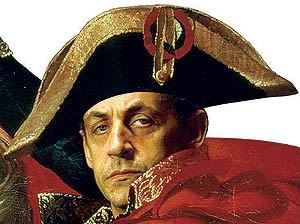 , and Germany in a very short period of time. Even the Russians are a bit warm to him, even if the Chinese aren't. He is now courting the Syrians--who are probably the biggest remaining key to the entire situation in Israel/Lebanon/Palestine--in a truly fantastic, Romanesque way. He has invited them to Club Med, given his support to peace talks with Israel, and even held the Syrian president as a guest of honor at Bastille Day, depsite the fact that this raised a few eyebrows in his own country. Syria is responding well to Sarkozy's courting, and if Syria acts well, the dominoes may begin to fall.
Where does Brown fit into all this? By giving his goodwill. The UK's massive military and political power could be put to use here, but they are mostly being kept in check. The UK doesn't want to play bad cop, and can't afford to play good cop due to having so many troops in Iraq. Brown likely gave his permission for Club Med, and is likely exercizing his political strengh to silence people like Merkel, who are most likely to object. The Big Three are working in concert, as they had the potential to as soon as the French and British elections had happened, and each his doing his own part.
Sarkozy's carrots to Bush's sticks are making cooperation a very tempting alternative. One can imagine Assad's eyes light up during his visit to France on Bastille Day, when Sarkozy told him "This is what the cool kids get."
Tuesday, July 8, 2008
Iraqi Timetable May Be More Than it Seems
The Surge is ending: The final brigade is on its way out of Iraq right now, after tremendous security success. For the next few months, we will have to hold our breaths and see if the situation keeps improving with fewer forces.
The Bush adminsitration has wanted a "long-term" US presence in Iraq, including permanent bases (like in Korea, Japan, Germany). Al-Maliki, the Prime Minister, has suggested a counter-proposal: A withdrawal timeline. At first glance, this would be a crippling defeat for George Bush, vindicating all of his political opponents that have been demanding such a thing for years.
But more likely, it is a compromise proposed by the administration itself, after realizing that permanent bases were not feasible. If Al-Maliki told Bush "we don't want permanent bases, and even if I did, I couldn't make them happen," then a withdrawal timeline is the immediate second choice.
Al-Maliki mentioned that the timeline would stretch until 2011 or 2012--2 or 3 years into the new presidency. At this point, I think most people in the administration are betting that Obama is going to win the election, and are hedging against him. That, or they could be trying to defeat him.
Stealing the initiative: If the Administration agrees to a 2012 withdrawal timeline and Obama wins the election, he will be hard-pressed to implement his 16-month withdrawal plan, given a previous treaty arrangement with the Iraqis (which he is bound by the Constitution to obey). If the Bush administration's war thinkers are worried about a speedy withdrawal, setting their own timeline with the Iraqis is the best way to prevent it.
Influencing the Election: This move has clear implications in the election that Obama will have to deal with very carefully. He could be caught in a double-bind. If this timeline agreement goes through, Obama will have to choose whether or not to dramatically change his policy. Should he obey the timeline, and try to delicately drop his 16-month withdrawal plan? He might draw serious criticism for flip-flopping, discourage his base, or lose his anti-war cred with moderates. Or should he defy the treaty, and stick to the plan? The Republicans may try to snatch moderates back by calling him out-of-touch, idealistic, unwilling to deal with reality, ignoring international treaties, etc. This timeline may make his Iraq stance an automatic liability, which is definitely a win for an administration that wants someone who is going to stick closer to its foreign policy aims into the future.
Whatever is happening, it is likely very thoroughly-thought long-term planning by the Bush administration. Al-Maliki is a close enough Bush ally that he almost certainly would not publicly request a request for a withdrawal timetable unless it had been already agreed-upon (or unless the administrations were at a deadlock, but it does not appear so at all). And, having been already agreed-upon, the intuitive thing for Bush to do is announce it himself, to show the public he is dedicated to changing his policy with changing times. But he gave the initiative to Al-Maliki, allowing the US press to call it a defeat for him. When he agrees to the timetable, it will appear as if he "caved to pressure." This is exactly what he wants. If it looks like he fought this timetable tooth-and-nail, then the Democrats will be politically forced to rejoice when he signs it, and won't be able to criticize it. Bush, once again, is going to get (almost) what he wants, despite a Democrat congressional majority. Sometimes, Bush is more clever than most give him credit for, and it is this very reputation for lacking subtlety that will allow him to outsmart the Democrats in congress once again.
The Bush adminsitration has wanted a "long-term" US presence in Iraq, including permanent bases (like in Korea, Japan, Germany). Al-Maliki, the Prime Minister, has suggested a counter-proposal: A withdrawal timeline. At first glance, this would be a crippling defeat for George Bush, vindicating all of his political opponents that have been demanding such a thing for years.
But more likely, it is a compromise proposed by the administration itself, after
 realizing that permanent bases were not feasible. If Al-Maliki told Bush "we don't want permanent bases, and even if I did, I couldn't make them happen," then a withdrawal timeline is the immediate second choice.
Al-Maliki mentioned that the timeline would stretch until 2011 or 2012--2 or 3 years into the new presidency. At this point, I think most people in the administration are betting that Obama is going to win the election, and are hedging against him. That, or they could be trying to defeat him.
Stealing the initiative: If the Administration agrees to a 2012 withdrawal timeline and Obama wins the election, he will be hard-pressed to implement his 16-month withdrawal plan, given a previous treaty arrangement with the Iraqis (which he is bound by the Constitution to obey). If the Bush administration's war thinkers are worried about a speedy withdrawal, setting their own timeline with the Iraqis is the best way to prevent it.
Influencing the Election: This move has clear implications in the election that Obama will have to deal with very carefully. He could be caught in a double-bind. If this timeline agreement goes through, Obama will have to choose whether or not to dramatically change his policy. Should he obey the timeline, and try to delicately drop his 16-month withdrawal plan? He might draw serious criticism for flip-flopping, discourage his base, or lose his anti-war cred with moderates. Or should he defy the treaty, and stick to the plan? The Republicans may try to snatch moderates back by calling him out-of-touch, idealistic, unwilling to deal with reality, ignoring international treaties, etc. This timeline may make his Iraq stance an automatic liability, which is definitely a win for an administration that wants someone who is going to stick closer to its foreign policy aims into the future.
Whatever is happening, it is likely very thoroughly-thought long-term planning by the Bush administration. Al-Maliki is a close enough Bush ally that he almost certainly would
 not publicly request a request for a withdrawal timetable unless it had been already agreed-upon (or unless the administrations were at a deadlock, but it does not appear so at all). And, having been already agreed-upon, the intuitive thing for Bush to do is announce it himself, to show the public he is dedicated to changing his policy with changing times. But he gave the initiative to Al-Maliki, allowing the US press to call it a defeat for him. When he agrees to the timetable, it will appear as if he "caved to pressure." This is exactly what he wants. If it looks like he fought this timetable tooth-and-nail, then the Democrats will be politically forced to rejoice when he signs it, and won't be able to criticize it. Bush, once again, is going to get (almost) what he wants, despite a Democrat congressional majority. Sometimes, Bush is more clever than most give him credit for, and it is this very reputation for lacking subtlety that will allow him to outsmart the Democrats in congress once again.
Saturday, March 1, 2008
Setback in Iraq Violence Trends
In February, the death toll in Iraq increased for the first time in over six months, to 721 dead (January was 541). This setback was due largely to two large suicide attacks that had recently been more rare. Nonetheless, the Bush administration plans to continue a troop draw-down throughout 2008 beyond the surge, putting US troop numbers at just under 100,000 by the end of the year.
The increase in violence is likely frustrating for General Petraeus and the Bush Administration--despite large violence reductions and apparent cooperation on the part of Anbar Sunnis and Al-Sadrite Shiites, public opinion in the US has remained bleak. Any setback in progress is likely to make the administration's current fragile shield over the Iraq issue begin to crumble to congressional pressure. Bush will need the month of March to show a return to improvement in rates of violence if he does not want to be pushed into a corner over hastier troop withdrawal.
Nonetheless, Bush certainly believes that victory (as defined in his own mind) in Iraq is not only right, but critical. Given that, we must look at his current actions and policy as an attempt to influence policy long after he leaves. Should McCain be elected, some form of the Bush policy is likely to stay in place for quite some time; a few ten thousand troops will remain in Iraq for decades to come. But if Barack Obama (who is likely to be the presumptive nominee by Tuesday night) is elected, he will carry with him a strong anti-war mandate, and a fundamental shift in foreign policy. Bush will want to secure Iraq's future before January, 2009 as best as he can.
Petraeus and Gates have not changed their previous stance that all 18 of Iraq's provinces could be fully handed-over by the end of the year; given that none of the remaining 9 have been handed over yet (and probably won't until April), much of this handing-over is going to happen increasingly close to the US presidential election in November. Furthermore, Iraqi provincial elections are tentatively slated for October, and us troop counts are likely to stay high until November and December (taking into account, of course, the mid-July end of the "Surge"). Bush is likely hoping to use the next six months to impress the American people enough about Iraq that public opinion finally begins to take a fundamental shift: away from "end" and towards "victory."
The increase in violence is likely frustrating for General Petraeus and the Bush Administration--despite large violence reductions and apparent cooperation on the part of Anbar Sunnis and Al-Sadrite Shiites, public opinion in the US has remained bleak. Any setback in progress is likely to make the administration's current fragile shield over the Iraq issue begin to crumble to congressional pressure. Bush will need the month of March to show a return to improvement in rates of violence if he does not want to be pushed into a corner over hastier troop withdrawal.
Nonetheless, Bush certainly believes that victory (as defined in his own mind) in Iraq is not only right, but critical. Given that, we must look at his current actions and policy as an attempt to influence policy long after he leaves. Should McCain be elected, some form of the Bush policy is likely to stay in place for quite some time; a few ten thousand troops will remain in Iraq for decades to come. But if Barack Obama (who is likely to be the presumptive nominee by Tuesday night) is elected, he will carry with him a strong anti-war mandate, and a fundamental shift in foreign policy. Bush will want to secure Iraq's future before January, 2009 as best as he can.
Petraeus and Gates have not changed their previous stance that all 18 of Iraq's provinces could be fully handed-over by the end of the year; given that none of the remaining 9 have been handed over yet (and probably won't until April), much of this handing-over is going to happen increasingly close to the US presidential election in November. Furthermore, Iraqi provincial elections are tentatively slated for October, and us troop counts are likely to stay high until November and December (taking into account, of course, the mid-July end of the "Surge"). Bush is likely hoping to use the next six months to impress the American people enough about Iraq that public opinion finally begins to take a fundamental shift: away from "end" and towards "victory."
Thursday, February 28, 2008
Bush is Squandering an Opportunity in Pakistan
By continuing to throw support to President Musharraf, Bush is alienating the Pakistani people, and thus the new ruling coalition that is likely to oust Bush's ally. Bush cannot be said to lack loyalty, but unfortunately, he can certainly be said to lack common sense. If this stance is not voluntarily and quickly reversed, it will result in--as a loyal reader of mine said when she pointed me to the article--"Failboat."
Pakistan is the primary front in the War on Terror, and is a battle that the United States must take a subordinate role in. I am ending this day, unfortunately, with frustration.
Pakistan is the primary front in the War on Terror, and is a battle that the United States must take a subordinate role in. I am ending this day, unfortunately, with frustration.
Subscribe to:
Posts (Atom)