Monday, March 31, 2008

Al-Sadr Joins The Forces of Order

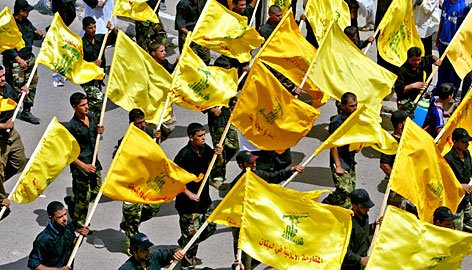
As you probably know, forces of the Al-Sadr militia, the Mahdi Army, got into a tussle with Iraqi Security Forces in Basra and Sadr City last week. Days of fighting have left over 100 dead, and a bad taste in the mouths of the residents of these areas. The Iraqi Security Forces showed prowess and achieved a military victory over the Mahdi Army forces, but it was Al-Sadr that ended the fighting with offers of peace and cooperation, painting himself as peace-maker and patriot.

The reason for his decision is complicated. Stratfor believes Iran has been a large factor in Al-Sadr's decision, and that there may be a greater pact for joint progress on Iraqi Security. Bush called this fight a "defining moment" for the future of Iraqi Security, but the ultimate conclusion may have been a defining moment in a way that he could have never guessed--and may mean an end to the adversarial positioning that the US and Iran have been going through for years.

After six days of fighting, Al-Sadr called his forces to leave the streets. He refused to give up arms, as the Iraqi government demanded, but kept vehemently to the cease-fire he called 9 months ago, and has claimed “Anyone carrying a weapon and targeting government institutions will not be one of us.” He has not only pledged not to fight, but to work together with the Iraqi government: "We have decided to withdraw from the streets of Basra and all other provinces... [and to] cooperate with the government to achieve security.” This is a long stretch from his previous anti-government sentiment, vowing to fight them for their cooperation with American imperialists.

Stratfor believes the renewed calls of cooperation and peace come in part due to Iranian pressure on Al-Sadr. Al-Sadr and the Iranian government likely depend each other for mutual security; Iran is looking for a Shiite-dominated Iraq that will never pose a security risk to it again (given the terror of the Iran-Iraq war of the late 1980's), and Al-Sadr needs outside support to secure his base in Iraq.

But the agreement seems very pro-American, and we must consider why each party seems to be agreeing:

Iran: President Ahmadinejad visited Iraq last month, proclaiming friendliness and cooperation between both governments. Certainly, Ahmadinejad had security on his mind; Iran wants neither an adversarial Iraq nor a refugee or terror problem. How much military meddling Iran is doing to hedge its bets is unclear, but Stratfor believes there may have been a secret US-Iran meeting in Baghdad to talk security concessions--Iran may have given a commitment to helping stabilize the Iraqi government for US concessions in both ceasing action against rival Shiite factions (which have remained fractured for years) and making military and UN resolution moves against the Iranians. Why now? Victory by Ahmadinejad's allies may be pressing his hand to act and achieve regional victory quickly. Finally, Iran may now be a committed advocate of Iraqi security; a dark ally that the US desperately needs as its era of troop presences draws to a close.

Mahdi Army: Al-Sadr's military defeats pressed his hand, in part; there was a danger of a strangle on his power base by the Iraqi Security Forces. But there are two other issues that made this choice easy for Al-Sadr. First, as an ally of the Iraqi government and people, Al-Sadr will enjoy support from the government and its security forces, on top of virtual immunity for his gathering of military and political forces. He may even be winning popular support for seemingly sacrificing his own power to achieve Iraqi unity. His power struggle with other Shiite factions in the south remains broiling, and as an ally of the government and people, he may be tapped as the Shiite leader that will unite the sect. But second, the Iranians may well have levied heavy pressure on Al-Sadr to make him step down for good and put aside his pride in favor of a long-term strategy.

Iraqi Government and Washington: The Iraqi government needs stability as it tries to create political unity and reconciliation. With the Al-Sadr militia on its side, it should be able to quell the anger of the restive southern Shiite regions, and Al-Sadr's Mahdi Army will become an asset, rather than a liability--this way, Iraqi Security Forces should be able to concentrate the bulk of their effort on pursuing Al-Qaeda and securing Baghdad. This advancement will become critical as US forces draw down both this summer and next winter (in particular if a Democrat wins the US election).

This new deal seems like one, long-term, that can help everyone involved. Furthermore, it ties in the security interests of the Mahdi Army, the Iraqi Government, and the Iranian leadership. I am a raging optimist, but this readjustment by the Mahdi Army and Iranian government is an excellent sign for the future security of Iraq.

Friday, March 28, 2008

No More Surrender Jokes, Guys

The French are tough again, and it's official. President Nicholas Sarkozy made a speech today fundamentally shifting French foreign strategy back to cooperative internationalism (a strategy very similar to Mr. Gordon Brown, and also US Candidates Hillary Clinton and John McCain), and toughening France's stance in Iran.

France has, for decades, avoided full NATO integration (since its withdrawal from NATO joint command in 1996), and has shouldered a disproportionately low burden in NATO operations. But Sarkozy has declared that France will become a full member once more, and has started re-integration talks with the Secretary General. As a full member of NATO, France will carry a higher military burden, which Sarkozy is willing to accept; he has offered to increase France's troop presence in Afghanistan.

Sarkozy has furthermore pledged to reduce France's nuclear warhead stock to 300; not that he is not willing to use them. Standing in front of France's newest nuclear attack sub, he said "All those who threaten to attack our vital interests expose themselves to a severe riposte by France.” He is getting tough, and not just in rhetoric.

France is taking a tougher anti-Iran stance, and is pushing for more sanctions against Iran to stop what France believes is a continued nuclear weapons program. In this stance, as well as full-frontal diplomacy in visits to the United States and the United Kingdom, Sarkozy is possibly pushing France to join the United States and United Kingdom's special foreign policy relationship. As the US and UK have been in near lock-step on foreign policy for decades--and particularly after 9/11/2001--Sarkozy may attempt to turn the Big Two into a Big Three.

Finally, Sarkozy's public mullings over boycotting the Chinese Olympic Opening Ceremony is a nearly unilateral attempt at pressuring the Chinese into changing their Tibet policy, as Bush and Brown play "good cop" and encourage dialogue between Hu Jintao and the Dalai Lama.

Ultimately, Sarkozy has thawed the somewhat frosty relationships France has had with the US and UK by showing not only a willingness to work with their leadership, but a toughness on the Middle East and China that the US and UK are likely to appreciate. If he can continue this blitz of policy and diplomacy, French surrender jokes and "Freedom Fries" are likely to be snippets of the past.

Tuesday, March 25, 2008

The AU Shows its Brass

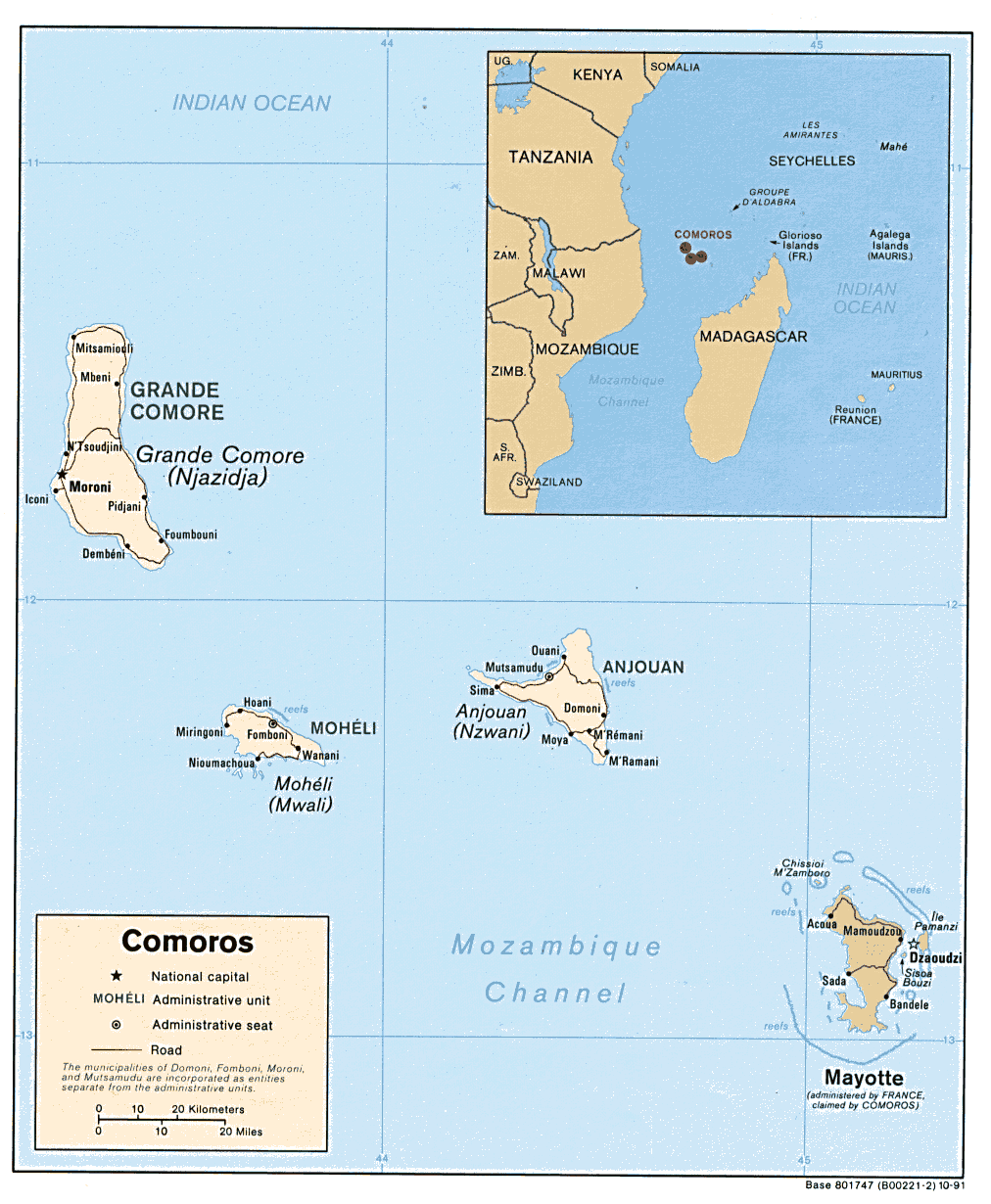
A tiny African island nation, The Comoros (in the Indian Ocean) has recently asked for--and received--African Union (AU) military assistance in bringing under control its rebellious island of Anjouan. The island was controlled by the country's former leader, Mohamad Bacar, who had been ousted from official power by judicial authorities after he rigged an election, but for a year held out on Anjouan with loyal military elements, administering it separately.


The island was taken in a day by mostly AU troops, who have surrounded Mr. Bacar and are urging his surrender. In all likelihood, his personal guard of a few hundred will surrender, and the Comoros will reassert control over the island (my impression is that the populace was not a big fan of Mr. Bacar), and he will be tried for torture, treason, and fraud.

But the interesting part of all of this is how this reflects the AU's efficacy and will affect its reputation and ability to perform in the future.

The AU does not have the best of reputations for being effective. Its hurdle-laden political structure makes it rather difficult to come to consensus to perform. Even when it has been deployed (like in Somalia and Sudan), it has been mostly useless in its peacekeeping efforts. Its bad reputation put it in some danger of dissolving.

This action, decisive and seemingly effective, should give the AU a legitimacy that it has been desperate for. Regional institutions like ASEAN, NATO, the EU, and OECD have had different, but generally effective, results on stabilizing or improving their regions. The AU has failed in repeating the success of these regional organizations, though this is in large part due to the fact that Sub-Saharan Africa is a mess.


Should the AU gain a legitimacy and mandate to intervene in unstable countries, it could have a massive stabilizing effect on the entire region. Momentum would do the AU well; in regional institutions, success can lead to confidence by member nations, which can lead to increased investment and integration. The AU has not only shown results, but has shown it can perform difficult amphibious landings, which would pose a challenge to many militaries.

The Comoros action is a small step forward, but a step in the right direction for the AU, and a success that might be seen as the first moment of the AU's renaissance as a regional organization.

Saturday, March 22, 2008

China's Taiwan and Tibet Dilemma

China struck a large victory in the Taiwanese presidential election yesterday, with the Guomindang candidate Ma winning with a healthy 58% of the vote. Ma may not be a great fan of China, but he supports increased economic ties, eased travel, and a peace agreement. It may not sound like too much, but the PRC sees it as a great improvement over Chen Shui-Bian's attempts at incremental independence. The Chinese have been patiently courting the GMD, while lambasting the DPP, for years as the DPP held power. Finally, with parliament and executive both secure, the GMD will be able to work on improving ties with China long-term.

But everywhere that the Chinese have gotten the Taiwan situation right, they have gotten it wrong in Tibet. Protests in and around Tibet continue despite brutal PLA crackdowns that have probably killed hundreds; and China seems to be losing control. The courting method used in Taiwan has not been used in Tibet; the PRC keeps thinking that it can continue to crush Tibet into submission. The tactic has repeatedly failed, and beyond the matter of human rights, it strains the Chinese military and shames the Chinese government's face.

Despite the Taiwanese victory, the Chinese government is in for a struggle. The repeated defeats in Tibet and countrywide unrest are a dangerous powderkeg. The Chinese government has justified one-party rule for decades with sustained and massive economic growth. But economic growth is now fragile, and if it should falter, the hotbed of unrest may grow.

China and the United States have both found Chen's pro-independence rhetoric frustrating; the US has been hoping for an extended status quo, and the Chinese have looked for reunification for fifty years. Ma seemed in danger of losing the Taiwanese election due to the Chinese crackdown in Taiwan; the DPP hoped to use the crackdown as a symbol of China's brutality and danger. There was some temporary shift in polls pre-election, but the Taiwanese voted in droves for Ma in promises of improved economic ties to put a kick in Taiwan's economy.

But this PRC victory is one of few in recent months. The Tibet uprising is growing, not shrinking; the PLA crackdown is not only bringing international support for Tibet and risking Olympic boycott, but it is rallying even reluctant Tibetans to the cause of resistance (except, of course, the Dalai Lama, who asks only for an end of violence and increased religious freedom). The PLA is struggling to deal with the wide and dispersed Tibetan resistance. Whether the PRC is planning to use tactics beyond military suppression to deal with the Tibetan uprising is not yet known.

But China's problems may be getting worse. Even with economic growth, China's income gap between its west and its coast is growing dramatically; the Chinese west remains largely left out of the 9% yearly growth enjoyed for decades straight. But the current economic growth is fragile. Oil prices are extremely high, and China's demand for it continues to explode. Inflation is getting out of control: 8.7% in February alone. While Taiwan may be opening economic ties, this won't happen until late May, and China is in danger of boycotts from both its actions in Tibet and its unlucky string of dangerous export incidents (dog food, toothpaste, and Barbies). Finally, US investment banks, facing hard times, are likely to pull back their investments in the near future; knowledge of that may cause smaller Chinese companies to struggle. The combination of the Tibet unrest and potential economic downturn may become a perfect storm come June 4th.

Thursday, March 20, 2008

The Iraq Stalemate

"Stalemate" is the word all of the news and open-source intelligence sources are using for the current Iraq violence situation; I spent some time trying to think of a better term for it, and failed. So I am jumping on the "stalemate" bandwagon, as disappointing as it is to admit that. The stalemate is expressed in a tapering off of the decline in violence; that is, violence in Iraq is no longer decreasing by month; in fact, there was a significant increase in violence in January.

This stalemate is going to pose a great challenge to the yet highly successful General Petraeus and his controversial surge strategy; as the surge ends through the summer, violence might be in danger of increasing should more political reconciliation not occur. This stalemate is showing the urgency for said reconciliation; the security gains made in the last eight months are indeed fragile, and will not remain in the nearly-inevitable 2009 American withdrawal unless sectarian groups feel enough security that they become stakeholders.

A particularly bad sign in all of this is that violence spikes keep occurring when US troops pull out of an area, in particular Baghdad (which absorbed the majority of the US surge). Baghdad might well get hit, and hard, when the surge ends over the summer.

But there is hope. Besides the post-pullout spikes in violence, which seem to be temporary in nature, the vast majority of the violence increases are due to US and Iraqi offensives, rather than sectarian violence or random attacks. One might call this an "investment," like the increase in violence from February to July 2007. Petraeus may be trying to take advantage of the relative peace to use US troops, while they still remain, to root out remaining insurgent strongholds.

In addition, a serious political step may be taken in the next month. Provincial elections have just been approved by the Presidential Council, largely due to very high US political pressure. The elections first happened in 2005, when Sunnis were still boycotting (and de-Sunnification was still the policy of the day), and Sunnis are still woefully under-represented in provincial-level government. The Shiite- and Kurd-dominated executive branch of the government was reluctant to schedule early elections, but finally succumbed. With the "Sunni Renaissance" of participation, as well as the end of the de-Sunnification policy, Sunnis will likely make proportional gains in the provincial-level government, and secure themselves as stakeholders in the Iraqi government. With that, things may well calm down.

Wednesday, March 19, 2008

Dissecting the Iran Election

I am often told of a power struggle within Iran; at least the secular part of it. There is evidence of it; Iranian shifts in Iraq policy and shifts in strength of anti-Israeli and anti-American sentiment show that such is clear. Iranian students are often lauded to be more pro-Western and moderate than their parents, defying Iranian dress code law by cutting their hair close and wearing ties. In the late 1990's and early 2000s, moderate reformers swept into power, and in 2004 lost it.

After this election, the conservative/reformist split of seating seems to have not changed much, despite the fact that the cleric-led Guardian Council banned most of the reformist opposition from running due to insufficient loyalty to Islam (that same Guardian Council is calling the election a "Victory Against the West"). But among the conservatives, a fissure is growing. A faction of conservatives is rallying against Ahmadinejad's hard-line stances, which they say are bringing UN sanctions, as well as Iran's faltering economy, suffering from high inflation and unemployment.


The reformers might have done better, had President Bush not encouraged Iranians to boycott; his words likely inflamed Iran's sense of nationalism and anti-Americanism.

The EU and US have condoned the election as unfair due to the banning of reformer candidates, though the protests will go no further than that, and Iran's parliament will press on, functional, for the next four years.

Reformers are also calling this vote a victory, given that they held on to most of the seats they had despite many of the men and women who had campaigned for seats were blocked.

The interesting part will not be what the reformers do, but what the opposition conservatives do. Ahmadinejad is in for a tough next year; presidential elections occur in 2009, and a few conservatives are looking to lead their faction towards a presidential victory, beating out Ahmadinejad.

It should be noted that not all right-wing religious fanatics are the same. While not reformers, these conservatives are likely to do more looking inward, concentrating on economic reform and strengthening cultural and religious unity. What Iraq policy the anti-Ahmadinejad conservatives hold is unknown to me, but it is likely to change.

The US public won't see much in the way of immediate changes from this election, but Ahmadinejad may be forced to make foreign policy concessions; look closely for subtle changes in rhetoric and action in Iran's foreign policy in the next few months. I'll keep my eye on what's to come.