Monday, January 19, 2009

Israeli Timing Holds True

While Mr. Obama was busy moving his family and belongings to Pennsylvania Avenue, Israel abruptly and unilaterally declared a ceasefire in Gaza. The Gazans (undeniably more than simply Hamas), a few hours later, declared one as well. The ceasefire is holding, somewhat surprisingly. Hamas has decided that they don't want to risk another invasion (yet), and no rockets are flying. Even a day without rockets is a huge symbolic victory for Israel.

Israel's unilateral ceasefire makes two points. The first is that the Israelis do not want a lingering war when Mr. Obama takes office. Such a decision is strategically calculated to prevent Mr. Obama from having to deal with an Israeli war (under the pressure of his allies to stop the Israelis) on day one; certainly, Israel wants to be as friendly with the new American president as possible. The second point is that the Israelis do not want to be bound by the terms of an internationally-brokered peace deal: they want to be able to move into Gaza unbound if the rocket fire continues.

But for now, signs point to Hamas being beaten up enough that it has no intentions of provoking the Israelis yet. It is likely waiting to see if it can rebuild and rearm itself over the next few years of quiet to be ready to weather another Israeli storm.

Sunday, January 18, 2009

Calculated Madness


The New York Times has a fine article about the "calculated madness" of the Israeli attack, and its analogy in the Hamas circle. But I'm not going to re-hash that.

I intend to consider the validity of Israel's conclusions on its war. Israel took down a lot of Hamas infrastructure--and because Hamas is so ubiquitous in Gaza (it is pretty much everything), Israel took down many houses, schools, Mosques, etc. As far as I can tell, nothing hit wasn't either A) a legitimate Hamas target, or B) a complete mistake, but in war, intent is a very small part of the story.

Israel believes that it has taught them a lesson, as the Chinese are fond of saying in their wars. It strolled in, delivered a beating, and left. It wasn't going to destroy all of the rocket sites. It wasn't going to take down Hamas, and alas, it certainly didn't. This war was meant to show Hamas and its supporters that throwing rockets at Israel wasn't worth the risk of massive retaliation. Did that work? Indeed, can that work?

Israel's hope is that the sup;porters of Hamas, while angry at Israel, will question the wisdom of voting for Hamas. This is somewhat likely, but they may also be purple-blooded. After the Sept. 11 attacks in the US, Americans did not question their foreign policy, except perhaps in concluding that they were being too shy, too meek, too peaceful, and too generous (in conflict with pretty much the rest of the world). While the analogy between the 9/11 attacks and the Israeli war is pretty weak, it makes a strong point: can beating on people make them more calm and peaceful? The Blitz of London, the 9/11 attacks, the bombings of North Korea, the Rape of Nanking, they all say otherwise. But they were all primarily anti-civilian attacks. Can Israel make a clearer message by having almost exclusively attacked Hamas-related targets?

Perhaps. Israel has to make two messages clear: 1) Hamas got Gaza into this mess by refusing to stop launching rockets, and 2) that the Israelis were genuinely trying to avoid civilian casualties. The second will not make Gazans less angry at the Israelis for their friends and family dying from shell fire, but it will allow point #1 to have more salience. And that is the important part--if Gazans can say, "Hamas' irresponsibility is why the Israelis attacked" (whether or not it was deserved, etc), then they will back down.

A good example of this is Europe. Russia has recently been, for lack of a better term, insufferable and hyperaggressive. They have gone after Ukraine (with gas) and Georgia (with tanks) for minor provocations. But even though the Russian response was far out of line (and resembling that of a child's temper tantrum), the European Union has questioned the wisdom of continuing to agitate the Russians--particularly, it has questioned a continued policy of trying to subsume Georgia and Ukraine into NATO. Indeed, while Russia's actions have been largely unjust (particularly in Georgia), Europe has taken the posture that Russia is an entity whose disposition and behavior are both A) unlikely to change soon through any measures, and B) rational, even if unfair and disproportionate. And so the Europeans have acted just as the Russians have. So might the Gazans, if the Israelis can impart the same sense of causal linkage between the rockets and Israel's attack (as Russia did between Georgia's shelling of South Ossetia and its own assault). If that link can become salient and vivid for Gazans, then they will either pressure Hamas to change into a more reserved military entity, or they will vote them out. Either, to some extent, is a victory for Israel. But now that the 3-week assault is over, the propaganda war will only intensify.

Thursday, January 15, 2009

If Mexico Failed

It's possible that Iran, or al-Qaeda, or Russia, any of them, are the biggest threat to the US in the next 8 years. That, my friends, is a luxury. That our greatest threats are all half a world away, that the worst consequence of defense failures for our civilian population was as single attack in an almost-70-year period is spectacular. We can spend all of our time worrying about whether Iran is funding a militia group with an effective operating radius of 100 miles.

That is, of course, as long as these 3 countries are our biggest threats. They might not be. I allude so cleverly, of course, to Mexico.

"Mexico?" you ask. "I vacationed there once. You can only drink bottled water, but how's that so bad?" So thought I once, as well.

I also maintained this opinion of Mexico as a rather poor but otherwise relatively inoffensive place over the past 8 years despite A) about half of the US becoming fixated on keeping Mexicans out of Texas, and B) increasingly frequent reports on America's Most Wanted (which, I admit, I watch at home during Thanksgiving and Christmas breaks) about crazy Mexican drug cartels abducting/killing Texans.

But the US Government has caught on. The Department of Defense is starting to seriously worry that the drug cartels could take down the Mexican Government.

Is it time to be terrified? Probably not. But the cartels have become extremely powerful, and momentum is on their side. For many local police, they must either accept bribes or be killed at night--"silver or lead," as it's called. Many police are still trying to crack down, and big fights are happening--generally between drug gangers and cops from calmer parts of the country. But the corruption runs pretty high, and at some point, impunity starts to take over: officials can stop pretending that they're part of the forces of order. It hasn't happened yet, but it might.

When that happens, Mexico is already a failed state. But other similarly catastrophic events could happen in this drug war: if Mexican leadership is assassinated, the rough and hectic transition period could be so ineffectual that the government would "lose its hold" of the country (which I have found in my studies to be a very elusive concept to operationalize in a country: the place to start looking is the Fund For Peace's Failed States Index). The drug war could get so bloody and miserable that people start to displace to avoid it--and the economy crashes. Any of these things could occur.

So what would happen if the Mexican state failed? For the US, a few pretty bad things. First and most obviously, there would be a huge rush of refugees to Texas, New Mexico, Arizona, and California. Oh, and given a pesky treaty on refugees that the US signed back in the 1950's, it would be obligated under international human rights law to take all these refugees in (particularly if the UN declares a certain level of crisis in the country to be present, which happens in the General Assembly, leaving the US veto useless). The US would either have to snub international human rights law in a very big way (something that would be very costly for the US' reputation, as well as an act that would undermine the world order that the US worked so hard to create for the past century), or take them in and deal. And then, the US would have to choose between shouldering this obligation itself (which would be financially ~impossible given current government debt) or swallow its pride and knock its status in the world by accepting large humanitarian aid from Western Europe (not that the Western Europeans would care much beyond jockeying and cultural competitiveness, but the Russians and Iranians would likely become quite bolstered).

The other problem, of course, would be law enforcement. The US would have to turn its southern border into a war zone, and send huge numbers of (unavailable) troops to provide law enforcement in the region and try desperately to keep the border watched and safe through the rush of refugees.

Can this be prevented? Almost certainly, but it will take some smarts. It's something Mr. Obama will have to put on his plate, right next to Gaza, the financial crisis, Iran, al-Qaeda, Afghanistan/Pakistan, and all the other plans he hopes to put through. US demand is a big contributor to this drug drade. Curtailing demand would help, but the only serious way to do that would be to legalize the production of drugs inside the US, reducing the need for foreign supplies (I say this due to overwhelming evidence that the War on Drugs isn't really going anywhere). Another way to do it would be to build a Berlin-Wall-esque station at the border to make sure the drug supply and demand are permanently separated, despite the "pressure" for goods to flow (think of trying to keep a vacuum separated from a high-pressure vessel with a membrane between the two). It seems unlikely that either solution is going to look attractive.

It's a question for which I don't think there is a clear answer. Supporting the Mexcian government with US aid/intelligence/training is likely to help some. It is certainly the cheap and low-effort solution, but it's unclear as to whether it would be enough.
Tuesday, January 13, 2009

A Thank You and a Farewell

From the Department of Defense:

"The Department of Defense announced today the death of a Marine who was supporting Operation Enduring Freedom.

Lance Cpl. Daniel R. Bennett, 23, of Clifton, Va., died Jan. 11 as a result of a non-hostile incident in Helmand province, Afghanistan. He was assigned to 3rd Battalion, 8th Marine Regiment, 2nd Marine Division, II Marine Expeditionary Force, Camp Lejeune, N.C."


LCPL Bennett was a friend of the family, a gentleman, and a dedicated defender of the liberty of his fellow Americans. He is one of a very select few men and women of the United States with the courage to put himself in harms' way for our safety and freedom. To Dan, to the exceptional men and women of Operation Enduring Freedom and Operation Iraqi Freedom, and to all those that chose to wear the uniforms of the US Military, thank you.

Saturday, January 10, 2009

The Americans Stand by Israel

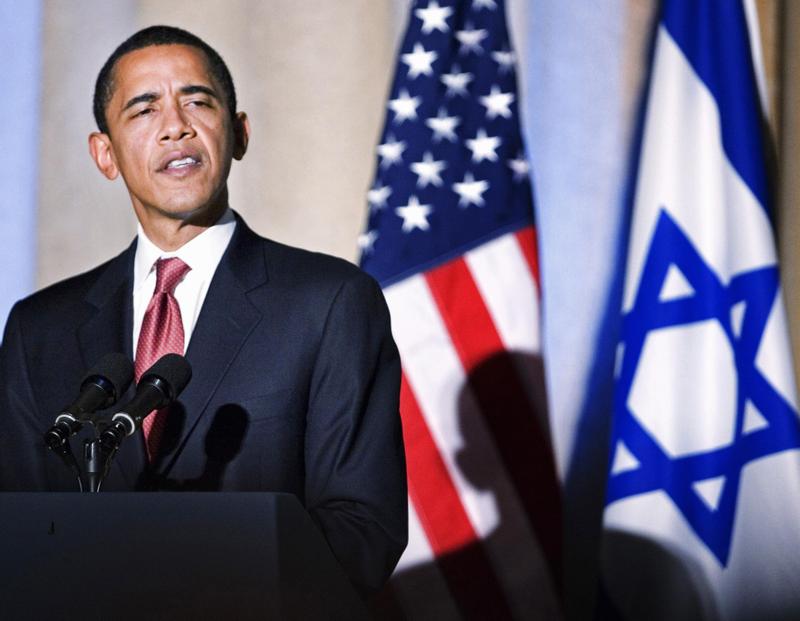
For any Israelis that worried about the United States' stance on Israel with the new Obama administration, worry no more: While the Obama administration is likely to push for ceasefires and diplomatic talks as much as it can, Mr. Obama will continue the US policy of defending Israel's sovereignty, safety, and actions. Allow me to elaborate.

Many have somehow worried that Obama's quiet stance on Gaza was a sign that he harbors quiet anti-Israeli tendencies. Not so, I am rather sure. More likely, Obama's quietness allows him to appear neutral coming into the negotiations, which will assist the Israelis more than anyone. The Israelis made sure to rush into this war so that they would not immediately force Mr. Obama into a difficult spot with them, and Mr. Obama has graciously responded by staying out of it for now. it was a wonderful piece of diplomacy, and something that quietly reaffirms Obama's commitment to working with Israel into the future.

The House passed a bill today affirming "Israel's right to defend itself" 395-5 (with a few abstentions, it seems)--it was sponsored by Nancy Pelosi, House majority leader. Big deal? Yes. The House, including a vast bipartisan majority and its Democratic leadership--is behind Israel, and willing to go out on a branch for it.

Senate majority leader Harry Reid also supports Israel's action in Gaza, saying (I paraphrase, sorry): "Hamas has to go." He sponsored a resolution with Senate Minority Leader Mitch McConnell supporting Israel's action, and it passed unanimously. That's right, unanimously.

So the new wave of American politicians are firmly and undeniably in the Israel camp. The tactics might be different, but the support isn't. Even if Obama does harbor some anti-Israeli-policy sentiment (which I really can't say either way, I just hear a lot of people complain about it), he certainly has no room to try to do anything about it--his party is firmly a pro-Israel party for at least the next fair while. This will be significant for the Israeli elections coming soon: American approval of the current party's action (Kadima) should raise confidence that they should keep the same horse in the race--I expect full well that Kadima is going to run away with this election and have a new mandate among the Israeli electorate.

A Brief Iraq Update

Maverick that I am, I've decided to bring you all an update on a war that nobody else is really updating for you: Iraq.

It'll be just a brief overview: I've got a lot to do for work. And I'll tell you more about work later (it is very awesome).

Anyway, there's not a whole lot to tell that isn't relatively obvious by the lack of news in the country. Deaths continue a relatively steady (but slow) decline. In December, Coalition deaths totaled 17, the third-lowest month yet (the lowest being 13 deaths). Deaths of Iraqis (related to the war) were 320, higher only than August and November of 2008 (311 and 317, respectively). This month is looking to be the most peaceful yet, with only 2 Coalition deaths do date, and 119 civilian deaths, though a number of events may attract terror attacks. A whopping four provinces are scheduled to be handed over in the next 2 weeks, as detailed in a map that I have modified below:

Iraqi Government Provincial Control, Updated for Jan 2009 (US DoD)

If these handovers go smoothly (which, to be honest, they do most of the time), then deaths should stay down. Provincial elections are on January 31st for all but four provinces, and these are likely to be the target of attacks (though solid security may make this an opportunity to capture militants). After the handover, the Iraqis are in charge everywhere but Baghdad, and US deaths will drop by even more. US costs should drop, too (particularly given incoming president Obama's political need to balance some sliver of spending discipline and bailing-out--he will not be spendthrift on this war).

Iraq's Kurd problem remains, but is resolvable--especially once the last four provinces hold their elections. The more the US can put its power into negotiating between Kurds and Arabs in Iraq, the more likely it is that an agreement can be forged.

Anyway, that's really it. In short, things are mopping up nicely in Iraq, for the moment, and they show no particular signs of falling apart.