Showing posts with label European Union. Show all posts

Wednesday, April 8, 2015

Foggofwar Prediction: Inertia Will Keep the UK In the EU

Just as inertia and fear of disruption kept Scotland from declaring independence from the UK, I think the same inertia will keep the UK in the EU.

Quick context: there's been talk for a while of potentially exiting the EU and Prime Minister David Cameron is pledging to have a 2017 referendum on the question if the Tories win a majority.

But they won't.

Fivethirtyeight predicts a slim Conservative victory over Labor and pretty much no chance of getting an outright majority.

UK General Election Prediction by Fivethirtyeight


Wales is staunchly against withdrawal--most support comes from the English countryside. But even that support for withdrawal has been dropping after a solid four years (2010-2013) of consistent majority.

The window may have passed.

Labour has made it clear that they'd support a referendum if the UK were to lose more sovereignty to the EU, but that's unlikely--the resurgence in nationalism throughout all of Europe is making it unlikely that the Continent will unite any time soon to give the EU more power. Almost everyone seems a bit grumpy with how much power the EU has now, but not enough to seriously consider leaving.

The UK leaving--unlike, say, Greece--could trigger a mass exodus of "satellite" states, from Poland to Portugal. The fact that it won't leave means we're going to see some ongoing stability--but the threat that it might have left will keep the EU from getting more powerful.

Monday, November 17, 2014

No, the Ruble Falling Doesn't Mean Russia is Hosed

A friend recently shared an article with me about the ruble dropping (partly in response to sanctions) and asked me what I thought about it.

Go read it first, it's quick. I'm not going to summarize.

Read it yet? No, really, go do it.

Alright, good. Below is a modification of my original response, which I just wanted to share with everyone.

First, I think "2 guys got arrested" --> "Russia's economy is eating itself" is a grossly over-inflated and completely un-supported assertion here. Putin is on top because he does a great job specifically pitting his oligarchs against each other and reminding them that he can snap his fingers and crush them at any time... while keeping them rich. So the government still doing that is not surprising.

The oligarchs aren't in charge of the justice system (Putin wouldn't trust that) so I don't see how the arrests relate at all to oligarchical bickering. 

The ruble dropping isn't great, but it does mean that you can buy more bread (domestically made) for each barrel of oil you sell, so Russia's gas/oil imports will be buffeted here against the drop in the general price of oil/gas. 

Dropping one's currency is also a way to pivot an economy towards internal manufacturing, which may also be a deliberate move by Putin's administration to become less foreign-dependent, and it may be a sign of an economic strategy rather than just a political one. 

So yes, Russia is "digging in," and no doubt, it's getting ready to survive long-haul sanctions. But that doesn't mean the Russian economy is going to collapse. Putin is a smart guy. If he's planning to lose trade with the West, the first thing one wants to do is create as much domestic manufacturing as possible, and the ruble dropping is step one to doing that (because imports get expensive, exports get profitable, so local manufacturing is stimulated). The pain of the ruble dropping will pass as entrepreneurs seize on the opportunity to build new industries that take advantage of new domestic cost advantages. Russia's got the metal to make a lot of what it imports, excepting the luxuries that wealthy Russians love so much (but we don't need to worry about them). 

They'll be fine. The only way to really choke off the Russians is to cut oil/gas imports dramatically, and the Europeans aren't ready to feel the sting of that, themselves.

Wednesday, November 9, 2011

The Aftermath of Europe's Disintegration

Dear Readers,

I apologise for my long absence from the blog. I've been busy, but I've also been holding back and feeling out the European situation before I wanted to say anything definitive about it.

As the European Debt Crisis worsens, we are starting to see the fault lines in the "Blocanization" of Europe grow wider and deeper. The core EU is torn between total control of its periphery, and jettisoning it completely. The former Soviet bloc countries continue to huddle together, waiting to ride out the eurozone storm and hold the Russians at bay when they come to capitalize on the fracturing of the Eurozone. Turkey's previous desperate love affair with the EU has become nearly a joke.

In the end, we're seeing Europe, as a concept, fall apart. The EU still exists, but it may dissolve in the next few years. If Greece or Italy leave, it will set a precedent that countries like the Czech republic, Poland, and the United Kingdom (all of whom have grown massively Euroskeptical) may take on and jump ship. This will happen, without a doubt, before any of these countries allow themselves to be pulled down by the Eurozone's debt crisis.

Even if these countries don't leave, they'll weaken the EU and make sure they are not as dependent on the fiscal responsibility of periphery countries in the region. Nationalism is coming back in Europe, and with ferocity. This nationalism, which many thought was being eroded away by Pan-Europeanism, will lead to European countries acting, once again, as independent entities, rather than a united force.

Geopolitically, it eliminates Europe from contestants for the role of 21st century hegemony. Despite its national pessimism, the United States is once again the front-runner--it remains the center of gravity of world trade and commands the seas. A growing Russia may be able to challenge the United States over the next 50 years. China continues to focus inwardly, and risks its own end similar to the "Japanese Miracle" if it cannot navigate its way out of the toughest bubbles in world history.

Look for surges in activity and influence-building from all three of these nations in the next decade or so, as they try to feel out what the new geopolitical system is going to look like.

Monday, August 22, 2011

Baltic Solidarity to an Emerging Russia

1) The Visegrad 4: Eastern Europe as a Major Player
2) The Re-Emergent Russian Bloc
3) Baltic Solidarity to an Emerging Russia
4) The EU Periphery: "Core" EU's Albatross
5) The Atlantics: A Return to Arms-Length Continental Management

Dear readers,

Sorry about the wait. Today we conclude our 5-part series on the Blocanization of Europe with our final installment: Baltic Solidarity to an Emerging Russia.


The Baltics have worried about Russia for a long time, likely surprising nobody. When Russia looks west, it sees both vulnerability and opportunity. Its vulnerability comes from open plains stretching from Moscow all the way to the Alps, giving potential invaders an easy route in (which we've seen taken advantage of many times), as well as St. Petersburg being potentially bottled up by European maritime powers in the Baltic sea. Russia thus seeks to create buffer space and exert influence over its western neighbors in order to protect its land and sea periphery.

The opportunities are in natural resources (Finnish timber, Norwegian oil, etc). Russia has made moves to squeeze control of these resources or the processing of them out of the Nordic holders.

So Russia has thus spent most of the 20th and 21st centuries attempting to exert control over these areas to in order to protect itself and realize financial opportunities.

So the Baltics have been traditionally fearful. Much like the V4, their faith in NATO has started to erode. Estonia has been the constant victim of political manipulation and cyber-attacks for a decade; Finland has been pressed by tariffs.

So the rest of the story is short. The Baltic countries are looking to each other for solidarity, especially military. Sweden and Norway sport surprisingly powerful military forces that will make any incursions by Russia a much more painful contest than the invasion of Georgia.

In particular, Sweden and Poland are discussing potential alliance-making; nothing as strong as the V4 itself or the Baltic's grouping, but something that could potentially functionally replace NATO altogether.

Friday, July 15, 2011

The Atlantics: A Return to Arms-Length Continental Management

1) The Visegrad 4: Eastern Europe as a Major Player
2) The Re-Emergent Russian Bloc
3) Baltic Solidarity to an Emerging Russia
4) The EU Periphery: "Core" EU's Albatross
5) The Atlantics: A Return to Arms-Length Continental Management

Today we continue our 5-part series on the Blocanization of Europe by discussing the changes that will happen to the UK, US, Canada, and Iceland as the Continent splits into blocs.


The Atlantics are largely a classic story, and largely a bloc that has existed since the beginning of the second World War. The question of The Atlantics bloc has always been about just how much the Atlantic powers get distracted from each other.

To be clear, the Atlantics consist, fundamentally, of the United States, Canada, and the United Kingdom--I've (controversially, I supppose) tacked on Iceland due to perceived mutual benefit and a few historical interactions.

The United States, Canada, & United Kingdom have the exact same interest on the Continent: prevent any power from amassing enough wealth, power, and influence that it could project that power out of the Continent. For the UK, this threat is more immediate. But for the US & Canada, the fall of the UK to a Continental power would spell long-term disaster (if one consolidated the Continent from Moscow to London, its economy would be a bit larger than that of Washington & Ottowa combined).

We saw this during the first and second World Wars, as well as the Cold War--the US, Canada, and UK have a "special relationship" not despite geopolitics but because of it (which generally makes such a relationship more reliable and less fickle). It will continue to be so.

So why are we even discussing this? Trends looked, briefly, like they would turn awry for the North America / UK relationship in the 2000s, while Europe was upset with the US over Iraq and wildly enamored with its own experiment: a politically strong European Union. It appeared as if the UK had turned its attention towards the Continent, and would actually embrace a unified Continental power.

But this was never to be. The UK managed to sneak in a Eurozone deal in which it had the option of keeping the Pound as a currency for as long as it wanted (it will keep the Pound, for sure). The UK has lobbied against a stronger European military or foreign policy cooperation, preferring to limit its involvement to free trade, and a few domestically popular legislative concepts.

The UK has been skeptical of its involvement with the European Union, and has now grown exceptionally so. Unlike the United States, the European Union would not go to war with itself to maintain its cohesion--there is too much Nationalism at the level of each country, and the EU's tendrils of cohesion are already too weak, and getting weaker. As the UK pulls away, the European Union will do little to stop it.

The United Kingdom is very worried about recent Franco-Russo-German cooperation in military & economic matters. In the 19th and 20th centuries, it was usually 2 of these powers versus the other, and the United Kingdom always sided with the underdog to prevent Continental consolidation. But the UK shudders to think of facing all three at once, and will turn increasingly towards the US for support if this cooperative trend continues on the Continent among its major powers.

And of Iceland? Iceland has no military at all, and depends on NATO for protection. But if NATO's cohesion weakens (which it will), it will need to cling to one of the Blocs for security. Why the Atlantics, and why not the Baltics?

As we'll discuss in our final installment on The Blocanization of Europe, the Baltics are too preoccupied with defending their borders from Russia to reach out to protect Iceland. The US, UK, and Canada will pick up the slack--the US rarely backs off an opportunity to have a forward base of operations in exchange for military protection, and will take the opportunity here as Russia's power grows (as much as Iceland may hold its nose during the deal).

Ultimately, the US, Canada, and UK will work together to play European powers off each other and try to keep the continent divided. They will back the underdog (in this case, the Visegrad 4) against powers like Russia & Germany that are looking to expand their influence across larger swaths of the Continent. North American / UK cooperation will only grow into the future as the Atlantics return to their old strategy of managing Europe at an arms length.

Wednesday, July 6, 2011

EU Periphery: the "Core" EU's Albatross

1) The Visegrad 4: Eastern Europe as a Major Player
2) The Re-Emergent Russian Bloc
3) Baltic Solidarity to an Emerging Russia
4) The EU Periphery: "Core" EU's Albatross
5) The Atlantics: A Return to Arms-Length Continental Management

Today we continue our 5-part series on the Blocanization of Europe by skipping ahead to the EU Periphery, as it's currently of great interest to state leaders and armchair political scientists, alike. Rather than talking borders and weaponry, we'll be talking about money. It's just as important.
Standard & Poor's have cut the credit ratings of both Portugal and Greece to CCC, tied with a few other countries as the worst credit ratings in the world (see here for S&P credit ratings definitions). These, along with mediocre credit ratings for Italy, Spain, Belgium, and Ireland, put the Eurozone concept (and European unity in general) at major risk (see Wikipedia for an elaborated explanation of how the Eurozone and European Union differ).

The periphery states have become an albatross to the "core" EU states (for the "albatross" reference, please see Rime of the Ancient Mariner). Portugal and Greece have both already received bailouts, and Greece is likely to accept another in exchange for a modest austerity plan. Despite these bailouts, S&P (as well as Moody's, and other credit rating agencies) have tanked most of the periphery states in credit rating--indicating their likelihood to be able to pay back credit on time.

This is relevant for a few reasons:
1) Chronically weak periphery states will mean that the Euro won't overtake the US Dollar as the world's dominant currency. It will mean less influence for France and Germany on the world stage than they would otherwise have.

2) France and Germany may become tired of bailouts and allow defaults. The German & French taxpayers are subsidizing Portuguese & Greek deficits, and are likely to lose patience with it. If this occurs, Greece or Portugal may default, weakening both EU strength and solidarity.

3) France and Germany are looking for more financially stable partners. Generally, they are turning towards Russia, with little debt and significant earning potential (as well as few entitlement/welfare programs). Germany and France are likely to see much of the EU as a financial burden (rather than boon), and will focus on finding financial success elsewhere. This will drive Germany, France, and Russia closer together. Such a friendship has consequences beyond the EU Periphery--it will change the course of NATO, and US/UK strategy for a time to come (the latter of which will be discussed in our Atlantics section).

4) The continued struggle of EU periphery countries makes Eurozone obligations less attractive to potential members. Eastern Europe (technically obligated to join the Eurozone at some point) and the UK (with an option to join the Eurozone) are likely to balk at the idea of the financial burdens associated with Eurozone membership, and may try to find a way out.

Those who have read our previous posts are likely to see how this is a rather impressive compounding factor with other forces that are forcing Europe into blocs. The EU periphery is not going to become a bloc, perse--they are too weak to help each other--but the EU "Core" and V4 are likely to abandon the periphery at some point in hopes of better pastures elsewhere... and out of a fear of going down with the Eurozone ship, should it sink.

Saturday, June 4, 2011

The Re-Emergent Russian Bloc

1) The Visegrad 4: Eastern Europe as a Major Player
2) The Re-Emergent Russian Bloc
3) Baltic Solidarity to an Emerging Russia
4) The EU Periphery: "Core" EU's Albatross
5) The Atlantics: A Return to Arms-Length Continental Management

Our series on the "Blocanization of Europe" continues with an exploration of the factors behind the rise of Russia over the past decade, and what implications it will have for the continent.

As we discussed in our last post, Russia faced imminent marginalization in 2004, as NATO planned to incorporate Georgia and Ukraine into its alliance. A Western-led push into Ukraine had formented the Orange Revolution and the election of a pro-Western Yuschenko. Georgia's strongly pro-Western government was knocking at the gates of NATO and the EU. The US had successfully coaxed Europe into accepting the Baltics, Romania, Bulgaria, and Albania into the EU in a fell swoop. Russia appeared to have an insurmountable united front poised against it.

This united front dissolved over the next 4 years. Some of it was due to Western distraction in the Middle East and complacency over Russia; some of it was the rift between the US and Europe over the Iraq war. But credit must be given to the Russian leadership, which successfully took advantage of every mistake the West made in order to shatter the united front:

-The carefully-timed invasion of Georgia highlighted Gerogia's vulnerability and the inability of NATO to come to its aide, and also turned popular support against the pro-Western elements that enraged Russia.
-Russia has engaged Iran and assisted its nuclear programme, enabling it to grow more assertive in the Middle East and largely upset Western plans for a hastier withdrawal from the region.
-Russia's intelligence forces engaged in a full-court press (both clandestine and propaganda operations) in Latvia and Ukraine, shaking Western support and mobilizing pro-Russian citizenry to become a more powerful political force.
-Russia threatened Germany and France with interruptions in oil & gas supplies, causing (in part) both countries to back off their bid for Ukraine and Georgia to enter NATO, thus kaibashing the entire attempt.

With NATO's plans successfully disrupted, Russia has been able to focus on two major geopolitical goals:
1) Solidifying its gas & oil supply dominance in Europe
2) Expanding its influence back towards the former Soviet states

Central Asia built strong ties with Russia during the Soviet Union, and they remain. The only major competitor for their support is China, which is a much more inward-looking nation.

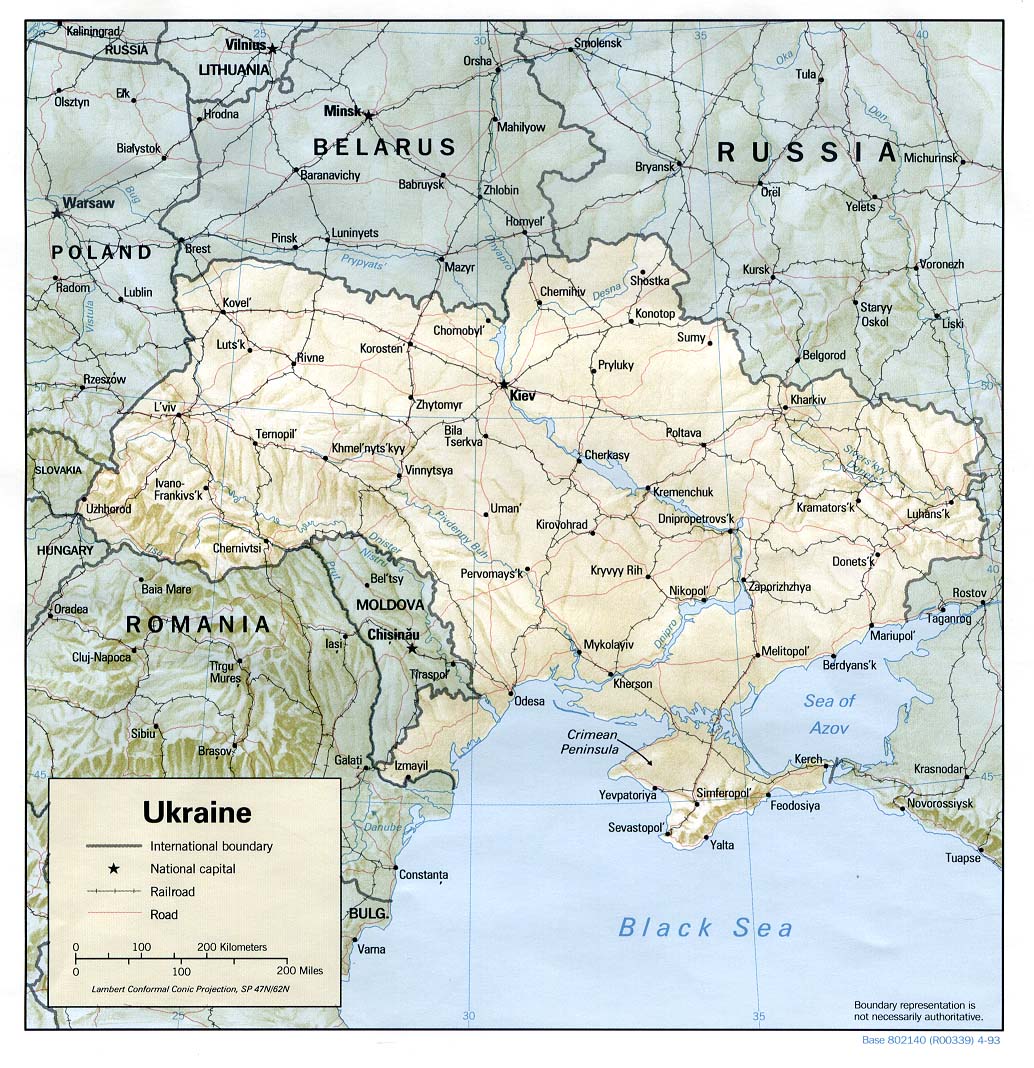
Backlashes against the pro-NATO governments in Ukraine and Georgia have put these two states closer to the Russian bloc. Ukraine's ouster of the pro-Western government has eased ties with Russia and opened up stronger economic channels between the two countries. Russia's warm-water navy base near Sevastopol will remain in Russia's control. Moldova is currently a toss-up.

Russia has begun throwing its weight around as its power has grown. It has used Iran and Afghanistan to distract and frustrate the US, and shaken up confidence in the governments of Estonia and Latvia (while driving the Baltics closer together in defense--more on that later).

Furthermore, Russia is taking advantage of the EU's disharmony to build economic ties with key "Core" EU members--particularly Germany and France. Russia's vast natural resources and low-cost labor pool poses a great opportunity for the Core EU's largest (but slow) economies to start growing again and begin to bounce back from the weight of the falling EU Periphery.

What all of this means is that Russia is becoming a global player. Its base is sound (internal threats to the Putin regime are shaky at best), and it will continue to grow economically. It is rebuilding its military--in particular, its power-projection capabilities. It will grow to challenge the US on the global stage.

The thing that will make Russia different from the US--and the thing that will ultimately give the US a key advantage--is that Russia will spawn stronger and stronger alliances against it. The Visegrad 4 and the Baltic Bloc exist primarily to protect themselves from Russian domination. The US/UK will keep its power checked on the continent: their key interest is making sure no major power controls the resources and military of Europe. China will oppose Russia if it grows too strong.

The US, on the other hand, has scattered opposition at best. Iran, Venezuela, North Korea, and Libya form the bulk of Anti-US governments (and Russia is stuck supporting these unsavory regimes)--besides Iran, they are largely irrelevant (or are becoming less relevant quickly). If Russia can pull Ukraine into its bloc for good, it will become a relatively significant ally, but it is unlikely to grow beyond that.

But at the same time, Russia will prove a highly disruptive force in Europe, and will test the loyalty and priorities of the US/UK onthe global stage. To a great extent, Russia will be the primary driver behind the major geopolitical changes in Europe into the forseeable future.

Wednesday, May 25, 2011

The Visegrad 4: Eastern Europe as a Major Player

Our "Blocanization of Europe" series will include a number of posts, each outlining what the new bloc will look like, why the bloc is losing faith in the NATO/EU system (if it ever bought in at all), and why each country is choosing the group it's choosing. Our upcoming posts should look like this:

1) The Visegrad 4: Eastern Europe as a Major Player
2) The Re-Emergent Russian Bloc
3) Baltic Solidarity to an Emerging Russia
4) The EU Periphery: "Core" EU's Albatross
5) The Atlantics: A Return to Arms-Length Continental Management


Today, we'll be discussing the Visegrad 4, if for no other reason than we find them the most interesting and most potentially game-changing bloc of Europe.

The formation of a Visegrad 4 "Battle Group" was the original even that prompted our thinking about the blocanization of Europe; it is both a symptom of and (will be) an emerging cause of declining European solidarity.

Ultimately, NATO's inability to completely defeat the Russian Bloc (by failing to integrate Ukraine and Georgia into NATO) meant that European security could not be completely ignored; that, combined with NATO's attention locked in the Middle East (and thus not on Eastern European security: the United States has pledged only a single army brigrade to the defense of the Visegrad 4) have led to a serious security crisis for the V4. With a strong Russia and a weakened will by NATO to commit to Eastern Europe's defense, the Visegrad 4 had to take matters into its own hands.

The Visegrad 4 battle group certainly projects a strong regional commitment to a unified defense of the plains from Russia; perhaps more importantly, it will have a significant material impact on the region's ability to defend itself.

The Battle Group will allow each country to streamline its military to adopt regional command and control; sharing resources will allow each country to reduce redundancy and redirect freed resources to extra firepower or new specialization. Shared intelligence will lead to greater regional awareness, and thus better response times and effectiveness. Most importantly, the Battle Group means that the V4's entire military force could potentially focus on a single area quickly (both due to bureaucratic reductions and effective regional planning on troop mobilization and transportation), thus making it much harder to "pick off" individual countries in the region.

Historically, such "picking-off" has been a key strategy for both Germany and Russia in consolidating power in the region (Germany and the Soviet Union were both successful in such a strategy in the 20th century); the V4's Battle Group nearly guarantees such a strategy will not work, as long as the will to support it remains (which it should into the medium-term future).

Romania and Bulgaria similarly recall the harsh rule of the Soviet Union, and wish to avoid any similar arrangement. They joined the EU and NATO in order to guarantee security against any repeat incidents, but the relative aloofness of NATO and a breakdown of confidence in the EU as a supranational structure is likely to push these two countries towards the next-best alternative: the V4.

Neither Romania nor Bulgaria has yet shown commitment to join the V4; in particular, Hungary and Romania have had regional disputes over territory and mutual security. But, if Russia's regional assertiveness continues to grow, these two countries will need to seek shelter. There is potential, especially in Bulgaria, to fall into Turkey's sphere, but a European rejection of Turkey's bid for EU membership is likely to push it towards the Arab region (where it already seem sto be facing).

The Visegrad 4's strengthening has implications beyond its own interactions internally and with Russia. Eastern Europe is currently the EU's most dynamic economic region, with highest yearly GDP growth on the continent. While the region is still economically troubled, its structural advantages set it up to continue to grow over the next decade.

If the EU's financial strength continues to weaken, the V4 may become the economic stronghold of the continent--and its influence over the region will grow as many countries come to depend on its growing economic strength.

Practically-speaking, the US and UK will not abandon the V4 entirely: they see the V4 region (in particular) as a stronghold against an emerging Russia, and will support it when times become dire enough. But Middle Eastern distractions have turned the attention of the V4's major allies, and this group will wisely remember not to depend too heavily upon Western allied support against Russia--it has failed multiple times in the 20th century (during the German invasion of Poland, the Hungarian and Czech revolts against the Soviet Union), and the Visegrad 4 will not sit by to allow another such failure.

Expect, in the future, for the Visegrad 4 to grow increasingly strong and assertive as it finds its center of gravity. The region faces many risks to its long-term security, but it is likely to have the influence and weight, when the situation grows "dire," to man its own front lines and call upon the help it will need from the US and UK.

Tuesday, May 17, 2011

The Blocanization of Europe: An Introduction

I'll keep this one quick.

I've been doing some thinking about how Europe has been changing in the past decade, especially with the military rise of the Visegrad 4. It has been a dramatic change indeed.

A large portion of my next few posts will be focused on this series: The Blocanization of Europe. In short: the vision of a single unified Europe is beginning to show the signs of fray -- a "blocanization" of the continent is beginning, based on natural lines of national interest and security.

In particular, as we see NATO's commitment to European Security weaken, and the financial integrity of the European Union shaken, the ability to depend on the hope of a strong, unified Europe is diminishing.

We'll be focusing on the reasons for this, and the new blocs emerging--and what each means. As a teaser, I've attached a map of these blocs, built on my current understanding of the geopolitical makeup of the new Europe.

Monday, July 5, 2010

Komorowski's Win a Polish Westward Entrenchment

Whether the Poles voted for Komorowski for his foreign policies is not yet clear to me, but his victory is significant in the long-term shaping of the European landscape.

Komorowski's pro-EU (and Berlin-friendly) stance is likely a minor blow to Russian hopes for a friend along the plains of Europe (and a friend strategically positioned to surround the Baltics). The win is a sign that at least a majority of Poles resisted the charm offensive from Moscow after the tragic plane crash of April that killed a large swath of Polish leadership.

The win is also a sign that the EU and US may have dodged a bullet after allowing a perceived "sympathy gap" to form between themselves and Russia after the plane crash.

Sunday, June 13, 2010

The Nationalist Spike in Europe

This is more an observation than a strict analysis, but very interesting, nonetheless.

Nationalism seemed to die in much of Eastern Europe towards the end of the 20th century as Europe reeled from centuries of war. It seemed unlikely to many that it would return soon. But, of course, geopolitics marches on. Nationalism is back in Europe, and back in a big way. A few examples of interest:

Germany: The Germans have pushed for a leadership role in Europe with the onset of the Greek crisis. Rather than an isolationist nationalism, Germany seeks to exert its will over Southern Europe, lest the debt crisis bleed it dry. The Germans are likely to come out of the debt crisis with a considerable amount of power in Europe--which is the only way they can make the EU work for them. Otherwise, they will consider leaving--the EU will only be a deal the Germans will tolerate so long as it is not one that tears them down.

Hungary, Czech Republic, Slovakia, Bulgaria, Austria: Right-wing (sometimes seriously so) nationalist parties have made huge gains over the past two years. Much of this is in response to the Russian resurgence (where the options are to fight or join). But this resurgence makes for a potentially rivalrous situation in Eastern Europe. Territorial squabbles may arise and prevent Eastern European unity against Russia.

Denmark, Switzerland, France, and Holland: Right-wing and largely anti-Islamic parties have made great gains in Denmark and Holland in their last elections, signaling a reaction against growing Muslim influence in much of Europe due to massive immigration. France has banned burqas, and Switzerland has banned minarets. Anti-Islamism has become a relative European hallmark. Europe is set for a strong showdown with the Islamic world, but one very different from that of the US.

Belgium: Perhaps the most interesting of the nationalist movements, the Flemish movement has made big gains in Belgium, capturing 20% of seats (far more than any other party). Unlike previous separatist movements, this independence party is largely mainstream (rather than right-wing), and hopes to see a gradual dissolution of Belgium into Flanders (a Dutch region) and Wallonia (a French region). Belgium is probably closer to its end than ever before.

The return of Nationalism to Europe will make it a geopolitically interesting continent once again (after two decades of relative calmness, saving the Balkans).

Saturday, January 30, 2010

Last Decade Series: The European Union


The EU gained serious traction through the late 2000s as the Lisbon Treaty was ratified and the EU's executive and legislative branches became significantly more powerful bodies than they previously were (as I've mentioned before, they begin to rival the powers of the former Articles of Confederation).

But as we know, a unified European continent is verging on the single greatest threat to the US' security. Obviously, the US is relatively preoccupied in the Middle East, but it is not this preoccupation that has kept the US from pressing on the EU (certainly the US is pressing on China and Russia).

Ultimately, the EU is a mixed blessing for the United States. There are some downsides--with a "united" foreign policy representative, it will be "easier" to stand up to the United States on foreign policy matters as a group with collective bargaining power (think of a trade/labor union). The EU could, as a group, threaten all sorts of nasty stuff as a whole, including pulling out of Afghanistan, or otherwise not supporting a US policy, that each state on its own would not be able to credibly do. But these downsides are mitigated by the very things that caused me to use sneer quotes earlier; the EU is not actually a terribly unified place, and probably won't be for a long time, if ever (in the US, it took over 100 years for states to shed their strong unique identities). Most EU countries have a very strong unique identity that the United States lacked when they came together, and already there is a fair amount of discord within the ranks. Italy is up in arms about an EU Court ruling over crucifixes in its schools. The UK is now majority in favor of full withdrawal from the EU (in order to protect its own sovereignty). With the Tories bound to be elected by March, this may end up happening--and if it does, countries like Poland and the Czech Republic may follow.

In general, a fair chunk of EU countries would rather not give up their sovereignty and independence to the extent that the Lisbon Treaty asks them to do, even for the economic benefits entailed by the Eurozone. But in general, the idea that many countries with such disparate geopolitical interests could get along is tough to imagine. The US has the dual advantage of coasts on its east/west, and relative weakness to its north/south (a number of wars have made that the case). Unity is geopolitically sensible for the US, but the EU has very different needs on its West (where it sees relative security) and its east (where Russia looms and the Balkans remain a hotspot). Western and eastern European geopolitical interests and needs will clash in the future as Russia tests the EU, and it may fall apart as the east forms its own alliance bloc with the US and UK (NATO largely faces the same risk as western Europe decides it would rather not suffer through standing up to the Russians again).

Ultimately, the EU will remain geopolitically fractured and weak. The bureaucracy of getting anything all done in the EU is horrendous, especially so for such a new institution. The EU will remain facing inward, trying to find a hopeless balance that works for everyone, instead of looking outward to challenge the US or even Russia. It will, at least, have a strong internal trade, which will ultimately be good for the US--a richer EU will mean not only more high quality products, but a bigger market to which the US can eventually export.

The EU will be an irritation in America's side for a bit as the US and EU diverge on geopolitical topics ranging from the Middle East to Russia to global warming, but the EU's very structure largely prevents it or any other European power from becoming a major geopolitical threat to the US, something with which the US should ultimately be quite pleased.

Tuesday, November 3, 2009

Lisbon Treaty Sees Fissures On Day One

The Czech President Klaus signed the Lisbon Treaty (the last EU leader to do so) today, after the Czech Republic's constitutional court gave the treaty its thumbs-up.

But already, fissures have emerged. The Tories in the UK, who are poised to take over in big numbers by next June at the latest, are furious, and David Cameron (the very-likely next PM) is currently under great pressure to come up with some sort of legal scheme to re-transfer a great deal of power from Brussels to London. It might mean a secession, in the end: there seem to be few options left for the Tories besides total withdrawal.

Italians are also quite irate over a European Human Rights Court decision to ban crucifixes in Italian schools. And it seems that it's not a particularly politically divisive issue in Italy--they're either very attached to these crucifixes or they simply don't want Brussels meddling so deeply in their business. But this is, quite literally, what they wished for.

Disaffection and disillusionment is coming quickly at the heels of the Lisbon Treaty. Skittles and beer are not being poured on the streets in celebration, as the visionaries of the EU had hoped.

The big question: will these jitters settle, or will they undermine the process completely? The United States certainly had similar problems, and still has the occasional fight for sovereignty between a state government and Washington, but it does hold. But then again, a civil war was fought to keep it together. Surely, the Europeans will not go killing each other to preserve the Union; will that make it all too easy for the UK (and then others) to drop out?

Saturday, October 3, 2009

The Lisbon Treaty

The Lisbon Treaty in the EU finally cleared one of its biggest hurdles today--that set up by the voters of Ireland.

Requiring unanimous approval of the member states of the EU, the Lisbon Treaty was signed by heads of state of all 27 member nations in 2007, and was expected to be in force at the beginning of this year. For all but Ireland, national parliaments rubber-stamped the treaty through (though the Czech and Polish executives had refused to sign the treaty until the Irish passed it--not sure what they've done yet). With the Irish vote done, the treaty is likely only some red tape away from coming into effect.

The Treaty would strengthen the breadth of powers and autonomy of the EU parliament and executive, create tighter central integration, and a whole bunch of other stuff. In reality, it's very similar to the "EU Constitution" which was so summarily rejected by the more nationalist nations of France and Holland before being abandoned entirely. While the Treaty of Lisbon's passing does not actually make Europe one big happy sovereign nation, it does make it pretty darn powerful (they'll even have a single Foreign Minister to represent the "united" EU opinion on foreign policy). It's the kind of treaty that makes an old-school realist sit down and wonder what sovereignty really means.

If the EU holds together and chugs forward, I anticipate some level of "de facto" sovereignty will emerge, even if it is not formalised in the lifetimes of anyone around today. Many of my European friends (with very strong nationalism) would surely want to cut my tongue out for saying such a thing, but I will indeed note that state pride/nationalism in the US was incredibly powerful until after the civil war (if you've seen any of those civil war movies, you see the Confederates holding up state flags and screaming things like "FOR VIRGINIA!"). In fact, while the States of the US did not have formal sovereignty in the Westphalia sense as soon as the Constitution was signed (they essentially retained their sovereignty under the Articles of Confederation by... oh, just go look it up if you don't know), the de-facto erosion of state-level power, autonomy, and semi-sovereignty is obvious in American history. Every time some issue emerges that is pressing enough to worry some majority of the country, the voting public cedes another notch of power to the federal government (though I will remain mum on whether this is or isn't a good idea).

My point is that the creation of a centralized confederation for all of Europe is similar enough to the confederation of the American states that I think a somewhat similar process of growth of central power is relatively inevitable unless the formalized central system is reversed, and quickly (which is highly unlikely).

I believe, though, that the situation is more likely to be reversible than in the US, and I believe that Russia has the potential to cause it. Like George Friedman (by the way: go read The Next 100 Years), I believe that the nations of Europe have such a vast discrepancy of fears and misgiving's about Russia's potential behavior and future that its expansion and aggression is more likely to drive a wedge between European countries rather than unite them. If Western Europe does indeed abandon the East in order to keep the oil and gas flowing, then NATO will become defunct, as will any faint illusion of collective defense in Europe under the umbrella of the EU. And then, expect some action.

But until that hypothetical arises, expect the EU to be a rather happy-go-lucky place for a while. Maybe (just maybe) it will become a more assertive and significant player in world affairs, after a 50-year post-world war II hiatus.

Monday, June 8, 2009

Obama, Lebanon, the EU, and the American Turnaround

Perhaps I am a bit optimistic in the power of Diplomacy. As a number of readers have pointed out to me, Mr. Obama has not changed a whole lot of US Foreign Policy. Pick a foreign policy situation, and Bush/McCain would have probably done whatever Obama's doing now (save perhaps Guantanamo, which is questionably foreign policy, and questionably changing at all). Obama's "humble" Diplomacy has many in the GOP grumbling, but it's really a great way to get everyone to like you without actually having to do any work.

Anyway. A few elections have come and gone, with some pretty pro-American results. Not every election puts most of its weight behind an American referendum, but US & Allied policy has been a pretty hot topic as of late. The EU elected pro-market, pro-US centre-right parties to its parliament despite rough economics and formerly-shaky US-EU relations. More importantly, Lebanon's pro-Western coalition held on despite a concerted and blistering push by a pro-Iranian (Hezbollah-led) coalition to get a majority in parliament. Many analysts are venturing that President Obama's speech on Islam may have made a difference, and indeed it may have. And, as soon as the speech was over, many political leaders said that they wanted action beyond the words, but in any democracy, words can go a long way in a voting population.

Mr. Obama's speech to the Muslim world was timed in particular to be right before the Lebanese and Iranian elections--two of the most important elections in the Middle East in the next few years. Even Iran's opposition may have gotten a bit of a boost (albeit perhaps futile) from Obama's speech.

Ultimately, it is easier to find a way to get along with an adverasary than to fight them. Particularly, when the adversary is the US and its Allies, finding some common ground and a leader that will reach out to them often reduces difficulty on your own part. Such was the basis of the "thaw" in the US-Soviet Cold War. Such may be the basis of a changing attitude toward the US in the Middle East in in the EU--if the US appears more willing to talk and work together, then the EU and Middle East will gladly accept the stance and jump at the opportunity.

Such speeches and diplomatic blitzes may prove very useful to the US, and are likely to prevent the "marginalization" of US power so quickly predicted by US and foreign pundits alike. Mr. Obama is taking a page from Sarkozy's diplomatic book, and may already be turning key results in favor of the US' long-term foreign policy goals.

Sunday, June 7, 2009

EU Elections

The EU had its elections today, and for whatever reason, the centre-lefts got pretty hammered by the centre-rights and the Liberals (these being real liberals [in favor of small government and civil liberties], not what the American leftists have tried to call themselves).

Anyway, the centre-left coalition and the liberal coalition together took a majority, which means they are likely to take the helm of the EU parliament while the anti-EU dudes, the conservatives, and the leftists/socialists all become an odd and scattered opposition. Here's a link of the results:
http://en.wikipedia.org/wiki/File:Ep1979-2004.png

The yellows are the liberals and the light blues are the liberal-conservatives. The red leftists got pretty hammered. We're still to who ends up actually getting on board with the winning coalition, and what the new policies will be, but expect: more free trade, slightly more pro-American bend, lower taxes, and probably some less regulation.

Wednesday, March 25, 2009

Obama's Economic Policies Alienate Rest of World

As much as Obama's domestic critics may be criticizing his policies for having a European socialist tone, it is becoming increasingly clear that the road that Mr. Obama is marching down seems so destructive that the rest of the world--socialist and communist alike--is rallying to criticize it, perhaps in the dim hopes of reversing it.

Obviously, China is not thrilled. China worries that the massive static reserves built up by panicked money-printing by the US Treasury, bailout-tossing by Congress, and Stimulating by the President, will lead to enormous inflation once US money velocity increases. Enormous inflation will gravely devalue the US dollar, giving China two serious problems: first, its large reserves of US bonds will be worthless. Second, it will become extremely difficult to export anything to the US if the dollar is weak against the yuan. There are people that would tell you this is a good thing, but these people would be wrong. In response to the spendthrift policies of the new administration, China has called for a "global super-currency" to replace the dodgy dollar. And before you give China a hard time for being simply selfish, note that the United Nations is making a report recommending that the entire world ditch the dollar, too.

Even Europe is fed up with US spending. EU (and Czech) President Topolanek called US spending a "road to hell," saying that bailouts and obsessive stimulating will nuke the world economy. Frankly, he's probably right. The Japanese are trying to quietly remind the United States about Japan's lost two decades, where they tried time and time again with no avail to stimulate their way out of recession and stagnancy.

Why is US spending bad for Europe? There are a few reasons. First, the state propping up broken financial companies with money that does not exist is a bold form of anti-competition. Europe is resisting the temptation to dump tons of money into most of its sectors, financial and auto-making sectors included. But European companies that were otherwise able to weather the storm will suffer if they are not able to compete with US companies that are receiving subsidies that are nearing 10% of the US GDP. It goes without saying that such propping-up decreases market growth opportunities for companies that managed to not drop the ball; it creates perverse incentives for American business executives (because currently, the way to make lots of money quick is to make your company look like it's broken and needy, rather than strong and efficient); it will lead to horrifying inflation down the line; and, of course, "buy American" policies sprinkled all over the stimulus plan will grossly damage developing nations and anyone that depends on exports, as well as generally shrink the world economy.

So, the President's (and Congress', to be fair) policies are doing very little to improve the US image abroad--and very little to help the world economy. As much as promises of free money now are keeping Obama's US constituency opiated and placated for now, those abroad that are not receiving these checks are much more cognisant of the terrible consequences of reckless spending and panicked economic intervention. When socialists and communists around the world are uniting to tell you to free your markets, perhaps it is time to consider that you're doing something wrong.

Sunday, January 18, 2009

Calculated Madness


The New York Times has a fine article about the "calculated madness" of the Israeli attack, and its analogy in the Hamas circle. But I'm not going to re-hash that.

I intend to consider the validity of Israel's conclusions on its war. Israel took down a lot of Hamas infrastructure--and because Hamas is so ubiquitous in Gaza (it is pretty much everything), Israel took down many houses, schools, Mosques, etc. As far as I can tell, nothing hit wasn't either A) a legitimate Hamas target, or B) a complete mistake, but in war, intent is a very small part of the story.

Israel believes that it has taught them a lesson, as the Chinese are fond of saying in their wars. It strolled in, delivered a beating, and left. It wasn't going to destroy all of the rocket sites. It wasn't going to take down Hamas, and alas, it certainly didn't. This war was meant to show Hamas and its supporters that throwing rockets at Israel wasn't worth the risk of massive retaliation. Did that work? Indeed, can that work?

Israel's hope is that the sup;porters of Hamas, while angry at Israel, will question the wisdom of voting for Hamas. This is somewhat likely, but they may also be purple-blooded. After the Sept. 11 attacks in the US, Americans did not question their foreign policy, except perhaps in concluding that they were being too shy, too meek, too peaceful, and too generous (in conflict with pretty much the rest of the world). While the analogy between the 9/11 attacks and the Israeli war is pretty weak, it makes a strong point: can beating on people make them more calm and peaceful? The Blitz of London, the 9/11 attacks, the bombings of North Korea, the Rape of Nanking, they all say otherwise. But they were all primarily anti-civilian attacks. Can Israel make a clearer message by having almost exclusively attacked Hamas-related targets?

Perhaps. Israel has to make two messages clear: 1) Hamas got Gaza into this mess by refusing to stop launching rockets, and 2) that the Israelis were genuinely trying to avoid civilian casualties. The second will not make Gazans less angry at the Israelis for their friends and family dying from shell fire, but it will allow point #1 to have more salience. And that is the important part--if Gazans can say, "Hamas' irresponsibility is why the Israelis attacked" (whether or not it was deserved, etc), then they will back down.

A good example of this is Europe. Russia has recently been, for lack of a better term, insufferable and hyperaggressive. They have gone after Ukraine (with gas) and Georgia (with tanks) for minor provocations. But even though the Russian response was far out of line (and resembling that of a child's temper tantrum), the European Union has questioned the wisdom of continuing to agitate the Russians--particularly, it has questioned a continued policy of trying to subsume Georgia and Ukraine into NATO. Indeed, while Russia's actions have been largely unjust (particularly in Georgia), Europe has taken the posture that Russia is an entity whose disposition and behavior are both A) unlikely to change soon through any measures, and B) rational, even if unfair and disproportionate. And so the Europeans have acted just as the Russians have. So might the Gazans, if the Israelis can impart the same sense of causal linkage between the rockets and Israel's attack (as Russia did between Georgia's shelling of South Ossetia and its own assault). If that link can become salient and vivid for Gazans, then they will either pressure Hamas to change into a more reserved military entity, or they will vote them out. Either, to some extent, is a victory for Israel. But now that the 3-week assault is over, the propaganda war will only intensify.

Saturday, December 13, 2008

On The MedU Solar Plan

For your reading pleasure, a paper I wrote for a grad class this semester (Politics and Conflict in the Middle East) that goes a bit outside my normal subject material. I explore the political/economic/social feasibility of the Mediterranean Union's plan to drop down a bunch of solar thermal plants in the Middle East/ North Africa (MENA) region. The idea would have 4 potential benefits:

1) Help the EU meet its carbon reduction goals for 2020 and 2050.
2) Reduce European dependence on Russian gas and oil; The EU favors North African politics to Russian.
3) Develop the economies of North African countries.
4) Kick-start solar thermal economy by introducing economy of scale, allowing it to become competitive with fossil fuels. This would allow countries with lots of desert to start producing competitive electricity, and hedge energy needs from oil (which is volatile in price, vulnerable in transport to pirates and the like) to something more stable.

I'm not planning on publishing it, so the paper is accessible here. It is still copyrighted, and all rights are reserved. Some notes are below.

There are some serious issues with the plan, including the fact that it predicts that oil prices will stay the same or go up--if there is a sudden increase in electrical supply, then the price of oil is likely to drop--simple economics. China and India will happily slurp up this cheap oil to power their own economies, and then the EU's hopes of reducing carbon emissions might be undercut. Instead, this project is simply likely to subsidize India and China's industrial development on the backs of European taxpayers. At least it's not me.

Nonetheless, other goals are likely to be met. Europeans will indeed hedge their dependence from Russia and towards North Africa. The economy of scale is likely to allow wealthy nations like the US (with lots of desert of its own) to build its own solar thermal industry, and the EU and US can then supply to areas like the Arabian Penninsula, India, and Mexico. Finally, as long as trade deals are carefully sculpted by the EU, North African countries will likely benefit from the foreign investment. If the trade deals are poorly or sloppily formed, then solar power could become a "new oil"--a cheap source of revenue for tinpot dictators or ineffectual republics that encourages inefficiency, bureaucracy, and central planning. The trade deals will be the most important part.

Monday, November 24, 2008

Winning The Second Cold War Before It Starts

Oh, the Russians. Becoming more and more terrifying, no? Moscow's domestic and international politics alike are worrying the West, and for good reason.

The Duma (Russian parliament) has backed a 6-year presidential term, almost certainly leading to a 12-year Medvedev presidency--and thus an even greater extension of Putin's power. Apparently, the bill means that Putin will be eligible to run for President again in 2012 or 2018, whenever Medvedev decides he's done... giving Putin yet another 6-12 years afterwards. He'll have ruled longer than any post-revolution leader of Russia.

And Russia's leadership is not ruling with a bunnies-and-kitties fist. Russia's habit of intimidating dissenting reporters (usually by sending the mob) has been ratcheted up by Moscow's declaration that it would close the murder trial of Politkovskaya to the public. The Kremlin is signaling that it would rather appear opaque and shadowy than let whatever terrible truth is afoot here get out. Justice for future murders is unlikely.

Internationally, he presidents of Poland and Georgia had to duck from fire at a South Ossetian checkpoint over the weekend, and the Russians are waving it off as a setup by the Poles. How the Poles might have put agents into South Ossetia to fire on their own president is unclear.

Russia's launching itself towards new superpowerdom, and quickly. It is sending a naval fleet to South America to deal with Brazil, Venezuela, and Cuba--almost certainly to boast that it can steamroll the Monroe doctrine at its pleasure, and to put pro-Russian sentiment into the back yard of the US. It's threatening to set up offensive ballistic missiles against its former satellite countries that won't cow to its will. It's trying to force Finnish paper industries to move to Russia with crippling timber tariffs. The invasion of Georgia was a clear signal to NATO to back off. Russia has threatened to cut off gas supplies to France and Germany if NATO accepts the Ukraine.

With Putin and Medvedev likely in power for approximately forever (in government terms, looking three or four administrations away is such--Could Gerald Ford plan for Bill Clinton's tenure?), they're likely to only turn the heat up as Russia's GNP and military continue to grow. Western governments likely want to (and if they don't, should want to) launch preventative measures to keep Russia from becoming big enough to actually do damage to Western interests. I have some simple (but not easy) suggestions on how to relegate Russia to being a tinpot regional power, able to terrorize only the people of the Central Asian Stans (which we Westerners don't care much about anyway):

1) Show NATO Has Guts.NATO was formed for one reason: to contain Russia. In the 1990s, Russia's internal collapse meant NATO found itself bored and poking around in the civil wars of small Balkan and African countries. In 2001, it came to bat for its largest benefactor, the US. NATO has grown aggressively throughout the 1990's and 2000's. It has shown strength, unity, and cooperation. It should make sure not to splinter, and see what it can to do supports members in most dire need of help: the Czech Republic, Poland, Turkey.

2) Subsume Georgia and the Ukraine.The Russians clearly meant to terrify NATO by smashing Georgia up so thoroughly--they hoped to make Georgia such a liability that NATO would reject it as an ally. But if NATO is going to contain Russia, it should invest in taking the blow now to keep a knife close to Russia's underbelly. But the Ukraine is even more important. The Ukraine is the Russian heartland, and provides Russia with massive supplies of grain. In addition, Sevastopol is Russia's only deep warm water port, which it rents from the Ukraine. Losing its lease would mean a deep retraction of the Russian navy, particularly in the winter. Seasonal power projection is barely better than no power projection, and Russia would lose great influence in the Eastern Mediterranean and elsewhere. If the Ukraine and Georgia enter NATO, Russia's last two European allies will be the paltry Serbia and Belarus--staunch, but ineffectual. Russia will be pushed out of Europe forever. If it goes on to develop Central Asia to give itself a sphere of influence, than all the better.

3) Come to bat for Germany and France. If Ukraine and Georgia are admitted to NATO, then Germany and France are likely to lose access to Russian oil and gas. But luckily, oil and gas are necessarily fungible, unless Russia chooses to hoard that gas and lose all the revenue, rather than sell it... but this is unlikely. Let's assume they sell it to the Chinese, instead. That means the Chinese demand less Middle Eastern hydrocarbon, and the price goes down. The Americans and British can buy up these cheaper Middle Eastern resources, and then re-sell them to the French. Now, will it all be as cheap as normal? Clearly not. But everyone can take some hit in prices to support French and German stands against Russian resource blackmail, and it will have to be temporary if the Russians don't want to lose lots of money over their own inefficiency (currently, they make the most possible money by selling to Europe). It will be temporarily costly to test Russian resolve, but the long-term savings in not having to deal with Russian weight-throwing are immense.

4) Accelerate the Mediterranean Solar Plan. Sarkozy's MedU plan to stick a bunch of thermal solar plants in North Africa to replace oil and gas dependency for power-generation has a few excellent effects for Europe in the long-term. The first is a reduction in carbon dioxide emissions, which will help them sleep at night. The second will be a less volatile source of electricity, which will keep shocks from busting up the economy. The third benefit will be relief from dependence on Russian gas and oil. Imports are fine, unless you're importing from someone who's willing to jump from a cliff just to take you down with him. Putin may be ready to do that. In the long-term, the more the Europeans reduce their dependence on Russian gas and oil, the more irrelevant the Russians will become. France's high-speed construction of nuclear power plants is a great example of these efforts--even if nuclear power is currently more expensive than the gas and oil. The French and German power grids are integrated, and if the Russians do turn the gas off, a combination of solar in North Africa, wind in Germany, and nuclear in France should soon be able to sop up enough of the slack to keep the economy from faltering as the Americans and Brits scramble to deliver the necessary hydrocarbons.

If the Russians lose Ukraine and Georgia, and also (in the long-term) lose their hydrocarbon monopoly in Europe, they will become irrelevant very quickly, unless they actually want to initiate a full-scale war with NATO. But the Russians are smarter than they used to be, and weren't foolish enough to launch such a war in the 20th century, when they owned half of Europe. If NATO claims the Ukraine and Georgia, its conquering of the Russian empire will be complete, and in the long-term, Russia will be relegated to its own icy home.