Showing posts with label Air Raid. Show all posts

Friday, January 2, 2009

Israel Chooses a Gaza Strategy

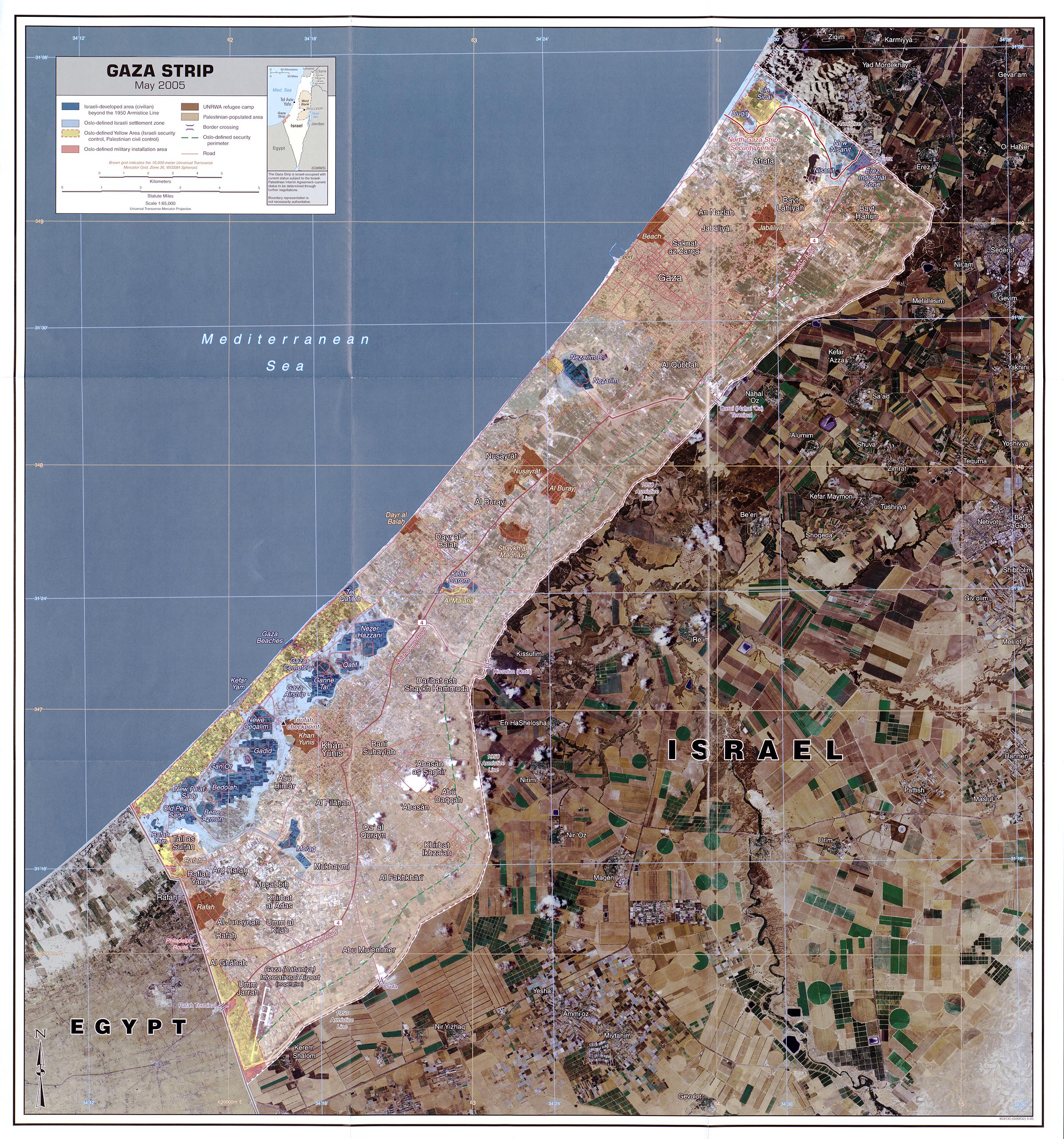
Israel's former ambiguity in its Gaza strategy is gone, and has given way to a much more decisive strategy of total crippling of Hamas' offensive capabilities. Israel is attacking leadership, communications, security, weapons storage/manufacturing, and deployment sites in an effort to turn Hamas into an ineffectual flag-waving organization, rather than a militant wing with any bargaining power.
Figure 1: Gaza Strip With Urban Densities (Click for Larger Image)

The turn to decisiveness is good for Israel, who appeared to be waffling earlier over what to do. Poking at Gaza and bloodying/infuriating its civilian population without achieving any real political goals would have been not only wasteful, but counterproductive--they would have increased Hamas' will without seriously hampering its capabilities. Now, the Israelis have figured that they have already paid the political cost of the airstrikes, both in Gaza and internationally, and they might as well finish the job to their satisfaction. It will mean many more dead Gazans. It will mean billions in relief. It is a questionable decision overall, but one that appears rational once one accepts the given decision to begin serious airstrikes.

The commitment to cripple Hamas doesn't necessarily mean it will happen, despite Israel's impressive military. In the past, like the 1982 and 2006 wars in Lebanon, the Israelis have struggled to do serious damage to non-state actors. Israel's regular military, despite the state's security needs, remains largely outfitted to promptly dispatch Arab regular armies. But to be fair, nobody on earth has yet figured out how to properly deal with non-state actors, as the US in the last 7 years has demonstrated. Hamas remains resilient and confident. It is an organization that feeds politically on suffering, terror, mayhem, and death. Its support among its base is likely to harden. What makes life tougher for the Israelis is the constant decision between tactical advantage and strategic caution--Hamas has no qualms with hiding arms in Mosques, hiding terrorists in orphanages and hospitals. Israel must choose between letting them hide out, or killing children, killing the sick, killing religious observers. They seem to be going for the latter.

Figure 2: Arms Smuggling and Rocket Sites in Gaza

Israel may be preparing to invade Gaza. Reservists have been called, troops and tanks are lining up by the Gazan border, and foreign nationals are being escorted out of the country. The move may be an effort to pull Hamas security to the border and push civilians away, making it easier to more exclusively target militants, but it may be a legitimate preparation. A ground war is likely to become a mess--unless the Israelis have learned from the Summer 2006 Lebanon war, but chances are (sadly) that they haven't. The most productive thing that Israel can do in a ground war is conduct a series of raids to take down every single Hamas leader whose name registers on the Israeli radar that they can. The only way to truly get Hamas to fall apart will be to rob it so completely of leadership that it kills itself in an internal power struggle. The Mossad may have the intel the Israeli army needs to do that. It's tough to say.

For what it's worth, Israel's friends are sticking by their side. Israel's earlier diplomatic maneuvering is paying off. Egypt is keeping its border crossing closed except for inspected humanitarian relief trucks going into Gaza and inspected emergency transport trucks going out. Egypt has drawn a lot of criticism for this, from the UN and Iran, and from protesters just about everywhere, but it's sticking to its guns. The Lebanese government has come out against criticisms of Egypt, The Syrians have vowed to continue peace negotiations with Israel, and Jordan is keeping quiet despite a 50% Palestinian population. Such reactions are absolutely remarkable, and should mostly guarantee Israel a free hand in the Gaza operation. It remains likely that Livni has convinces Israel's neighbors that Hamas must go.

So with its free hand, Israel continues to pound Gaza, targeting as many Hamas critical points as they can. Hamas remains bold, but nothing Israel can do will change Hamas' rhetoric. Keep an eye out for a Gazan land war, and for more Hamas leaders to turn up dead. Israel may have a unique opportunity to eject this thorn in its side once and for all.

Sunday, December 28, 2008

On the Gaza Air Raid

Israel hit Gaza--hard--for the second straight day today in an air raid. Short of decisive, the attacks are looking ugly, pulling Israel into a mess that they may not be willing to deal with. But diplomatic pressure remains low.

300 Gazans are dead--Hamas reports 180 of their own and the rest civilians, the Israelis, of course, claim more. 700 are wounded. Hospitals are flooded. The place is a mess. Okay, now what?

If the Israelis were trying to strike a crippling blow to Hamas, and keep them from operating, then fine. It might be worth the PR problems that are being generated, and it might be worth the resentment of their Palestinian neighbors. Any raid like this has huge political costs. But Livni has openly declared that there won't be a ground invasion, and this will not be the crippling blow to Hamas. Then what is it? What's the benefit?

This campaign looks like a deterrence/punishment operation, from its nature. It's an attempt to tell Hamas, "hurt us a little, and we'll hurt you a lot." Hamas and Israel don't recognize each other as legitimate, and Hamas isn't participating in talks with Fatah, Israel, or even an Egyptian mediator. There's little talking that can be done to Hamas.

But this mayhem may not be what Israel wants. Mayhem should be an unfortunate byproduct of a bigger operation--eliminating Hamas' rocket capabilities, or decapitating the leadership. But neither of those are happening. Israel probably won't seriously hamper Hamas' ability to throw rockets into Israel, and it's certainly unlikely to break Hamas' will--martyrdom is encouraged and sought-after among Hamas' members, and civilian deaths are an infuriating motivator in any bombing campaign (think of the London Blitz).

So Israel seems to be failing to really make a blow to Hamas' capability or will with this air raid. There is a possibility that this raid is actually a signal to Fatah and its leader, Abbas, that Israel's grievances must be taken seriously by the PA if the PA is going to be able to govern itself. Fair enough. If anyone is getting the signal that Gaza needs to be put under control, it's Mr. Abbas.

What this assault won't do is strike a blow to Hamas' popularity--if anything, its base is likely to be energized. If Israel hoped to convince Hamas supporters that their party's irresponsible behavior was the cause of the attack, they've failed.

But, Israel's options remain open. They're really not taking much in the way of diplomatic fire--the UN, EU, and Arab states are calling for "restraint" and an end of hostilities--but there's very little condemnation coming out of the region, the EU, or the UN. Obviously, the US is expressing its hope for a peaceful resolution, but has openly told the Palestinians that they had it coming.

Abbas has sent an official condemnation, but that was to be expected. Arabs throughout the region are protesting in the streets, burning Israeli flags and whatnot, but their governments are not responding strongly. International politics is trumping domestic politics in the region. It's a sign that the Israelis--particularly their Foreign Minister Livni--have prepared the diplomatic battlefield. It means that they've got options in the bag, and it means that they have, over time, earned the acceptance of their regional community. But unless they can start thinking about a new approach, and focus on what their political goals in this operation might be, the diplomatic maneuvering might all be for naught.