Showing posts with label Canada. Show all posts

Friday, July 15, 2011

The Atlantics: A Return to Arms-Length Continental Management

1) The Visegrad 4: Eastern Europe as a Major Player
2) The Re-Emergent Russian Bloc
3) Baltic Solidarity to an Emerging Russia
4) The EU Periphery: "Core" EU's Albatross
5) The Atlantics: A Return to Arms-Length Continental Management

Today we continue our 5-part series on the Blocanization of Europe by discussing the changes that will happen to the UK, US, Canada, and Iceland as the Continent splits into blocs.


The Atlantics are largely a classic story, and largely a bloc that has existed since the beginning of the second World War. The question of The Atlantics bloc has always been about just how much the Atlantic powers get distracted from each other.

To be clear, the Atlantics consist, fundamentally, of the United States, Canada, and the United Kingdom--I've (controversially, I supppose) tacked on Iceland due to perceived mutual benefit and a few historical interactions.

The United States, Canada, & United Kingdom have the exact same interest on the Continent: prevent any power from amassing enough wealth, power, and influence that it could project that power out of the Continent. For the UK, this threat is more immediate. But for the US & Canada, the fall of the UK to a Continental power would spell long-term disaster (if one consolidated the Continent from Moscow to London, its economy would be a bit larger than that of Washington & Ottowa combined).

We saw this during the first and second World Wars, as well as the Cold War--the US, Canada, and UK have a "special relationship" not despite geopolitics but because of it (which generally makes such a relationship more reliable and less fickle). It will continue to be so.

So why are we even discussing this? Trends looked, briefly, like they would turn awry for the North America / UK relationship in the 2000s, while Europe was upset with the US over Iraq and wildly enamored with its own experiment: a politically strong European Union. It appeared as if the UK had turned its attention towards the Continent, and would actually embrace a unified Continental power.

But this was never to be. The UK managed to sneak in a Eurozone deal in which it had the option of keeping the Pound as a currency for as long as it wanted (it will keep the Pound, for sure). The UK has lobbied against a stronger European military or foreign policy cooperation, preferring to limit its involvement to free trade, and a few domestically popular legislative concepts.

The UK has been skeptical of its involvement with the European Union, and has now grown exceptionally so. Unlike the United States, the European Union would not go to war with itself to maintain its cohesion--there is too much Nationalism at the level of each country, and the EU's tendrils of cohesion are already too weak, and getting weaker. As the UK pulls away, the European Union will do little to stop it.

The United Kingdom is very worried about recent Franco-Russo-German cooperation in military & economic matters. In the 19th and 20th centuries, it was usually 2 of these powers versus the other, and the United Kingdom always sided with the underdog to prevent Continental consolidation. But the UK shudders to think of facing all three at once, and will turn increasingly towards the US for support if this cooperative trend continues on the Continent among its major powers.

And of Iceland? Iceland has no military at all, and depends on NATO for protection. But if NATO's cohesion weakens (which it will), it will need to cling to one of the Blocs for security. Why the Atlantics, and why not the Baltics?

As we'll discuss in our final installment on The Blocanization of Europe, the Baltics are too preoccupied with defending their borders from Russia to reach out to protect Iceland. The US, UK, and Canada will pick up the slack--the US rarely backs off an opportunity to have a forward base of operations in exchange for military protection, and will take the opportunity here as Russia's power grows (as much as Iceland may hold its nose during the deal).

Ultimately, the US, Canada, and UK will work together to play European powers off each other and try to keep the continent divided. They will back the underdog (in this case, the Visegrad 4) against powers like Russia & Germany that are looking to expand their influence across larger swaths of the Continent. North American / UK cooperation will only grow into the future as the Atlantics return to their old strategy of managing Europe at an arms length.

Thursday, December 4, 2008

Followup: Canadian Parliament Suspended

It was even easier than I thought. Despite being Liberal-recommended, Governor General Jean agreed to suspend Canadian parliament today. The no-confidence vote, which Harper was expected to lose, will not happen--at least in the near future.

When parliament reconvenes in late January, both sides will have had a fair amount of time to make their point to voters. If Harper is able to get Canadian citizens on his side, then the opposition coalition will dare not bring the no-confidence vote--for then, Harper could call snap elections and potentially win a majority of seats. But if the Canadian people have in fact grown tired of the Conservatives only 2 months after giving them a near-majority power, then the no-confidence vote may go ahead, forcing Harper to bow out into opposition status.

But given how quickly the opposition coalition tried to push through the no-confidence vote, they are unlikely to benefit from 2 more months of jockeying and thinking among the Canadian populous. It will be hard to keep people excited for a change in government when nothing is getting done. And with the Governor General on his side, Harper can claim that the State will benefit from a continued Conservative government with more legitimacy.

Wednesday, December 3, 2008

The Canadian Political Crisis

After a second-straight gain in elections, the Conservative Party of Canada 143 of 308 seats--nearly a majority, and things looked good for Stephen Harper and his party.

Being good Conservatives, they decided that the fiscal crisis would probably be hurt by a too-hasty hemorrhaging of taxpayer loonies all over the economy, so they took a wait-and-see approach.

But the Liberals, New Democrats, and Bloc Quebequois aren't happy about this--so unhappy, in fact, that they've signed a deal to topple Harper's Conservatives and drop a 30 billion dollar package of their own. To actually oust the government, they would need to win a vote of no-confidence, which would need 155 votes (out of 308). But the Conservatives' 143 seats are unlikely to vote for the motion, meaning that the Conservatives would only have to convince 12 out of the remaining 165 representatives in house not to shake up the government. I don't know the propensity of Canadian reps to toe the party line, but this would be a doozie for the opposition almost anywhere.

But Harper's not taking any chances. Instead of letting the vote of no confidence go forward, he's asked the Governor General to suspend parliament until late January--when the Conservatives will present their budget for a vote. The move, if he can pull it off, would be quite brilliant. The whole justification of the opposition coalition's hostile takeover is a desire to put through a quick stimulus package--but if the Conservative budget in January is politically sound (and it likely will be, if they have the next 8 weeks to think about it), there will be little that an opposition coalition could accomplish beyond it. The original purpose of the coalition would be lost, as long as the budget looks good.

As angry as they'd be about having parliament suspended during the economic crisis, they'd have to find a new political reason to topple the Conservatives--they might hold a vote of no confidence on the grounds of irresponsibility; on the grounds that Harper wanted to suspend Parliament during tough times--but the opposition coalition can't blame Harper without more deeply (though unintendedly) blaming Governor General Jean, who was recommended by the last Liberal government and appointed at the pleasure of the Queen, and is not part of any political party. The members of House would be spitting on some pretty big wigs, and almost certainly are unwilling to do that.

So, if Harper can pull off the suspension, he'll take the wind out of the opposition's sails, and likely hold onto the government for the forseeable future. If not, he may have to face a no-confidence vote or test the wind to see if he'd fare well in a snap election, marking one of the shortest election periods in Canadian history. If he does call snap elections, he'll have to blame the opposition parties for putting politics before country, which he's already trying to do. If he wins a majority out of the snap elections (unlikely), then his government is in good shape for a fair many years.

Thursday, August 14, 2008

How the West is Capitalizing on Russia's Aggression

While shocked and reeling from the blistering Russian attack on Georgia, the West is doing what it can to capitalise on Russia's perceived aggression and use a surge in anti-Russian popular opinion to slip through anti-Russian measures that might otherwise overworry the Europeans.

The first is a response to Russia's use of Ballistic Missiles in its war on Georgia. Russia's signal that it is willing to employ such weaponry upon its neighbors has helped Mr. Bush to convince the Poles that anti-Ballistic Missile weapons emplacements are a necessary defense measure (this on top of radar installed earlier). The US is insisting that this is happening right on schedule, but the talks yesterday were by no means guaranteed to lead to a quick and easy Polish acceptance--especially after 18 months of tough negotiations. Radar installations will be waiting for Czech parliamentary approval soon--but they are likely to pass, given the jolt that Eastern Europe has recently received.

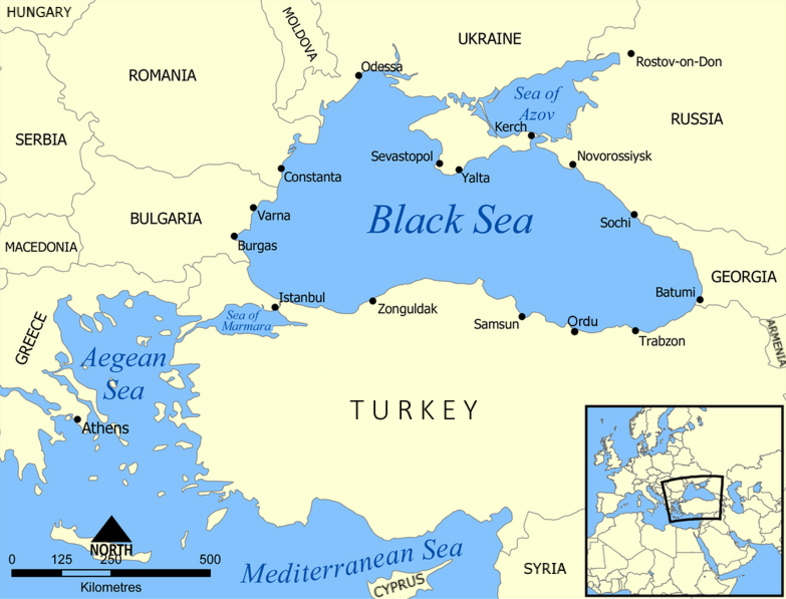
The second move by the West has been a Ukrainian decision to formally require the Russian navy to ask for permission to dock in Sevastopol--a port leased to the Russians until 2017. The move is mostly symbolic, but it shows that the Ukrainians are officially unwilling to facilitate Russian action (particularly given that Georgia rests on the Black Sea), and that the Russian navy will have a great deal of headaches over the next 9 years, unless it builds its own major naval seaport.

Finally, NATO seems to be doing what it can to make very clear its own anti-Russian stances--not to deter Russia (especailly coming from the mouths of the Canadians), but to encourage the Germans not to veto Georgian and Ukranian membership in the future--or so it would seem. Along with NATO's unanimous resolution of support for Georgia, such anti-Russian rhetoric might actually convince the Germans that they simply must go along with Georgian and Ukranian inclusion, and be ready to face the consequences as an alliance.

But regardless of what the West does, the Russians have lots of options in Georgia--from mere bases in Georgian breakaway regions to full annexation of Ossetia and Abkhazia. The Russians may be more passive-aggressive and ask the Georgians to cut down their military (to make it easier for these regions to break away), or just continue killing Georgians in the regions to eliminate any grassroots support for Georgian control. No matter what, Russian refusal to pull out, let humanitarian aid in, or allow international reporters is ominous at best. In this Russo-Western cold war, the Georgians are but an unfortunate pawn that will continue to lose civilian lives, economic prosperity, political stability, and territory, all so the Kremlin might show the West that it is not to be trifled with.