Showing posts with label Georgia. Show all posts

Tuesday, June 30, 2015

Why the US is Sending an Armored Brigade to Eastern Europe

Whether an armored brigade is "big" depends on the size of the pond it swims in.

At about 1100 armored vehicles (Abrams tanks, Bradley fighting vehicles, and some mobile artillery), such a brigade could easily overwhelm the conventional militaries of most small countries.

In the Eastern European theatre, an armored brigade is nothing close to large enough to be a game-changer. Russia's military sports about ten thousand pieces of active heavy armored equipment (tanks, fighting vehicles, and mobile artillery), most of which is dedicated to its western front.

Despite the numerical gap, the US is sending such a brigade to Eastern Europe, spread out from the Baltics all the way down to Romania. What we know is that such a brigade won't be a decisive force if Russia were to invade Sweden, the Baltic countries, Romania, or Poland (all of which it's threatened to do over the past few years). Why the effort, then?

Some analysts suggest it is a "symbolic" gesture for wary allies. I think a fifteen-second gut check suggests this hypothesis is weak: Eastern European countries are skeptical of NATO, terrified of Russia, and are smart enough to see past symbolic gestures. And US leadership is smart enough to see all of this.

I think what's really going on is that these vehicles are there to be a "positive deterrent" of sorts. That is, rather than deterring Russia by having overwhelming strength on the battlefield, this brigade deters Russia by promising that if Russia attacks one of these countries, the US will be dragged into the war: these units are mixed in with local units and have the right to defend such territory from invasion--all these countries are NATO allies. If that happened, US assets would be attacked and destroyed, with all the shock and fury on the domestic front that would come with that.

The United States' leadership would have almost no choice in the matter: they would face massive pressure to deploy more forces (probably first from Germany) in order to repel the Russians from whichever ally was attacked. For Russia the subsequent fight would be long and messy at best. If Russia lost, defeat could bankrupt the country, wreck Putin's reputation, and set the Russian military back years. Not to mention that countries like Ukraine and Sweden would likely hop on the express train to NATO and request heavy garrisoning by the US to prevent further Russian attacks.

So what this brigade does is that it embodies lessons from the errors of 2004 and 2014 that allowed Russia to invade and annex parts of Georgia and Ukraine. Russia's success in those conflicts depended on avoiding getting entangled with NATO and on pitting their forces only against the small domestic forces of their target territories, and on moving quickly enough that it won the status quo in the area. Such a strategy has worked so far, but its effectiveness would quickly end once an American battle tank was destroyed on the field. Russia could not have a quick, clean victory that way, and would no longer be able to use Europe's lethargy to its advantage.

Russia's leadership is also smart, and knows this. The US administration is putting American lives at risk, yes, but with the expectation that Putin will understand the consequences of attacking, and thus be far less likely to attack at all. It is a clever way of containing Russia in a world where Western European allies are afraid to get on Russia's bad side: the US uses its cowboy reputation to its advantage here, and deploys its own deterrent.

The final stroke of brilliance here is that it is a force that is too small to be a credible offensive threat to Russia, so Russia not only won't feel territorially threatened, but its leadership will have shaky ground on which to pretend that it feels threatened (and thus justify an arms race).

In a comparatively cheap, gentle stroke, the US has out-positioned Russia in most of Eastern Europe, putting time back on the West's side for sanctions to squeeze Russia into acquiescence. 

Tuesday, March 10, 2015

The Baltics as Russia's Next Target -- And Their Loss of Confidence in NATO

Thanks to reader Tom G. for the inspiration on this one.

I continue to be convinced that Putin's Russia has its sights on the Baltics as it looks to expand its "sphere of influence" back to Soviet days (The Economist has its own take on this idea). This isn't for completely arbitrary reasons: as we discussed way back in 2011 in the series (probably my favorite from my rapidly-approaching-400-posts) on the Blocanization of Europe, and again in May 2014, Russia is not doing this for arbitrary reasons.

Its natural security, according to the "realist" International Relations school, depends on its ability to keep its industry, natural resources, and population centers secure, and that means land buffers (as well as other defensive measures like tactical nuclear weapons, air defenses, etc) between NATO and its core.

And note that all this stuff is jammed right up on its western border (below is a map of population density in Russia).


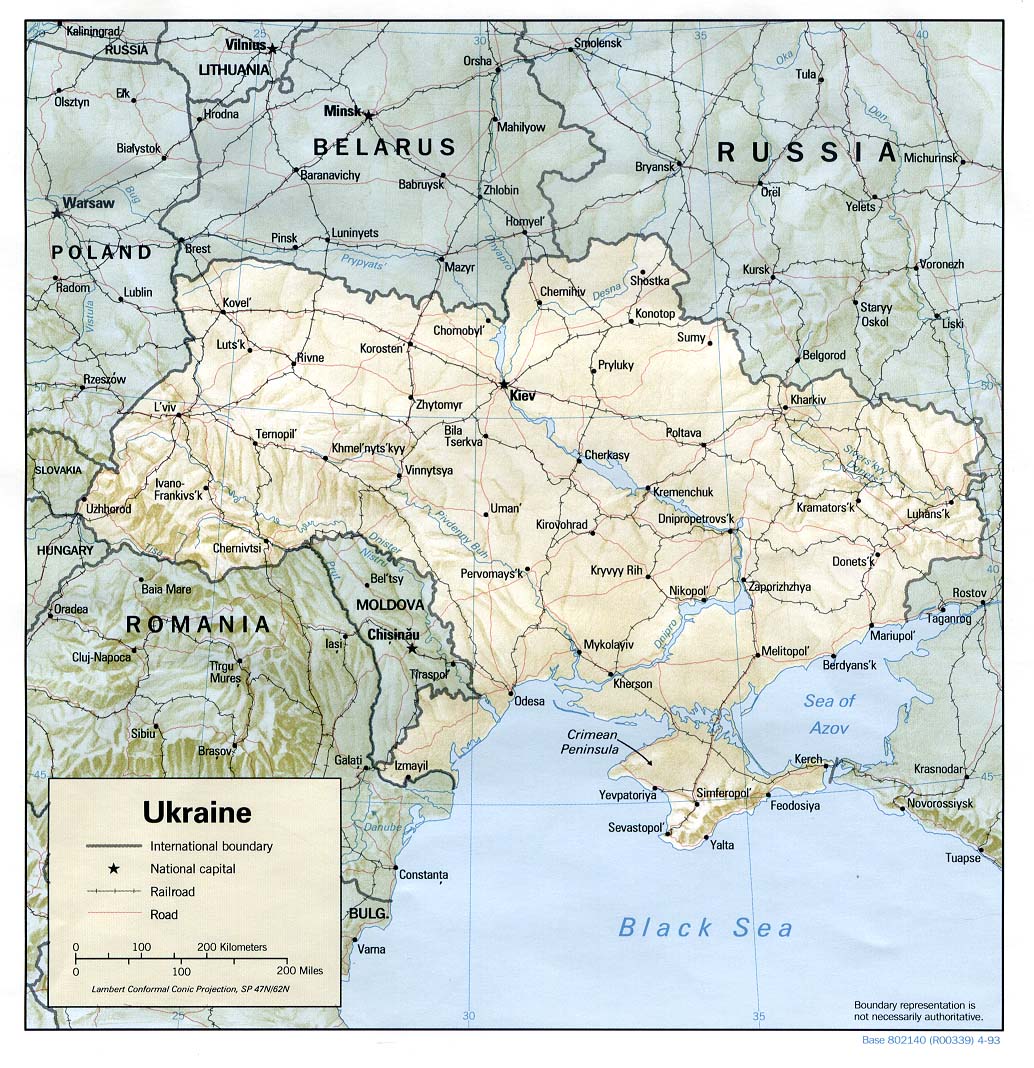
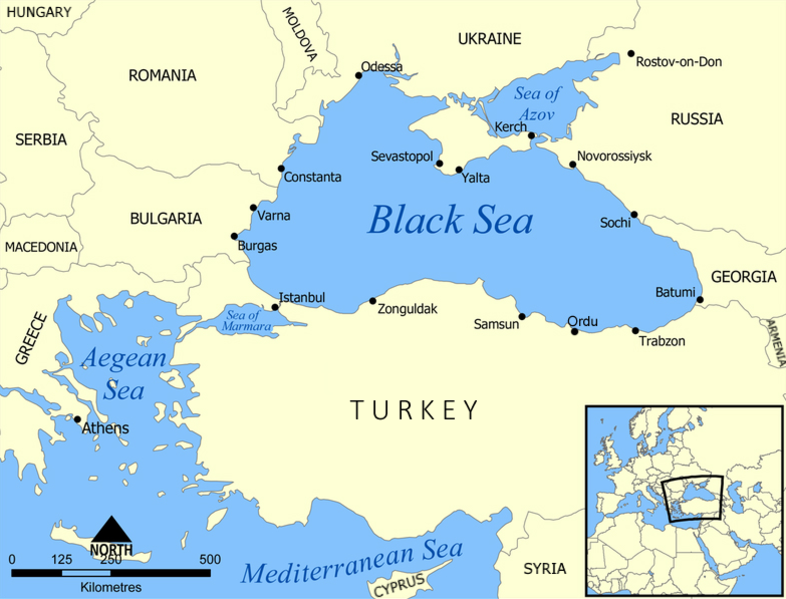
We also discussed why holding Sevastopol was important: to have access to a warm water port that Russia might have lost had Ukraine gone into NATO. Putin made it all-but-clear that this was the motivation for invading Crimea when he said recently that Russia decided to annex the territory when Ukraine ousted President Yakunovych: while the propaganda was about "protecting Russian citizens" (a la the Sudetenland), the reason to focus first on Crimea was about the Sevestapol warm water port, and the risk that the new pro-EU Ukrainian government would wrest it from Russia.

Putin's declaration of a "New Russia" in eastern Ukraine is creepily akin to Hitler's "Lebensraum," particularly because it has the same motivations. Hitler did not want Eastern Europe simply to have more territory: it was about security.

But not all is secure in Russia even if it does settle with Ukraine in the way it wants (and it will, I think). St. Petersburg remains at serious risk from NATO's presence in the Baltics, and pulling the Baltics under Russia's control is arguably even more important than having eastern Ukraine. It's just not on the table yet because Russia is using Ukraine--a non-NATO country--to test NATO's will.

(And we still remember the Georgian invasion and the successful annexation of Abkhazia and South Ossetia, yes?)

But the Baltics are NATO Countries--Could He Really Take Them Over?
Sure. Putin is excellent at messaging, enough so that even today the West is still trying to make the case that Russia has sent troops into Eastern Ukraine (rather than it being so widely believed and obvious that nobody talks about whether it's true anymore). Putin is clever enough to not simply declare war and march in.

Russia has been using "cyber warfare" against Estonia and has stepped up efforts to incite unrest in its 25% Russian population (Latvia also has a 25% Russian population and is similarly worried).

In Ukraine, Russia has used non-uniformed troops (the famous "little green men") in both Crimea and eastern Ukraine, and has focused on arming annexationist rebels to keep a shroud of plausible deniability. Its efforts in both Ukraine and Georgia have been nothing short of brilliant.

But even if it did invade directly: Estonia and Latvia are tiny, and Russia could overwhelm them in hours. It's already frequently conducting military exercises on the border, any of which could turn into an invasion--Israel famously used this tactic in the six-day war. And if it does invade and deploy extensive anti-air defenses, NATO would have to commit to a bloody, protracted campaign to defeat Russia militarily in order to get them to back off. And much like Germany in 1939, Russia has good reason to believe that just won't happen. So after it wraps up Ukraine, it might just go ahead with the Baltics, after the heat has died down and the Americans have become too distracted in the Middle East to mount a credible response.

Hold On: Why Do You Keep Comparing Putin to Hitler?
Putin is obviously not a madman hellbent on committing genocide upon an entire race of people, so don't take it the wrong way.

But Putin is interested in taking over swaths of Europe, and for similar reasons as the Germans. It's worth noting that Germany had gone to war with its neighbors many times before WW2 in its short history as a unified nation, for always the same reasons: security. Putin's "testing the West" behavior is similar to Hitler's in the 1930's, and the propaganda of "protecting ethnic peoples" is similar. The West's response is note quite as weak as in Munich, but Russia is willing to deal with sanctions, and support for Putin remains over 80% even as the economy takes a major hit. His absolutely brilliant propaganda campaign is galvanizing the Russian people for an ongoing war with the West. Sanctions aren't a deterrent, and won't be: pretending they will be is probably naive.

Back to Business: Aren't NATO Countries Obligated to Act?
They're obligated to act, but as the Economist points out, Article V leaves ambiguity in the type of action member states are obligated to take. It doesn't require that NATO countries use military force, which is important. Russia has held off so far invading NATO countries, but it's running out of buffer-states to build without going to NATO countries like the Baltics for that security it craves.

The Baltics and the Visegrad 4 are both taking matters into their own hands as their confidence in NATO wanes. The V4 formed their own battle group, independent of NATO command. The Baltics are stepping up defense spending as Russia flies daily "exercises" near their borders. They're losing confidence in NATO's willingness to defend them. Sadly, the Baltics are not going to be able to resist Russia's invasion, but they may be depending on the V4 to act when NATO doesn't: Joe Biden actually went to Poland to keep Poland from leading the V4 against Russia when it invaded Crimea.

Germany wanted to station troops in the Baltics as a response. This would put NATO lives on the line, meaning that Russian attacks would risk killing NATO military personnel--increasing the impetus to go to war for NATO--essentially a form of deterrent. This was shut down in Brussels.

So What's Going to Happen?

The question, as usual, is ultimately about deterrence: does Russia believe the US and NATO will get alarmed enough to shed blood over Russia's next military move? Ultimately: did Putin see oh-so-much wormlike behavior in Minsk? If so, deterrence has failed.

On another note, the Blogger search feature is actually quite impressive. If you want to do a deeper-dive on any serious topic like Russia, Iraq, Afghanistan, ISIS, etc, I've pretty-enthusiastically tagged everything I've written, so a simple topic search will get you some rich and historical stuff. 

Wednesday, January 27, 2010

Last Decade Series: The Aborted Orange Revolution

Things looked really good in Ukraine in 2004. I mean, really good. They do, at least, if you're America.

Victor Yushchenko won the Presidency of Ukraine after a poisoning attempt on his life and a fraudulent runoff that originally gave his opponent the win, prompting massive protests throughout Ukraine known as the Orange Revolution. The West was so thrilled about it that they practically bragged about having had a hand in influencing the outcome.

The West envisioned the final consolidation of the former Soviet Empire into Western hands. With Ukraine secure, Russia would lose influence over a massive population, critical breadbasket, and (most importantly), Russia's only warm-water port of Sevastopol. After the Orange Revolution, the West eyed adding it to NATO, and making the Black Sea a NATO-controlled body of water. Russia's geopolitical position would have been devastated--it would have been resigned to competing with China, India, and Pakistan for influence over Central Asia.

But poor handling of Ukranian politics both by the US and by Yushchenko himself caused him to lose control over parliament rather quickly. Such a loss of control led, of course, to a decline in effectiveness and a further loss of support within Ukraine. NATO did not strike quickly enough. And, indeed, Russia grossly out-maneuvered the West in its 2008 invasion of Georgia, brilliantly repelling both Georgia and Ukraine's incorporation into the American sphere (Georgia's incorporation would have been similarly crushing to Russia's presence in the Caucasus. Had such mismanagement not occurred, Georgia and Ukraine may well be (unpopularly) part of NATO, much as many Middle Eastern states are US allies despite their own internal politics against it. Russia would be dealt its decisive blow into the future--it would not be an influential global power. It would have spent too long focusing on its own border, population, and food security.

The inability to secure gains from pro-Western governments in Ukraine and Georgia will put the West on the defensive with respect to Russia for years to come. Russia will now look to the Baltics to further its influence and buffer--not out of malice, but simply out of geopolitical security concerns. It will be able to make Iran a continuing problem for the US, and will try to keep the US bogged down in Afghanistan. It will become the primary national challenger to the US in the next decade, rather than either collapsing irrecoverably or becoming a pro-Western liberal market country. The latter is unlikely to happen no matter its strength.

Ultimately, this mismanagement was one of the biggest losses for the US, even if not among its poorer performances. The US is in the enviable position of having lots of room to make mistakes and make a mess in its foreign policy (for example, the US wins by the Middle East being a relatively divided and messy region, rather than a united anti-US force). But the situations in Ukraine and Georgia required a precision and skill that the West was not quite able to provide, and it shall pay for that lack of capability in the medium term.

Monday, December 1, 2008

NATO Expansion Engines Cool

Despite Mr. Bush's hopes for continued efforts to include Ukraine and Georgia into NATO, such an expansion is quite unlikely. It seems the Russian maneuver in Georgia has done exactly what was intended.

The Ukrainian people are now strongly against joining NATO in polls--it seems as if Russia made it clear that messing with them was a bad idea. Even Yushchenko has decided that his NATO hopes are over, and he should warm up to the Russians.

The Europeans are also rather unenthusiastic about rushing the Ukrainians and Georgians into NATO--the French and Germans in particular are still against the notion, and the Brits have lost any excitement they may have had. It looks like the Membership Action Plans are not going to happen in the near future--meaning the Russians are not going to be relegated to nothingness in the next few decades.

And that means that the Russians have won their immediate objective. They're going to be taken seriously. The EU members of NATO are in favor of reopening security ties with Russia--and Medvedev is offering about as peaceful an olive branch as Russia can offer to Obama.

It's possible the Russians will muscle their way back into the fold. Whether that's good for NATO or not is yet to be determined.

Monday, November 24, 2008

Winning The Second Cold War Before It Starts

Oh, the Russians. Becoming more and more terrifying, no? Moscow's domestic and international politics alike are worrying the West, and for good reason.

The Duma (Russian parliament) has backed a 6-year presidential term, almost certainly leading to a 12-year Medvedev presidency--and thus an even greater extension of Putin's power. Apparently, the bill means that Putin will be eligible to run for President again in 2012 or 2018, whenever Medvedev decides he's done... giving Putin yet another 6-12 years afterwards. He'll have ruled longer than any post-revolution leader of Russia.

And Russia's leadership is not ruling with a bunnies-and-kitties fist. Russia's habit of intimidating dissenting reporters (usually by sending the mob) has been ratcheted up by Moscow's declaration that it would close the murder trial of Politkovskaya to the public. The Kremlin is signaling that it would rather appear opaque and shadowy than let whatever terrible truth is afoot here get out. Justice for future murders is unlikely.

Internationally, he presidents of Poland and Georgia had to duck from fire at a South Ossetian checkpoint over the weekend, and the Russians are waving it off as a setup by the Poles. How the Poles might have put agents into South Ossetia to fire on their own president is unclear.

Russia's launching itself towards new superpowerdom, and quickly. It is sending a naval fleet to South America to deal with Brazil, Venezuela, and Cuba--almost certainly to boast that it can steamroll the Monroe doctrine at its pleasure, and to put pro-Russian sentiment into the back yard of the US. It's threatening to set up offensive ballistic missiles against its former satellite countries that won't cow to its will. It's trying to force Finnish paper industries to move to Russia with crippling timber tariffs. The invasion of Georgia was a clear signal to NATO to back off. Russia has threatened to cut off gas supplies to France and Germany if NATO accepts the Ukraine.

With Putin and Medvedev likely in power for approximately forever (in government terms, looking three or four administrations away is such--Could Gerald Ford plan for Bill Clinton's tenure?), they're likely to only turn the heat up as Russia's GNP and military continue to grow. Western governments likely want to (and if they don't, should want to) launch preventative measures to keep Russia from becoming big enough to actually do damage to Western interests. I have some simple (but not easy) suggestions on how to relegate Russia to being a tinpot regional power, able to terrorize only the people of the Central Asian Stans (which we Westerners don't care much about anyway):

1) Show NATO Has Guts.NATO was formed for one reason: to contain Russia. In the 1990s, Russia's internal collapse meant NATO found itself bored and poking around in the civil wars of small Balkan and African countries. In 2001, it came to bat for its largest benefactor, the US. NATO has grown aggressively throughout the 1990's and 2000's. It has shown strength, unity, and cooperation. It should make sure not to splinter, and see what it can to do supports members in most dire need of help: the Czech Republic, Poland, Turkey.

2) Subsume Georgia and the Ukraine.The Russians clearly meant to terrify NATO by smashing Georgia up so thoroughly--they hoped to make Georgia such a liability that NATO would reject it as an ally. But if NATO is going to contain Russia, it should invest in taking the blow now to keep a knife close to Russia's underbelly. But the Ukraine is even more important. The Ukraine is the Russian heartland, and provides Russia with massive supplies of grain. In addition, Sevastopol is Russia's only deep warm water port, which it rents from the Ukraine. Losing its lease would mean a deep retraction of the Russian navy, particularly in the winter. Seasonal power projection is barely better than no power projection, and Russia would lose great influence in the Eastern Mediterranean and elsewhere. If the Ukraine and Georgia enter NATO, Russia's last two European allies will be the paltry Serbia and Belarus--staunch, but ineffectual. Russia will be pushed out of Europe forever. If it goes on to develop Central Asia to give itself a sphere of influence, than all the better.

3) Come to bat for Germany and France. If Ukraine and Georgia are admitted to NATO, then Germany and France are likely to lose access to Russian oil and gas. But luckily, oil and gas are necessarily fungible, unless Russia chooses to hoard that gas and lose all the revenue, rather than sell it... but this is unlikely. Let's assume they sell it to the Chinese, instead. That means the Chinese demand less Middle Eastern hydrocarbon, and the price goes down. The Americans and British can buy up these cheaper Middle Eastern resources, and then re-sell them to the French. Now, will it all be as cheap as normal? Clearly not. But everyone can take some hit in prices to support French and German stands against Russian resource blackmail, and it will have to be temporary if the Russians don't want to lose lots of money over their own inefficiency (currently, they make the most possible money by selling to Europe). It will be temporarily costly to test Russian resolve, but the long-term savings in not having to deal with Russian weight-throwing are immense.

4) Accelerate the Mediterranean Solar Plan. Sarkozy's MedU plan to stick a bunch of thermal solar plants in North Africa to replace oil and gas dependency for power-generation has a few excellent effects for Europe in the long-term. The first is a reduction in carbon dioxide emissions, which will help them sleep at night. The second will be a less volatile source of electricity, which will keep shocks from busting up the economy. The third benefit will be relief from dependence on Russian gas and oil. Imports are fine, unless you're importing from someone who's willing to jump from a cliff just to take you down with him. Putin may be ready to do that. In the long-term, the more the Europeans reduce their dependence on Russian gas and oil, the more irrelevant the Russians will become. France's high-speed construction of nuclear power plants is a great example of these efforts--even if nuclear power is currently more expensive than the gas and oil. The French and German power grids are integrated, and if the Russians do turn the gas off, a combination of solar in North Africa, wind in Germany, and nuclear in France should soon be able to sop up enough of the slack to keep the economy from faltering as the Americans and Brits scramble to deliver the necessary hydrocarbons.

If the Russians lose Ukraine and Georgia, and also (in the long-term) lose their hydrocarbon monopoly in Europe, they will become irrelevant very quickly, unless they actually want to initiate a full-scale war with NATO. But the Russians are smarter than they used to be, and weren't foolish enough to launch such a war in the 20th century, when they owned half of Europe. If NATO claims the Ukraine and Georgia, its conquering of the Russian empire will be complete, and in the long-term, Russia will be relegated to its own icy home.

Thursday, October 16, 2008

The Power of the De Facto

The de facto can be a very powerful force in international politics--when things are a certain way, it is usually the burden of the party that wants to change it to justify that change, even if we all agree that the status quo is a bad idea. For some folks, it's a really bad deal. Others take advantage of it. Today, we'll review some of the interesting current status quo kinks in the world.

1) Abkhazia and South Ossetia. The status quo of South Ossetia and Abkhazia were tenuously against the Russians' favor one year ago--they had peacekeepers in both regions, but they were recognized as Georgian, despite the Georgians not having administrative control. But the Russians performed a masterful swap--their war was a shock, certainly, but one that they (probably) had the political capital to bear, largely due to European forgiveness of the US invasion of Iraq. Russia is insisting on the same forgiveness, particularly given the plausibility of the story that Georgia provoked them by moving (themselves unprovoked) into South Ossetia. The Europeans and Americans were not happy, but had very little to yell about. With weak justification for their anger, the EU and US mostly agreed that they'd been duped, and lost. Now, Russian de facto presence in--and support of--the breakaway states is the new status quo that the EU and US will have to fight to overcome... if they care enough.

2) Kurdistan. It's tough to dispute that the Kurds were left the short end of the stick in the post-WWI division of the Middle East; they were the largest nationality without their own state. After decades of fighting, the Turks, Iraqis, and Iranians--for all their mutual irritation--are working together to keep them suppressed. Nobody in the Middle East wants to give them independence. The fact that they don't have independence creates enough inertia that they simply won't.

3) US Attacks on Pakistan. The power of de facto has allowed the US to slowly creep up the boldness of its attacks in Pakistan--now, they're just lobbing missiles into Waziristan to take out Talibani leadership. While this is certainly the militarily sound strategy, it's risky--it is alienating a weak--but once dedicated--ally in the GWoT. And while the Pakistani leadership will continue to protest--they must, if they are to be re-elected--but ultimately tolerate it. What else can they do?

4) Taiwan. An oldie but a goodie. While the US (and every other darn country in the world) agree that there is One China, not Two Chinas, the international community would not tolerate any force on the part of the Chinese to take Taiwan back. The de facto independence of Taiwan is China's burden to overcome, even though nobody officially supports formal independence. The fact that it is the way it is continues to be compelling, even though no government argues that it's the way things should be.

When something looks odd or wrong in international politics, think whether some odd de facto force is present. It may be quite revealing.

Saturday, September 13, 2008

More Russian Public Relations

Russia is perhaps starting to worry about the backlash of its actions in Georgia--whether the Russians thought them entirely justified or not, they are realising there is little they can do to convince the West of their point of view. Despite the resignation of the hard-line nationalists to trying to create a futile "Eurasian anti-American Alliance," which would include questionable states like Iran, the moderates seem to be taking a more reasonable point of view, and trying to clean up Russia's image. [nb: The "Eurasian Alliance" sounds silly, but there are a few signs: Russia is sending bombers and diplomats to Bolivia, Venezuela, and Cuba, possibly looking for an alliance, as Bolivia cozies with Iran, and both Bolivia and Venezuela expel US ambassadors. The new way to be cool in third-world Socialism is to "stand up" to the United States.]

Anyway, the Russians are at least trying to look like they're playing nice with the West. This might be to prevent an impassioned speech at NATO in December that might give the Ukraine its membership, or to prevent a staunchly anti-Russian John McCain from riding a wave of American anti-Russian sentiment. Either way:

Russian forces are starting to leave "Georgia proper" a few days before their agreed pull-out date, which is a sign by the Kremlin that they're willing to not drag their feet on their agreements.

In addition, Putin has openly predicted that US and Russian relations will improve, which is in part a self-fulfilling prophecy; if a country openly declares that it intends to have a good relationship with another, then it is easier to have such a relationship. It is Putin's way of saying, "don't worry, we're not planning for a Cold War here." Whether he's being honest or not is a whole other story, but it's at least a sign that the Kremlin is sensitive to Western pressure, and not immune to all forms of complaint. This may be a minor comfort to some, but it's better than the alternative.

Thursday, September 11, 2008

Russia's PR Game

The South Ossetians are apparently rather gung-ho about this Russia thing; and for good reason. North Ossetia is in Russia, and many South Ossetians already have Russian passports and speak Russian. They'd love to be reunited with their cultural brethren.

But South Ossetia's President Kokoity jumped the gun on annexation, and said that his country would probably skip independence and go straight for Russian annexation (ala Texas). Now, this is a bit iffy--it would scare the heck out of the West, and convince a lot of skeptics that the Russians instigated the Georgian/Ossetian conflict purely out of a desire to annex Georgian territory.

Putin is smarter than to let Kokoity get away with calling for annexation quite yet (especially when being a puppet satellite with Russian troops is just as good! [ala Poland]). Despite not being a representative for foreign policy in the Russian state, Putin handed Kokoity a speedy verbal slap-down, saying such annexation was not going to happen. It looks like the Russians are now trying to ease the minds of their European brethren--the timing is so quick and the vocabulary so strong that it could have been a planned PR stunt (though this is unlikely).

It also brings light to the question that the Russians were merely being opportunists over the Georgia conflict, rather than conspirators. But their very slow pullout, occupation of breakaway provinces, recognition of independence, and complicity in Ossetian pillaging/killing of Georgians leaves still very little doubt over the opportunism being practiced by the Russians now. But in typical Putin fashion, the PR machine is brilliant.

Sunday, September 7, 2008

The Sovereignty Problem

Sarkozy visited Russia today and "negotiated" Russians out of Georgia (at least, all of Georgia but the breakaway provinces) by mid-October. In addition, the EU and Russia largely agreed that this was somehow America's fault, and they're not quite sure how, but that it makes sense at this point to blame the United States, hug, have some tea, and move on with their lives.

Why the Russians need well over a month to move troops out when it only took them a few hours to hurl them on in is beyond me. The Georgian state didn't collapse and the Georgian army didn't dissolve--I'm sure the Georgians wouldn't mind taking care of it at this point.

But more to the point, we ask: What about sovereignty? Why did Sarkozy walk out with an "okay, fine, mid-October," and even then! only after an agreement to pull out of "non-breakaway" Georgia--Russian troops will remain in Abkhazia and South Ossetia, which the EU recognizes as Georgian territory, to continue the slow (but now easy) process of annexation?

Well, sovereignty has been out the window for a long time. I know you're all thinking this is George Bush's fault, after the invasion of Iraq. But it started long, long before that.

Afghanistan isn't it, either--if a state is assisting a group in its borders to attack another country, it violates that other country's sovereignty first, even if the assailants are not on the official payroll. That one was pretty open-and-shut.

I'm speaking more to operations that we tend to want to look back on with nostalgia: the Humanitarian 90's. US or NATO or UN incursions into places like Ethiopia, Haiti, Bosnia, Kosovo, Rwanda (sortof...), etc, all had slowly eroding effects on sovereignty. They pressed on without asking much the question of whether sovereignty was an issue at all.

There were some arguments for this. The best was that our enlightened western liberal ideas taught us that sovereignty lay in the hands of the people; if a government was slaughtering its own people, then it has abandoned its mantle of "sovereign," and should be taken down on behalf of the people. But what if a democratic majority decides to genocide a small minority? The sovereignty argument falls apart, and we must simply say that the moral good of saving lives overrules sovereignty.

Pre-1960 (convention on genocide), sovereignty was a hard-and-fast rule: you didn't violate it unless your target had done so to you or someone else. But when you think of some moral goods that overrule sovereignty, you can use those moral goods to justify a lot of stuff--or, when the precedent is out, you can think of other moral goods: stopping WMD proliferation, for example, or rooting out drug cartels. Just how morally good does something have to be for sovereignty to be violated? It's largely up to statesmen, and the whim of the Great Powers in the international order. And then, you're just back to balance-of-power politics, with rules custom-tailored to make the Great Powers' lives easier.

This was the justification George Bush used in Iraq--Saddam Hussein voided Iraqi sovereignty by massacring/terrorising his own people, and having a WMD program. Many were quite happy with that argument (assuming it was more justifiably factual, at the time). Russia used this argument, too--the Georgians were indeed bombing South Ossetians, and even people with Russian passports. Was that enough to violate Georgia's sovereignty? In the old days of the Cold War, the the West would have been on an all-out blitz to stop this. Now, we shake our heads and sigh. We know that sovereignty isn't a dead-man switch anymore, because we've spent decades eroding it. And now, it's biting us in the rear.

Sunday, August 31, 2008

Back for More Cold War

The Russians announced today that they had "Spheres of Priveleged Interest" on their peripheries, including (of course) the "independent" nations of South Ossetia and Abkhazia.

This whole mess has got Eastern Europe scared stiff, and is raising tensions in the highly ethnically Russian Ukraine, which is poised to be accepted into NATO this fall. The Baltics, Czechs, Slovaks, Poles, and many Slavs have no interest in returning to the "sphere of influence" that Russia held over them between 1945 and 1989.

In addition, the Georgia offensive is looking more and more like the Prague operation of 1964, just without the offense on the capital. Russia's reassertion of its "sphere of influence" using tanks and civilian terror is a strategy that worked when Russia was strong in 1964, but really: at this point, Europe needs to stand up to them, lest the Russians learn from all of this that they can get away with doing whatever they want.

Tuesday, August 26, 2008

De Facto Annexation Begins

By unilaterally recognizing the independence of South Ossetia and Abhkazia, Russia has taken the obvious (yet still chilling) final step in its game in Georgia--it has successfully broken up the country.

For years, the Russians have provided Russian passports to the de facto independent regions, and kept "peacekeeping" troops there. After the war with Georgia, the Russians promised to pull out of Georgia--even though they are still in South Ossetia and Abkhazia, and allowing the locals to loot Georgian stores and kill Georgian people, the recognition means Russia is not technically violating the cease-fire; it recognizes the governments in these two regions that are asking for Russian troops to be there.

Not that the technicality matters, though. The West is still furious, but impotently so. Russia has now successfully managed to invade Gerogia and almost literally conquer territory for itself. This move means that if NATO admits Georgia into its alliance, the Russians will immediately use the status quo to protest to any idea that these two regions are under the NATO umbrella--and with many troops there, the Russians need only keep the status quo to keep Gerogia broken and weak; a severe and clear punishment for defying Russia's regional wishes.

Thursday, August 14, 2008

How the West is Capitalizing on Russia's Aggression

While shocked and reeling from the blistering Russian attack on Georgia, the West is doing what it can to capitalise on Russia's perceived aggression and use a surge in anti-Russian popular opinion to slip through anti-Russian measures that might otherwise overworry the Europeans.

The first is a response to Russia's use of Ballistic Missiles in its war on Georgia. Russia's signal that it is willing to employ such weaponry upon its neighbors has helped Mr. Bush to convince the Poles that anti-Ballistic Missile weapons emplacements are a necessary defense measure (this on top of radar installed earlier). The US is insisting that this is happening right on schedule, but the talks yesterday were by no means guaranteed to lead to a quick and easy Polish acceptance--especially after 18 months of tough negotiations. Radar installations will be waiting for Czech parliamentary approval soon--but they are likely to pass, given the jolt that Eastern Europe has recently received.

The second move by the West has been a Ukrainian decision to formally require the Russian navy to ask for permission to dock in Sevastopol--a port leased to the Russians until 2017. The move is mostly symbolic, but it shows that the Ukrainians are officially unwilling to facilitate Russian action (particularly given that Georgia rests on the Black Sea), and that the Russian navy will have a great deal of headaches over the next 9 years, unless it builds its own major naval seaport.

Finally, NATO seems to be doing what it can to make very clear its own anti-Russian stances--not to deter Russia (especailly coming from the mouths of the Canadians), but to encourage the Germans not to veto Georgian and Ukranian membership in the future--or so it would seem. Along with NATO's unanimous resolution of support for Georgia, such anti-Russian rhetoric might actually convince the Germans that they simply must go along with Georgian and Ukranian inclusion, and be ready to face the consequences as an alliance.

But regardless of what the West does, the Russians have lots of options in Georgia--from mere bases in Georgian breakaway regions to full annexation of Ossetia and Abkhazia. The Russians may be more passive-aggressive and ask the Georgians to cut down their military (to make it easier for these regions to break away), or just continue killing Georgians in the regions to eliminate any grassroots support for Georgian control. No matter what, Russian refusal to pull out, let humanitarian aid in, or allow international reporters is ominous at best. In this Russo-Western cold war, the Georgians are but an unfortunate pawn that will continue to lose civilian lives, economic prosperity, political stability, and territory, all so the Kremlin might show the West that it is not to be trifled with.

Wednesday, August 13, 2008

The Georgia Game is Not Over

Western papers are bowing down to Putin's ruthless brilliance--he has shown the West that he is only to be pushed so far, that he will strike when he can, and that there is little the West can do about it short of declaring war.

The Americans are flailing a bit to show that they are not helpless, by sending aid via the US military in the Black Sea--surely they are not, in a military capability sense. But there is a willpower problem, and Russia knows it. The US public is not currently prepared to open a Caucasus front to defend Georgia, and Europe never has been. Like all thug powers before it, Russia will continue to do what it can get away with. Luckily for Russia, Putin is absolutley brilliant--much more so than a Hitler or a Khrushchev. Russia is reasserting its will over its periphery, and all that the Americans can do is condemn, all that the French can do is ask nicely, and all the rest of Europe can do is cower helplessly as the Russian bear stands up.

But this smack to the face of the West is not done--Russia has come back for the other cheek. The Russians have occupied Gori and stood by with tanks as South Ossetians looted and burned it into the ground--in defiance of a cease-fire agreement made with the EU and promised publicly by Medvedev. Why do this? Part of it is to punish Georgia, and to force their citizens to see that electing a president with too much hubris will bring them great pain. Part of it is to ensure the loyalty of the Ossetians for years to come. But mostly, it is a terrifying cackle to the West that Russia can do this if it wants to, simply because it wants to. It needs not follow cease-fires, it needs not listen to rebukes or threats, it needs listen to the West only as much as the West will listen to Russia--which, for the past 17 years, has been very little indeed. The West should indeed be shaking now, and unless Sarkozy can rally the EU out of its lethargic quagmire of indecision and white-flag politics, the Russians are going to throw temper tantrums every time they want their way--and they will get it. The US surely can't stand against the Russians with an unpopular Bush in power--McCain stands vehemently against any Russian interest, but he won't be able to do much without either ending the Middle East conflicts or inspiring the EU--the latter of which is highly unlikely, given current US popularity.

In the short-term, Russia may be turning next to the Ukraine. Losing the Ukraine to NATO would make an integral part of historical Russia an untouchable spectre, like a blade deep in its agricultural belly. Russia is making its moves to prevent NATO's final enclosure of Russia, and it couldn't come at a better time: The EU is fractured and disillusioned after the Irish "No" vote, the US executive branch has 3 full months before it can rally behind a desperately-needed new leader, and Western troops are all bogged down in the Middle East--angry words are the best the West can currently muster.

The only hope for checking Russia at this point is for NATO to put the Ukraine and Georgia on the fast-track to membership, and be prepared to deal with the consequences. The biggest problems are the Germans, who are less likely than the French executive to swallow a cut-off of Russian energy resources. But like thug powers before it, Russia will be emboldened by NATO's unwillingness to respond, and Putin will casually return from Beijing to a nervous, young Medvedev smiling, to say: "See? I told you they were worms."

Tuesday, August 12, 2008

The Devil Went Down to Georgia

You all have a pretty good idea what's going on at this point, so I will keep the summary brief:

Georgia has two provinces that have declared independence in the 1990's--South Ossetia and Abkhazia--and Russia jumped to recognize that independence (and probably wants to subsume them if they actually achieve physical indepdenence). A quick fight between Georgia and Russia left Russian "peacekeeping" troops in both breakaway regions, and a great deal of autonomy (Wikipedia considers them "de facto independent," much like Taiwan).

In the meantime, Bush's aggressive expansion of NATO hit a roadblock with the Ukraine and Georgia, because the Russians threatened to cut off French and German gas and oil supplies. Instead, the Ukraine and Georgia were offered promises of membership that were set to become action plans in December. Such an expansion would cut the Russians off from Europe for as long as the West pleased. December 2008 slowly began to creep upon a Russia whose behavior has been increasingly assertive and aggressive. Surely, plans were in the works.

Then things got complicated. Georgia's president Saakashvili has had strong but dwindling support since his 2004 victory with 96% of the vote--in 2008, he won 53% (the second place candidate won onlt 27%). He has had rather contradictory goals of improving relations with Russia, winning back control over South Ossetia and Sbkhazia, and entering NATO. He is one of President Bush's most loyal international allies.

Now: Five days ago. It should be noted that there are no independent foreign media in Georgia at all, so reports can only be taken on face. Five days ago, Georgian troops stormed into South Ossetia, claiming shelling by South Ossetian forces. This would be a claim of an unlikely and suicidal half-attempt at conflict, unless one presupposes that the Russians might have invited the South Ossetians to make such a move.

Afterwards, Georgian troops rolled in, hoping to use the incident (which may not have even happened) to reassert military control over South Ossetia. The region is connected to Russia primarily by a single tunnel, which the Georgians probably considered bombing, but they likely worried about provoking a formal Russian response.

Russian Cossacks, who are recognized as a pseudo-official security force in the Caucases by the Russian government (who often makes dubious agreements with shady characters like mobs and Chechneans to keep order in a vast Federation that it largely cannot centrally control), began flowing into Georgia through that tunnel on busses. They came (of course) from the region of North Ossetia, who shares ethnic and cultural ties with the South Ossetians, and somehow stuck with the Russian Federation during the confused and frantic early 1990's breaking-up of the USSR. The Russians did little to stop them, and we mostly thought that the Russian government was happy to let "volunteers" do its dirty work.

But, of course, Russian citizens started dying. This is due in part to the fact that the Russians have slowly been infiltrating both regions with Russian citizens and "peacekeepers" (no doubt to Russify the regions) that have been hit by shelling and bombing, and also that the poorly-armed Cossacks picked fights with Georgian tanks and airplanes. At this point, Abkhazia started fighting the Georgians as well, in hopes of helping the Ossetians deliver its army a rough defeat that would seal their de facto independence indefinitely. The Georgians struggled, but it looked as if they might even prevail, and reunite their country.

The Russians are probably looking at this problem much like the Americans would view an attack on Taiwan. While the US does not address Taiwan as an independent state, it would not quietly let the Chinese invade--just as the Russians' feathers were quite ruffled by Georgian action in Ossetia. The difference is thus: The Russian army is much, much larger than the Georgian army. And with American forces tied up in the Middle East, Western retaliatory action was unlikely. So the Russians struck, and hard.

Georgia has suffered a rout; it is barely worth speaking of orders of battle or troop numbers, the Georgians just weren't up to the fight. Russian troops have hung around the Caucaus for some time, waiting for an opportunity like this. Russian troops have not only completely occupied both breakaway regions (much to the delight of a majority of their residents), but also pushed into unambiguously Georgian territory, as far south as Gori. Bush made sharp criticisms of the Russians (though did not mention Putin), the UN called for an immediate end to fighting, and Sarkozy quickly flew to Moscow, hoping to use an increasingly legendary diplomatic charm to help Russia weigh its options.

But no threats of action have come out, except faint hints at booting Russia from the G-8 (which Mr. McCain was planning on doing anyway). Much talk abounds of the diplomatic and military weakness of the US because of Iraq, but the US would not have been able to do much besides declare war against the Russians anyway. Right now, Georgia is simply not worth it, and the Russians knew that.

Russia ordered a halt after conquering about half of the country, but is still quite willing to shoot Georgians that resist their occupation, and has made no plans to pull out. They are in negotiations with Sarkozy and the EU at the moment.

Now, this all is very interesting. Some questions arise:
1) Who started it, and why?
2) What will NATO's immediate response be?
3) What is the fate of the Georgian territories?
4) What does this mean for NATO expnasionism?
5) Will Russia's relationship with the West change in the long-term?

I will do what I can with these questions. Other questions about how this will affect US domestic politics and the November election arise, but the intuitive answer is that not much will happen--there is an unambiguously correct side for each candidate to take. I might make a later post about this anyway.

1) It remains unclear who started it, given that both sides have a fair amount of interest in starting it, given a few preconditions. The Georgians would have been happy to exploit or even fabricate Ossetian violence to reclaim the region, but only if they thought the Russians would not get involved. Is there any reason to think so? Putin's presence in Beijing might have made them think the Russians would have been impotent to respond, and they may have predicted a rapid victory. But besides that, nothing about Russian behavior shows obvious weakness or preoccupation. Why would the Georgians would not wait until they were NATO members--or at least had an expected membership date? Trying to assault Ossedia now, without a clear sign of Russian restraint, would seem foolish.

On the other hand, the Russians have a lot to lose from waiting. NATO's expansion is creeping too close for comfort. The last thing the Russians want is a second front from NATO in their south, or (perhaps more importantly) total NATO control of the Black Sea, which would be made possible by Ukranian and Georgian inclusion. If the Russians want to head off such inclusions, they have many options, and have already employed some; they may now be looking to scare the West into leaving their sphere alone--why now? Note that NATO is one of the most terrifying military alliances in the world because of a single clause in the Charter: Article 5, which states that an attack on one country would be considered an attack on all (this was used only once, in the Sept. 11th attacks on the US). But they may also be looking to lock in control over Ossedia and Abkhazia--Russia is currently a fledging-enough regional power that small influence gains are worth it. But it is rather clear from a brief topological survey that inclusion of these territories (or separation of them from Georgia) would give Russia much physical security--Russia's border with Georgia is a solid line of Caucasus mountians. The most likely explanation is that the Russians indeed encouraged a South Ossetian incident such that they might test Georgia's and NATO's resolve to fight. The result has been a great blow to Western influence in the South Caucasus region, and a new sign of US weakness in a "Cold War Lite."

I will note that the possibility remains that there was no subversive action--that a few Ossedians simply got upset at some small incident and started firing artillery, and the whole mess spiralled out of control. But it's unlikely.

2) When I first heard about this five days ago, I said "NATO should really have an emergency session over this," and indeed they have. The meeting didn't do much, but they took a stand that they really needed to: they called for a return to status quo ante (that is, Russian and Georgian troops both out of the region), condemned Russia but not Georgia, and affirmed support for Georgia's attempts to assert its recognized sovereignty over the region. NATO, far from abandoning Georgia for potentially foolish action, has stood by it (making this look perhaps like a World War I spiral scenario, which may be part of the reason the Russians were so quick to accept a cease-fire).

3) The fate of the Georgian territories is highly unclear. Even if the Russians pull back, the Georgian military has probably taken a beating, and is scared stiff. It will not be able to physically assert its authority over its breakaway provinces again. That said, if the Georgians do join NATO, the Russians will know that another stunt like this would risk a declaration of war, which they won't be able to afford if Bush manages to install anti-missile batteries in Eastern Europe. Ossetia and Abkhazia are just not worth that kind of risk. The fate of these regions depends largely on the next few weeks of diplomatic talk, and Russia's concern with trying to save its image. But its reputation is already tarnished and the West is already irritated--pulling back completely and leaving the mess alone would mean accepting diplomatic sunk costs to a foolish move that the Russians may feel they have bought too deeply into.

4) NATO expansionism is unlikely to alter its course, unless it is to speed up. The members of NATO said that their considerations of Georgia as a member have not changed. The Georgian ambassador to NATO chided them slightly by saying that this was a consequence of cowing to Russia's threats in April over a fast-track plan for membership, and Bush has suggested that NATO take a stronger stance on its acceptance of Georgia as a response to the Russian incursion, but it's likely that Georgia is likely to go through the same long and (now excruciating) process that most countries do, as is the Ukraine. Far from frightened by the Russians, NATO might be emboldened by this action into agreeing with more aggressive factions (like Bush and Sarkozy) into seeing Russia as a reemerging threat that needs to be aggressively contained.

5) The West has been using a "hedge" strategy with Russia for some time, Bush included. Warm words, joint military exercizes, and a crucial oil trade have kept relations on both sides friendly. The West has hoped to "socialize" Russia, much like they feel they have begun to "socailize" the Chinese (and, luckily for them, the Olympics are a good sign in this direction). But Russia has grown aggressive in the past few years, and Putin's iron grip over the country (which is quite happy to be so gripped) has not faltered--this trend is not going to reverse on its own. The West is likely to start to become worried enough about the Russians that a Hedge strategy will give way to full-blown containment. Unlike the Chinese, the Russians can be largely contained with trade restrictions and alliance expansion. But after such a quick turnaround from Soviet Union to Soviet Putin, the West may be scratching their heads in exasperation, wondering how they might teach the Russians to just get along.

On another interesting note, I cannot seem to find anything by the Chinese on the incident, who are probably quite grateful that they have the Olympics as an excuse to ignore completely an incident where they might otherwise be asked ot take sides between their greatest economic trading partner and their greatest military partner.

As a closing note: The situation is changing by the hour, some of this may already be out of date. But I will try to keep updated.

Sunday, April 6, 2008

Bush, Putin, and the Face of Eastern Europe to Come

Bush and Putin recently finished a press conference in Sochi (by the Black Sea), which followed a meeting between the two leaders to discuss missile defense and NATO expansion. The meeting and press conference showed an adversarial, yet highly respectful, position between both presidents that will keep growing US-Russian competition both tame and stable.

During the press conference, the two presidents spent most of their talking time complimenting each other (Putin said of "George": "I always appreciated his superior human qualities: honesty, openness and ability to hear a partner."), and looking fondly upon their seven years as statesmen and their management of difficult US-Russian relations.

Why the warm bonds? The US and Russia have much to quarrel over; Russia's human rights problems and natural gas brinksmanship worry US allies in Europe, and US plans for missile defense and ever-increasing NATO expansion threaten to successfully contain Russia into a future of dilapidated regionalism. But as he confessed in his "Person of the Year" interview with Time, Putin has a great deal of respect for Bush's dedication to his own country's strategic interests, willingness to "do what it takes," and tough-yet-respectful negotiating strategy. I suspect the two have become friends in the last seven years.

The next US president and Medvedev may not get along quite so well, unfortunately. Assuming Clinton is beaten by Obama, the Democrat candidate's "soft" foreign policy stances are likely to garner little respect from Putin's protege, and McCain's stance of removing Russia from the G-8 is not only an aggressive anti-Russian stance, but it denies Russia the respect that Bush has continued to give it, despite competition.

Pretty talk aside, Bush and Putin's meeting did little to reconcile the differences the US and Russia face on missile defense for Eastern Europe (the Czech Republic and Poland are already on board with US plans for installations in the next few years), and installations are likely to move forward.

Nonetheless, Putin scored a victory in NATO's most recent meeting in Bucharest, in which France and Germany vetoed invitations to NATO to the former Soviet republics of the Ukraine and Georgia. French and German representatives stressed they did not oppose in principle the admission of these two states, but instead urged that Russian backlash (in particular in the form of natural gas cutoffs) would make the move not worth their while yet. France and Germany may well be looking to increase their energy independence before allowing these two states in.

Unfortunately, both of them are only barely pro-Western, and only for the moment. They both have very large pro-Russian minorities that have protested vehemently becoming Western pawns against Russia. In Ukraine, the colors red and orange continue to stand divided across the Dnipro river, and are unlikely to come to terms soon; Ukraine will remain a battlefield for Western and Russian influence.

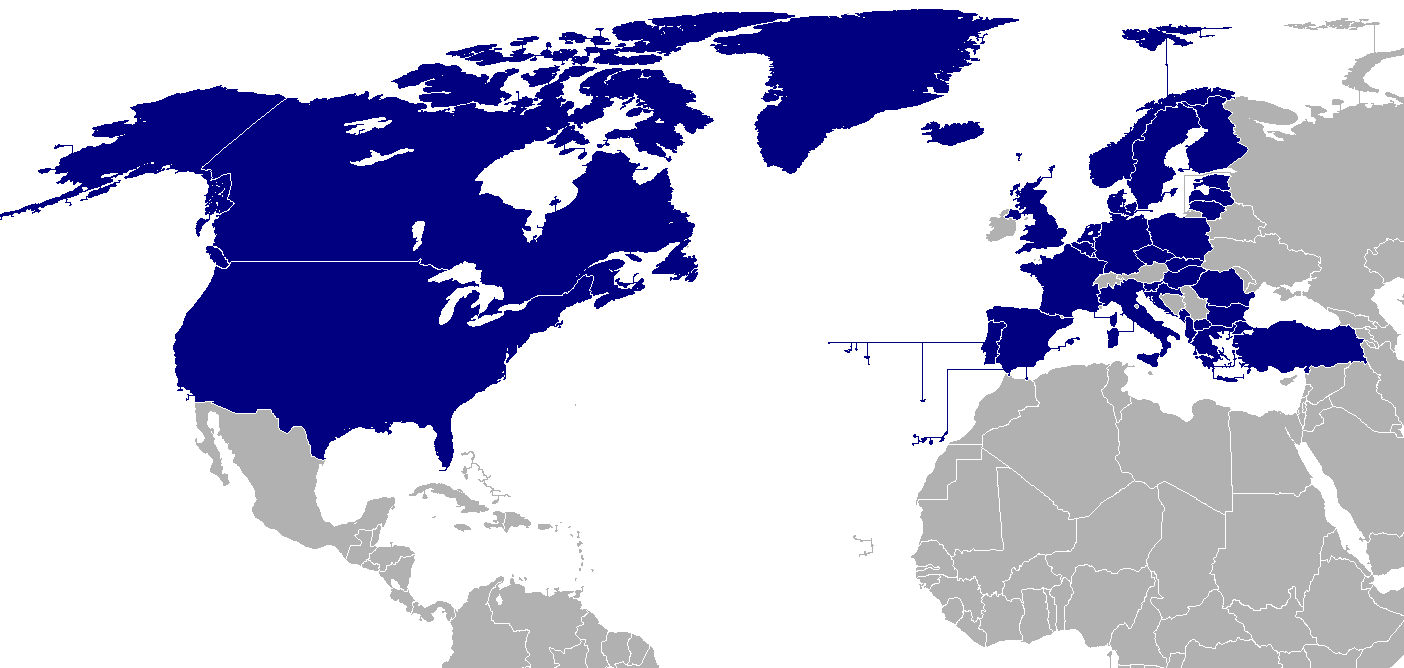
NATO did make progress at its Bucharest meeting, extending invitations to Albania, Croatia, and Macedonia (though Greece managed to put a rather silly condition of semantics into the invitation) for membership; they are all quite likely to accept. With the addition of these three nations, NATO's membership will reach a whopping 29 states, 12 of which were added after the fall of the Soviet Union.

While Russia scored a victory in keeping the Ukraine and Georgia from siding with the West, NATO's membership continues to grow, and its attempts to drive a wedge between NATO member states has failed. NATO continues to symbolize the most powerful and effective military coalition ever created, and member states have continued to respect each other's wishes and reach consensus for decisive action when needed, despite massive size. If a strong and powerful NATO is Russia's primary worry, then worry it should. NATO's drive into the once-volatile Balkans, re-integration of France, and near-victory on inviting Ukraine (Russia's most critical buffer-state) all mean that the organization's power and ambition are only growing.