The DPRK kicked out American experts and IAEA inspectors this week, promising to restart its plutonium reactor after launching a missile into the Pacific. This is not a new pattern for the DPRK--for decades, they have played brinksmanship with the rest of the world, gotten concessions in exchange for promises, only to swiftly turn 180 on those promises and start jerking the rest of the world around for more handouts.
I am typically more in favour of negotiation than many of my realist friends, mostly because I think that most concerns by most countries are relatively reasonable. But modern deterrence usually hinges on threats that are low cost to the deterrer, including sanctions or whatnot; negotiations can happen with such deterrence hanging in the background. But deterrence of DPRK will require serious threat. The DPRK won't be swayed by anything sanctions-related, as it controls the media so thoroughly that the country's people will never be angry at the state. Trying to affect public opinion is useless. Kim must actually be scared into acting straight--both carrots and some seriously heavy sticks must be presented.
Some sanctions actually have a shot at disabling the missile and nuclear programs, which is a laudible goal. China may possibly block such attempts, it's unclear--but the audacity of DPRK's continuance of nuclear refining after hard-won treaties against it will even anger the Chinese, who arguably put the most work into the negotiations in 2006 to get the North Koreans to stop refining plutonium in the first place.
The US should be prepared, at this point, to begin considering stacking South Korea with masses of anti-artillery rockets, and bring an aircraft carrier/missile destroyer to bear on North Korea, threatening to simply destroy known refining and production facilities (some of these are underground, unfortunately). The anti-artillery rockets are vital just in case the North Koreans attempt to respond by bombarding Seoul with artillery, or threaten to--Seoul is close enough to the border for the threat to be entirely real. If the US can create a strong upper-hand in negotiations, the DPRK might be more willing to ply. The Chinese will object, but are unlikely to get too involved at this point in their growth phase. The last thing the Chinese want is to give the Americans a stronger impression that the Chinese are bent on propping up rogue states--their relationship with Iran, Sudan, and North Korea as it is gives China a relatively bad impression in the US.
What cannot happen is new rounds of negotiations similar to those in 2006. Such brinksmanship on the part of North Korea is costly and, frankly, dangerous, and it would be irresponsible to encourage such brinksmanship by rewarding it with new negotiations for handouts. The long-term solution, of course, is to try and leak free information into the DPRK to push for domestic regime change. The brainwashing by the DPRK government is so thorough that any external attempts to depose the regime will be met by massive backlash (and, of course, refugees), so any attempts to oust/depose/bankrupt the DPRK will probably not go over so well (both South Korea and China virulently oppose bankrupting the DPRK, as they would have to deal with millions of starving refugees all at once--not a great plan).
So, Mr. Obama--time to get tough. Let's see if you can do it.
EDIT: I've since been informed that, should a conflict with DPRK arise in which the DPRK was sufficiently more prepared than the US/ROK, ~0.5 Million shells would land in Seoul during the first hour of the conflict--there aren't enough Patriot or Aegis batteries in existence to deal with that. Surprise operations, including airpower, commandos, etc, would be required to disrupt DPRK operations enough that those artillery batteries could not be brought to bear until enough US planes were in their air to blot out the sun.
Showing posts with label Missile Defense. Show all posts
Showing posts with label Missile Defense. Show all posts
Wednesday, April 15, 2009


Tuesday, April 7, 2009
The Impact of the Gates Reshuffle
Secretary of Defense Robert Gates recently announced massive cuts in and reshuffling of US military budget priorities. The move has a whole lot of people in a huff, but exactly those that you'd expect: the defense industry, congress, and big wigs in the military. I'll first contest that absolutely no cut in military spending (save appropriations for wars abroad) will make any of these folks happy, so I have no problems with ignoring their opinions and getting straight to the facts. The industry's objections should be self-evident. Congress has a series of constituencies to answer to, very many of whom have an army base or a plant or something related in their home towns--just go look at the military bases all over the US; Boeing, Lockheed Martin, Northrop Grumman, and General Dynamics (probably the 4 hardest hit, in order) have dozens of US offices/factories each, and dozens of suppliers, who have dozens of suppliers. And the military, like all bureaucratic departments, loves toys, loves money, and doesn't like being targeted. Anyway. That budget.
The biggest-ticket blow is th e F-22 Raptor. It's a beautiful aircraft, but at $138 million each, it's an absurdly expensive item. At $83 million, the uglier F-35 gets the job done at less than 2/3 the price. And while the F-35 isn't quite as "cutting edge" an air superiority fighter as the F-22, it's still better than anything else out there, and certainly better than anything the US is actually going to have to shoot at for the next 20 years, which is about the lifetime if most of these planes. The F-22 / F-35 dualism has been a bit like a VHS / Beta gimpfight, and it has been incredibly inefficient. If the Defense Department wants to pay the defense industry a few million bucks per year to keep the R+D departments coming up with new ideas, that's lovely, but paying top dollar for planes that ar
 e 95% redundant is like paying people to dig holes and fill them in again. And to be fair, Gates is accelerating the F-35 program to fill the replacement quotas for the Air Force--they'll get toys, just not the diversity they want. And yes, there will be fewer jobs, because the production lines will be vastly more efficient.
The next item that's getting whacked is the Boeing YAL-1 anti-missile laser. Another big-ticket project, which actually is relatively cheap compared to the above-listed items, still probably has very little practical application in the near future, and doesn't need much more in the way of development--just production. The point of the aircraft would be to shoot down theatre ballistic missiles (TBMs) or intercontinental ballistic missiles (ICBMs). Sounds lovely. But the YAL-1 would have to be circling over the launch sites of such missiles, with near-complete air superiority already established. The instances in which the US air force is going to be over a country, armed with serious ballistic missiles but no anti-air weapons, are vanishingly few. This did happen in the Gulf War, and it was a serious political issue that almost made the war a disaster--so the impulse to develop this technology is understandable. And it is cool. But it is a waste of money.
Gates is ending production of the C-17 Globemaster, which is a big ol' cargo plane. And a good one. But the primary rationale: We have enough. They have long lifespans, and we already have vastly more airlift capability than the rest of the world combined. This is nice for NATO missions, but Gates may be quietly telling the world: "Stop freeriding off American airpower. Buy your own." Will Europe respond? No idea. But I think it's sensible.
Additionally, the $87 billion ground portion of the Future Combat Systems revamp, which includes light combat vehicles, a logistics/utility vehicle, and a number of unmanned ground vehicles, is getting scaled back, though it's unclear to me by quite how much.
The final big-line item that is going down is ground based anti-ICBM missile defense. We've been testing it for 20 years against dummy missiles, and it has a pretty good track record. But 20 years ago, the Soviets were able to make decoy, evasion, chaff, E/M, and other technologies that could trick the interceptor. Trying to hit a missile with a missile is hard enough, especially in mid-flight/entry, when it is going stupidly quickly. But when it is ducking, weaving, deploying decoys, sending confusing E/M signals, sending chaff, etc, it's nearly impossible. I'm not even sure it would be feasible to build enough of these to make the probabilities work out if someone sent a few dozen nukes at us--we might get a few. But the probabilities start getting so vanishingly small that the tens of billions of dollars that the program still calls for are looking to not be worth it.
Now, the Gates budget is still over $500 billion. Most of the new money is going into anti-insurgent and anti-terror technologies that assist with tactical urban warfare knowledge, communication, troop protection, and other asymmetric-warfare issues (where Future Combat Systems-type stuff is mostly useless in these environments). This is, frankly, pretty smart. Projecting into the next 20 years, the likelihood of a war with China or Russia is absurdly small, where the likelihood of a war against militants/insurgents of some sort is much higher. US spending in the area will also enable the US to help other countries fighting their own counterinsurgencies, like Colombia, Lebanon, Israel, Iraq, Turkey, Pakistan and Afghanistan (which will be going on in some aspect for many years, like it or not), the Philippines, the Democratic Republic of the Congo, Somalia, and a whole host of others. A re-shifting of priorities is late in coming.
Change is hard. It has the potential to be tough on some American workers. But, frankly, it might actually be better to pay the laid-off workers to dig holes and fill them in again. The United States currently still has a mostly-Cold War budget, and needs to focus the wars it's fighting, and the ones it's going to fight in the next 20 years. If it doesn't win them, deter them, prevent them, or otherwise alleviate them, the problems for itself and its allies will be far greater than what the Russians can do in Ukraine, or the Chinese in Taiwan. The US Congress will probably frustrate the effort, but may say, "well, I guess we can just spend more." But the shifting of priorities--hopefully something Gates can concentrate on over the next 8 years--will put the US military in a much better position to be able to deal with the problems it's actually facing.
 you'd expect: the defense industry, congress, and big wigs in the military. I'll first contest that absolutely no cut in military spending (save appropriations for wars abroad) will make any of these folks happy, so I have no problems with ignoring their opinions and getting straight to the facts. The industry's objections should be self-evident. Congress has a series of constituencies to answer to, very many of whom have an army base or a plant or something related in their home towns--just go look at the military bases all over the US; Boeing, Lockheed Martin, Northrop Grumman, and General Dynamics (probably the 4 hardest hit, in order) have dozens of US offices/factories each, and dozens of suppliers, who have dozens of suppliers. And the military, like all bureaucratic departments, loves toys, loves money, and doesn't like being targeted. Anyway. That budget.
The biggest-ticket blow is th
 e F-22 Raptor. It's a beautiful aircraft, but at $138 million each, it's an absurdly expensive item. At $83 million, the uglier F-35 gets the job done at less than 2/3 the price. And while the F-35 isn't quite as "cutting edge" an air superiority fighter as the F-22, it's still better than anything else out there, and certainly better than anything the US is actually going to have to shoot at for the next 20 years, which is about the lifetime if most of these planes. The F-22 / F-35 dualism has been a bit like a VHS / Beta gimpfight, and it has been incredibly inefficient. If the Defense Department wants to pay the defense industry a few million bucks per year to keep the R+D departments coming up with new ideas, that's lovely, but paying top dollar for planes that ar
 e 95% redundant is like paying people to dig holes and fill them in again. And to be fair, Gates is accelerating the F-35 program to fill the replacement quotas for the Air Force--they'll get toys, just not the diversity they want. And yes, there will be fewer jobs, because the production lines will be vastly more efficient.
The next item that's getting whacked is the Boeing YAL-1 anti-missile laser. Another big-ticket project, which actually is relatively cheap compared to the above-listed items, still probably has very little practical application in the near future, and doesn't need much more in the way of development--just production. The
 point of the aircraft would be to shoot down theatre ballistic missiles (TBMs) or intercontinental ballistic missiles (ICBMs). Sounds lovely. But the YAL-1 would have to be circling over the launch sites of such missiles, with near-complete air superiority already established. The instances in which the US air force is going to be over a country, armed with serious ballistic missiles but no anti-air weapons, are vanishingly few. This did happen in the Gulf War, and it was a serious political issue that almost made the war a disaster--so the impulse to develop this technology is understandable. And it is cool. But it is a waste of money.
Gates is ending production of the C-17 Globemaster, which is a big ol' cargo plane. And a good
 one. But the primary rationale: We have enough. They have long lifespans, and we already have vastly more airlift capability than the rest of the world combined. This is nice for NATO missions, but Gates may be quietly telling the world: "Stop freeriding off American airpower. Buy your own." Will Europe respond? No idea. But I think it's sensible.
Additionally, the $87 billion ground portion of the Future Combat Systems revamp, which includes light combat vehicles, a logistics/utility vehicle, and a number of unmanned ground vehicles, is getting scaled back, though it's unclear to me by quite how much.
The final big-line item that is going down is ground based anti-ICBM missile defense. We've been testing it for 20 years against dummy missiles, and it has a pretty good track record. But 20 years ago, the Soviets were able to make decoy, evasion, chaff, E/M, and other technologies that could trick the interceptor. Trying to hit a missile with a missile is hard enough, especially in mid-flight/entry, when it is going stupidly quickly. But when it is ducking, weaving, deploying decoys, sending confusing E/M signals, sending chaff, etc, it's nearly impossible. I'm not even sure it would be feasible to build enough of these to make the probabilities work out if someone sent a few dozen nukes at us--we might get a few. But the probabilities start getting so vanishingly small that the tens of billions of dollars that the program still calls for are looking to not be worth it.
Now, the Gates budget is still over $500 billion. Most of the new money is going into anti-insurgent and anti-terror technologies that assist with tactical urban warfare knowledge, communication, troop protection, and other asymmetric-warfare issues (where Future Combat Systems-type stuff is mostly useless in these environments). This is, frankly, pretty smart. Projecting into the next 20 years, the likelihood of a war with China or Russia is absurdly small, where the likelihood of a war against militants/insurgents of some sort is much higher. US spending in the area will also enable the US to help other countries fighting their own counterinsurgencies, like Colombia, Lebanon, Israel, Iraq, Turkey, Pakistan and Afghanistan (which will be going on in some aspect for many years, like it or not), the Philippines, the Democratic Republic of the Congo, Somalia, and a whole host of others. A re-shifting of priorities is late in coming.
Change is hard. It has the potential to be tough on some American workers. But, frankly, it might actually be better to pay the laid-off workers to dig holes and fill them in again. The United States currently still has a mostly-Cold War budget, and needs to focus the wars it's fighting, and the ones it's going to fight in the next 20 years. If it doesn't win them, deter them, prevent them, or otherwise alleviate them, the problems for itself and its allies will be far greater than what the Russians can do in Ukraine, or the Chinese in Taiwan. The US Congress will probably frustrate the effort, but may say, "well, I guess we can just spend more." But the shifting of priorities--hopefully something Gates can concentrate on over the next 8 years--will put the US military in a much better position to be able to deal with the problems it's actually facing.
Tuesday, March 3, 2009
Obama's Very Quiet Olive Branch to Moscow
Obama recently sent a letter to Moscow. Presidents do this quite often. As far as I know, we even have a red phone to Moscow in the Oval Office today.
But this letter is a special one. And it was supposed to be a very quiet one. Somehow, through journalistic voodoo and heka magic, the New York Times happened across the contents. It looks, for the moment, that Mr. Obama was quietly implying that the US wou ld halt and undo its missile defense placements in Europe in exchange for Russia making sure that Iran would not be able to build ballistic missiles.
The implications are interesting. First, about the leak--it is unclear whether the letter was supposed to be leaked or not. Intentional leaks are common, in order to let the state throw its hands up and say, "we didn't mean to publicize this," and so further questions are not pressured. This may be an intentional leak--it may be an attempt to show Eastern Europe, Russia, et al, that the missile shield is not intended as an anti-Russian initiative (even though it is). This potentially gives Obama some political traction for continuing the project, should it seem necessary.
But it also makes the shield a bargaining chip with Russia. Obama says, "we know you don't like it, but hey, it's for Iran, so if you can just make that problem go away, we won't need it anymore, and we'll stop spending money on it." It means that, if the Russians choose to (and indeed, are able to) deal with the Iranians, then Obama is willing to reprioritize on defense. The likelihood that the Russians are actually going to engage in ballistic missile brinksmanship bargaining is low... but it is not so low for the Iranians. Furthermore, the EU is actually collectively strong enough to stand up to the Russians if they are willing to get their hands dirty, where Israel is less able to do so (even if much more willing).
So Obama knows that today, one needs to sidle up to the Russians, and pressure the Iranians. Obviously, this is tough to do. Medvedev, when questioned about the leak, mostly shrugged at the situation and said that "nothing concrete" was in the letter. He knows that he is in a relatively good relative bargaining position, and is not ready to yet show his hand.
But ultimately, the missile shield in Eastern Europe is something that the Russians are willing to do a lot to get rid of. In a somewhat ironic way, Mr. Obama can thank Mr. Bush for leaving the incomplete missile shield behind so that he, in the nicest way possible, can use it as a lever to pry Moscow.
But this letter is a special one. And it was supposed to be a very quiet one. Somehow, through journalistic voodoo and heka magic, the New York Times happened across the contents. It looks, for the moment, that Mr. Obama was quietly implying that the US wou
 ld halt and undo its missile defense placements in Europe in exchange for Russia making sure that Iran would not be able to build ballistic missiles.
The implications are interesting. First, about the leak--it is unclear whether the letter was supposed to be leaked or not. Intentional leaks are common, in order to let the state throw its hands up and say, "we didn't mean to publicize this," and so further questions are not pressured. This may be an intentional leak--it may be an attempt to show Eastern Europe, Russia, et al, that the missile shield is not intended as an anti-Russian initiative (even though it is). This potentially gives Obama some political traction for continuing the project, should it seem necessary.
But it also makes the shield a bargaining chip with Russia. Obama says, "we know you don't like
 it, but hey, it's for Iran, so if you can just make that problem go away, we won't need it anymore, and we'll stop spending money on it." It means that, if the Russians choose to (and indeed, are able to) deal with the Iranians, then Obama is willing to reprioritize on defense. The likelihood that the Russians are actually going to engage in ballistic missile brinksmanship bargaining is low... but it is not so low for the Iranians. Furthermore, the EU is actually collectively strong enough to stand up to the Russians if they are willing to get their hands dirty, where Israel is less able to do so (even if much more willing).
So Obama knows that today, one needs to sidle up to the Russians, and pressure the Iranians. Obviously, this is tough to do. Medvedev, when questioned about the leak, mostly shrugged at the situation and said that "nothing concrete" was in the letter. He knows that he is in a relatively good relative bargaining position, and is not ready to yet show his hand.

But ultimately, the missile shield in Eastern Europe is something that the Russians are willing to do a lot to get rid of. In a somewhat ironic way, Mr. Obama can thank Mr. Bush for leaving the incomplete missile shield behind so that he, in the nicest way possible, can use it as a lever to pry Moscow.
Saturday, November 15, 2008
Sarkozy Comes to Obama's Rescue
Nicholas Sarkozy, Diplomatic Rock Star, has made an appearance to reduce Mr. Obama's list of foreign policy challenges by at least one--to great effect.
Hours after McCain conceded the American Presidential election to Obama, Russian President Medvedev announced that Russia, in response to US anti-missile shields in Poland , would be building offensive missile capabilities right outside of Poland.
Allow me to first digress into how silly this is as a foreign policy scheme. "If you install anti-missile technology in Poland, we will install offensive missiles next to Poland!" seems unnecessarily bellicose. Of course Russia can overwhelm almost any missile shield with sheer volume--which means it's rather unlikely the missile shield was meant to defend against Russia, rather than Iran. But anyway.
Sarkozy led an EU-Russia meeting that caused the Russians to agree to back off of the claims--giving Obama some much-needed pressure relief. The Russians are asking Mr. Obama to attend an EU-Russia security meeting in the summer, but it may be a largely face-saving measure on their part--the longer that these missile shields are the norm, the tougher it will be for the Russians to overturn their existence (even though they are not yet installed).
Sarkozy's meeting and convincing has helped Obama avoid an early bout of brinksmanship, in which he would have to act in a way that might either be perceived as aggressive on one hand or weak on the other. This double-bind was probably the intent of Mr. Medvedev, who would benefit from either. Mr. Sarkozy has bought Mr. Obama some much-needed time to make a consistent foreign policy materialize before he faces any serious great power challenges. The Americans owe the French some thanks on this one.
Thursday, August 14, 2008
How the West is Capitalizing on Russia's Aggression
While shocked and reeling from the blistering Russian attack on Georgia, the West is doing what it can to capitalise on Russia's perceived aggression and use a surge in anti-Russian popular opinion to slip through anti-Russian measures that might otherwise overworry the Europeans.
The first is a response to Russia's use of Ballistic Missiles in its war on Georgia. Russia's signal that it is willing to employ such weaponry upon its neighbors has helped Mr. Bush to convince the Poles that anti-Ballistic Missile weapons emplacements are a necessary defense measure (this on top of radar installed earlier). The US is insisting that this is happening right on schedule, but the talks yesterday were by no means guaranteed to lead to a quick and easy Polish acceptance--especially after 18 months of tough negotiations. Radar installations will be waiting for Czech parliamentary approval soon--but they are likely to pass, given the jolt that Eastern Europe has recently received.
The second move by the West has been a Ukrainian decision to formally require the Russian navy to ask for permission to dock in Sevastopol--a port leased to the Russians until 2017. The move is mostly symbolic, but it shows that the Ukrainians are officially unwilling to facilitate Russian action (particularly given that Georgia rests on the Black Sea), and that the Russian navy will have a great deal of headaches over the next 9 years, unless it builds its own major naval seaport.
Finally, NATO seems to be doing what it can to make very clear its own anti-Russian stances--not to deter Russia (especailly coming from the mouths of the Canadians), but to encourage the Germans not to veto Georgian and Ukranian membership in the future--or so it would seem. Along with NATO's unanimous resolution of support for Georgia, such anti-Russian rhetoric might actually convince the Germans that they simply must go along with Georgian and Ukranian inclusion, and be ready to face the consequences as an alliance.
But regardless of what the West does, the Russians have lots of options in Georgia--from mere bases in Georgian breakaway regions to full annexation of Ossetia and Abkhazia. The Russians may be more passive-aggressive and ask the Georgians to cut down their military (to make it easier for these regions to break away), or just continue killing Georgians in the regions to eliminate any grassroots support for Georgian control. No matter what, Russian refusal to pull out, let humanitarian aid in, or allow international reporters is ominous at best. In this Russo-Western cold war, the Georgians are but an unfortunate pawn that will continue to lose civilian lives, economic prosperity, political stability, and territory, all so the Kremlin might show the West that it is not to be trifled with.
The first is a response to Russia's
 use of Ballistic Missiles in its war on Georgia. Russia's signal that it is willing to employ such weaponry upon its neighbors has helped Mr. Bush to convince the Poles that anti-Ballistic Missile weapons emplacements are a necessary defense measure (this on top of radar installed earlier). The US is insisting that this is happening right on schedule, but the talks yesterday were by no means guaranteed to lead to a quick and easy Polish acceptance--especially after 18 months of tough negotiations. Radar installations will be waiting for Czech parliamentary approval soon--but they are likely to pass, given the jolt that Eastern Europe has recently received.
The second move by the West has been a Ukrainian decision to formally require the Russian navy to ask for permission to dock in Sevastopol--a port leased
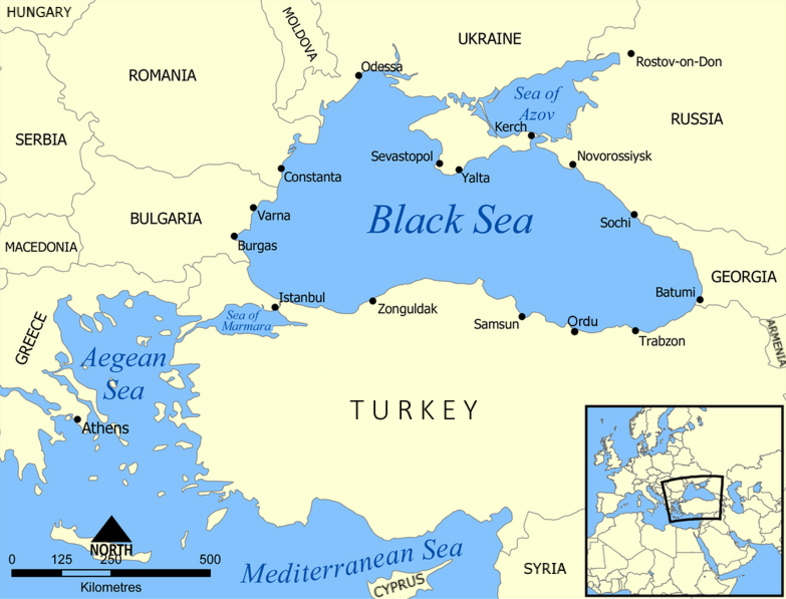 to the Russians until 2017. The move is mostly symbolic, but it shows that the Ukrainians are officially unwilling to facilitate Russian action (particularly given that Georgia rests on the Black Sea), and that the Russian navy will have a great deal of headaches over the next 9 years, unless it builds its own major naval seaport.
Finally, NATO seems to be doing what it can to make very clear its own anti-Russian stances--not to deter Russia (especailly coming from the mouths of the Canadians), but to encourage the Germans not to veto Georgian and Ukranian membership in the future--or so it would seem. Along with NATO's unanimous resolution of support for Georgia, such anti-Russian rhetoric might actually convince the Germans that they simply must go along with Georgian and Ukranian inclusion, and be ready to face the consequences as an alliance.
But regardless of what the West does, the Russians have lots of options in Georgia--from mere bases in Georgian breakaway regions to full annexation of Ossetia and Abkhazia. The Russians may be more passive-aggressive and ask the Georgians to cut down their military (to make it easier for these regions to break away), or just continue killing Georgians in the regions to eliminate any grassroots support for Georgian control. No matter what, Russian refusal to pull out, let humanitarian aid in, or allow international reporters is ominous at best. In this Russo-Western cold war, the Georgians are but an unfortunate pawn that will continue to lose civilian lives, economic prosperity, political stability, and territory, all so the Kremlin might show the West that it is not to be trifled with.
Sunday, April 6, 2008
Bush, Putin, and the Face of Eastern Europe to Come
Bush and Putin recently finished a press conference in Sochi (by the Black Sea), which followed a meeting between the two leaders to discuss missile defense and NATO expansion. The meeting and press conference showed an adversarial, yet highly respectful, position between both presidents that will keep growing US-Russian competition both tame and stable.
During the press conference, the two presidents spent most of their talking time complimenting each other (Putin said of "George": "I always appreciated his superior human qualities: honesty, openness and ability to hear a partner."), and looking fondly upon their seven years as statesmen and their management of difficult US-Russian relations.
Why the warm bonds? The US and Russia have much to quarrel over; Russia's human rights problems and natural gas brinksmanship worry US allies in Europe, and US plans for missile defense and ever-increasing NATO expansion threaten to successfully contain Russia into a future of dilapidated regionalism. But as he confessed in his "Person of the Year" interview with Time, Putin has a great deal of respect for Bush's dedication to his own country's strategic interests, willingness to "do what it takes," and tough-yet-respectful negotiating strategy. I suspect the two have become friends in the last seven years.
The next US president and Medvedev may not get along quite so well, unfortunately. Assuming Clinton is beaten by Obama, the Democrat candidate's "soft" foreign policy stances are likely to garner little respect from Putin's protege, and McCain's stance of removing Russia from the G-8 is not only an aggressive anti-Russian stance, but it denies Russia the respect that Bush has continued to give it, despite competition.
Pretty talk aside, Bush and Putin's meeting did little to reconcile the differences the US and Russia face on missile defense for Eastern Europe (the Czech Republic and Poland are already on board with US plans for installations in the next few years), and installations are likely to move forward.
Nonetheless, Putin scored a victory in NATO's most recent meeting in Bucharest, in which France and Germany vetoed invitations to NATO to the former Soviet republics of the Ukraine and Georgia. French and German representatives stressed they did not oppose in principle the admission of these two states, but instead urged that Russian backlash (in particular in the form of natural gas cutoffs) would make the move not worth their while yet. France and Germany may well be looking to increase their energy independence before allowing these two states in.
Unfortunately, both of them are only barely pro-Western, and only for the moment. They both have very large pro-Russian minorities that have protested vehemently becoming Western pawns against Russia. In Ukraine, the colors red and orange continue to stand divided across the Dnipro river, and are unlikely to come to terms soon; Ukraine will remain a battlefield for Western and Russian influence.
NATO did make progress at its Bucharest meeting, extending invitations to Albania, Croatia, and Macedonia (though Greece managed to put a rather silly condition of semantics into the invitation) for membership; they are all quite likely to accept. With the addition of these three nations, NATO's membership will reach a whopping 29 states, 12 of which were added after the fall of the Soviet Union.
While Russia scored a victory in keeping the Ukraine and Georgia from siding with the West, NATO's membership continues to grow, and its attempts to drive a wedge between NATO member states has failed. NATO continues to symbolize the most powerful and effective military coalition ever created, and member states have continued to respect each other's wishes and reach consensus for decisive action when needed, despite massive size. If a strong and powerful NATO is Russia's primary worry, then worry it should. NATO's drive into the once-volatile Balkans, re-integration of France, and near-victory on inviting Ukraine (Russia's most critical buffer-state) all mean that the organization's power and ambition are only growing.
During the press conference, the two presidents spent most of their talking time complimenting each other (Putin said of "George": "I always appreciated his superior human qualities: honesty, openness and ability to hear a partner."), and looking fondly upon their seven years as statesmen and their management of difficult US-Russian relations.
Why the warm bonds? The US and Russia have much to quarrel over; Russia's human rights problems and natural gas brinksmanship worry US allies in Europe, and US plans for missile defense and ever-increasing NATO expansion threaten to successfully contain Russia into a future of dilapidated regionalism. But as he confessed in his "Person of the Year" interview with Time, Putin has a great deal of respect for Bush's dedication to his own country's strategic interests, willingness to "do what it takes," and tough-yet-respectful negotiating strategy. I suspect the two have become friends in the last seven years.
The next US president and Medvedev may not get along quite so well, unfortunately. Assuming Clinton is beaten by Obama, the Democrat candidate's "soft" foreign policy stances are likely to garner little respect from Putin's protege, and McCain's stance of removing Russia from the G-8 is not only an aggressive anti-Russian stance, but it denies Russia the respect that Bush has continued to give it, despite competition.
Pretty talk aside, Bush and Putin's meeting did little to reconcile the differences the US and Russia face on missile defense for Eastern Europe (the Czech Republic and Poland are already on board with US plans for installations in the next few years), and installations are likely to move forward.
Nonetheless, Putin scored a victory in NATO's most recent meeting in Bucharest, in which France and Germany vetoed invitations to NATO to the former Soviet republics of the Ukraine and Georgia. French and German representatives stressed they did not oppose in principle the admission of these two states, but instead urged that Russian backlash (in particular in the form of natural gas cutoffs) would make the move not worth their while yet. France and Germany may well be looking to increase their energy independence before allowing these two states in.

Unfortunately, both of them are only barely pro-Western, and only for the moment. They both have very large pro-Russian minorities that have protested vehemently becoming Western pawns against Russia. In Ukraine, the colors red and orange continue to stand divided across the Dnipro river, and are unlikely to come to terms soon; Ukraine will remain a battlefield for Western and Russian influence.
NATO did make progress at its Bucharest meeting, extending invitations to Albania, Croatia, and Macedonia (though Greece managed to put a rather silly condition of semantics into the invitation) for membership; they are all quite likely to accept. With the addition of these three nations, NATO's membership will reach a whopping 29 states, 12 of which were added after the fall of the Soviet Union.
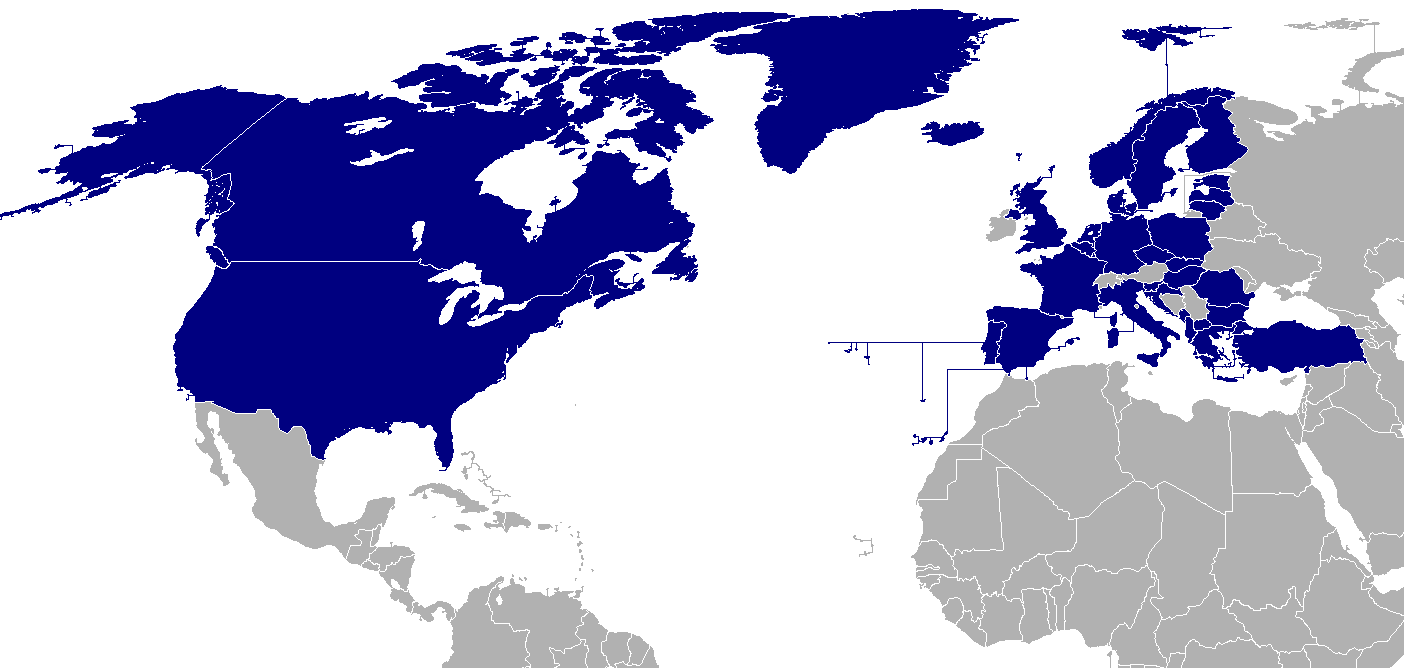
While Russia scored a victory in keeping the Ukraine and Georgia from siding with the West, NATO's membership continues to grow, and its attempts to drive a wedge between NATO member states has failed. NATO continues to symbolize the most powerful and effective military coalition ever created, and member states have continued to respect each other's wishes and reach consensus for decisive action when needed, despite massive size. If a strong and powerful NATO is Russia's primary worry, then worry it should. NATO's drive into the once-volatile Balkans, re-integration of France, and near-victory on inviting Ukraine (Russia's most critical buffer-state) all mean that the organization's power and ambition are only growing.
Subscribe to:
Posts (Atom)