Apologies for the lack of posts. It's been a busy last few days for us here at Fogg of War (unrelated to the blog though, unfortunately). Hopefully things will pick up again by the end of the week!
Also, we're hoping to implement some juicy new features for the site. I'm thinking that it is time for some upgrades. Therefore: do you, dear reader, have any suggestions? Don't like something? Would you like to see posts on a specific topic? Hate everything and everyone at the FoW? Let us know. Feedback is always welcome, post a comment and let us know!
Hope you're all having a great week.
Tuesday, January 27, 2009


Friday, January 23, 2009
Obama's Orders in Pakistan Vindicate Bush
 There has been much speculation in the past few years over seemingly foolish strategy in Pakistan against the Taliban by the Bush Regime. Alas, I have been a rather tough critic myself of a strategy that seemed at its core designed to irritate our alleged allies in the war on the Taliban.
 US missiles flung into Pakistani territory do indeed kill Talibani soldiers, but it is highly unclear just how much of a battlefield tactical effect they might have. It seemed rather obvious to we political scientists that it was a long-term strategic blunder. Ultimately, cooperation by the Pakistanis would have been much more helpful (for, indeed, ground assaults by local troops supported by US Intelligence, airpower, and special forces was just how we drove the Taliban out of Afghanistan).
But Obama's decision to so quickly continue with the missile strikes is a bit of a shock to at least myself. This new President is one that promised a completely different approach--in particular, one that was much more friendly to our allies, and even to those that don't like us (like Iran). Obama's order of a missile strike in Pakistan that killed about 20 (hopefully Taliban) seems to be a direct contradiction of that.
This contradiction can be resolved one of a few ways, some of which are more plausible than others:
1) Obama's foreign policy will be just like Bush's, for all the bad reasons we believed Bush's was bad.
Unlikely. Even Obama can't get away with calling for change and then doing the exact same thing for four straight years. Additionally, the closing of Guantanamo (despite it truly making lives in the US Justice Department painful) shows a strong commitment to national image abroad.
2) Firing missiles into Pakistan is actually so overwhelmingly important for the battlefield that we are willing to pay the price diplomatically.
Possible, though it doesn't really seem to have kept the Taliban in check so far. Might be keeping them worried/hidden/suppressed, which would in particular be helpful if there were ground forces converging, which brings me to...
3) All of this is secretly coordinated with a somewhat-cooperative (yet still questionably competent) Pakistani Army.
Given both that airstrikes are not terribly effective in the absence of infantry, and that the President was able to decisively choose to attack after only two days in office, he likely has the cooperation from relatively authoritative persons in Pakistan, probably in the army. I will note, as well, the reluctance of the Pakistani government to make much of a fuss, even if they cannot openly admit cooperation.
If said cooperation is occurring, then the Pakistanis are likely planning a relatively major crackdown in the region. Why it didn't happen during the Bush regime is a bit of a wildcard in this interpretation, to be honest, but not one without some room for interpretation. The Pakistanis certainly could not afford to show any signs of working with Mr. Bush, but the government may be waiting to see how the wind blows in its country for Mr. Obama. Obama is bringing serious non-military aid to Pakistan soon, and it may make the environment ripe enough for open coordination with the Americans. For the meantime, Mr. Obama has free reign to soften the Talibani leadership a bit. And so he will.
Thursday, January 22, 2009
Ever Wanted to Go to Cuba?
I know I do. And some time in the next 8 years, it might happen.
The US has had a long (and somewhat inexplicable) embargo of doing anything with Cuba, including talking to their leadership, because they're Communists. I should note that we have a free trade agreement with one Communist country (Vietnam) and we at least have a relatively healthy relationship with another big one (China), but for some reason, we just can't seem to get past the fact that we don't like Castro much.

Don't You Want to Be Here?
Obama's new take on diplomacy is likely to mean a more open mind towards states we're currently not talking to--and Mr. Castro has expressed approval for Mr. Obama already. Some people have argued to me that we are being "soft" on Communism if we open up to Cuba, but this elicits a few responses. First, we are not punishing the Cubans much by not having diplomatic relations with them. The trade embargo hurts, but it sure hasn't convinced them yet to decide on Capitalism, and it's unlikely to do so in the future--therefore, it's mostly wasted effort. Second, we really shouldn't care that much if they call themselves Communists. No, they don't have elections, but (again) nor does China. Nixon and Kissinger recognized and normalized with China because they were able to face reality, not because our strategy of recognizing Chiang had suddenly worked. As it turned out then (and is even more true now), such a coming-to-grips with reality did not hurt the American image, and did not falter our deterrent reputation, but instead enhanced our ability to deal with the Communists and take advantage of splits in their camp.
Cuba isn't doing anything to actively hurt our country. Now, Mr. Obama has an opportunity to embrace the Cubans into the American sphere as friends, rather than let them fall to the resurgent Russians (remember how well that worked the first time?). Opening trade with Cuba and flooding them with American dollars will certainly be an incentive that the Russians cannot provide. And heck, I'd really love to visit some of those beaches and smoke some of those cigars.
So, Mr. President, if you are reading this blog, I ask you to do two things. First, leave a comment, so I can brag. Then second, lift the embargo on Cuba and open up diplomatic relations. It's really a good idea.
The US has had a long (and somewhat inexplicable) embargo of doing anything with Cuba, including talking to their leadership, because they're Communists. I should note that we have a free trade agreement with one Communist country (Vietnam) and we at least have a relatively healthy relationship with another big one (China), but for some reason, we just can't seem to get past the fact that we don't like Castro much.

Obama's new take on diplomacy is likely to mean a more open mind towards states we're currently not talking to--and Mr. Castro has expressed approval for Mr. Obama already. Some people have argued to me that we are being "soft" on Communism if we open up to Cuba, but this elicits a few responses. First, we are not punishing the Cubans much by not having diplomatic relations with them. The trade embargo hurts, but it sure hasn't convinced them yet to decide on Capitalism, and it's unlikely to do so in the future--therefore, it's mostly wasted effort. Second, we really shouldn't care that much if they call themselves Communists. No, they don't have elections, but (again) nor does China. Nixon and Kissinger recognized and normalized with China because they were able to face reality, not because our strategy of recognizing Chiang had suddenly worked. As it turned out then (and is even more true now), such a coming-to-grips with reality did not hurt the American image, and did not falter our deterrent reputation, but instead enhanced our ability to deal with the Communists and take advantage of splits in their camp.
Cuba isn't doing anything to actively hurt our country. Now, Mr. Obama has an opportunity to embrace the Cubans into the American sphere as friends, rather than let them fall to the resurgent Russians (remember how well that worked the first time?). Opening trade with Cuba and flooding them with American dollars will certainly be an incentive that the Russians cannot provide. And heck, I'd really love to visit some of those beaches and smoke some of those cigars.
So, Mr. President, if you are reading this blog, I ask you to do two things. First, leave a comment, so I can brag. Then second, lift the embargo on Cuba and open up diplomatic relations. It's really a good idea.
Monday, January 19, 2009
Israeli Timing Holds True
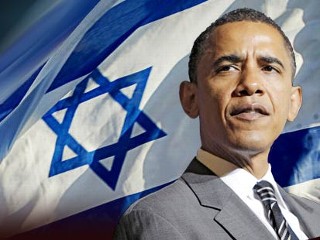 While Mr. Obama was busy moving his family and belongings to Pennsylvania Avenue, Israel abruptly and unilaterally declared a ceasefire in Gaza. The Gazans (undeniably more than simply Hamas), a few hours later, declared one as well. The ceasefire is holding, somewhat surprisingly. Hamas has decided that they don't want to risk another invasion (yet), and no rockets are flying. Even a day without rockets is a huge symbolic victory for Israel.
Israel's unilateral ceasefire makes two points. The first is that the Israelis do not want a lingering war when Mr. Obama takes office. Such a decision is strategically calculated to prevent Mr. Obama from having to deal with an Israeli war (under the pressure of his allies to stop the Israelis) on day one; certainly, Israel wants to be as friendly with the new American president as possible. The second point is that the Israelis do not want to be bound by the terms of an internationally-brokered peace deal: they want to be able to move into Gaza unbound if the rocket fire continues.
But for now, signs point to Hamas being beaten up enough that it has no intentions of provoking the Israelis yet. It is likely waiting to see if it can rebuild and rearm itself over the next few years of quiet to be ready to weather another Israeli storm.
Sunday, January 18, 2009
Calculated Madness

The New York Times has a fine article about the "calculated madness" of the Israeli attack, and its analogy in the Hamas circle. But I'm not going to re-hash that.
I intend to consider the validity of Israel's conclusions on its war. Israel took down a lot of Hamas infrastructure--and because Hamas is so ubiquitous in Gaza (it is pretty much everything), Israel took down many houses, schools, Mosques, etc. As far as I can tell, nothing hit wasn't either A) a legitimate Hamas target, or B) a complete mistake, but in war, intent is a very small part of the story.
Israel believes that it has taught them a lesson, as the Chinese are fond of saying in their wars. It strolled in, delivered a beating, and left. It wasn't going to destroy all of the rocket sites. It wasn't going to take down Hamas, and alas, it
 certainly didn't. This war was meant to show Hamas and its supporters that throwing rockets at Israel wasn't worth the risk of massive retaliation. Did that work? Indeed, can that work?
Israel's hope is that the sup;porters of Hamas, while angry at Israel, will question the wisdom of voting for Hamas. This is somewhat likely, but they may also be purple-blooded. After the Sept. 11 attacks in the US, Americans did not question their foreign policy, except perhaps in concluding that they were being too shy, too meek, too peaceful, and too generous (in conflict with pretty much the rest of the world). While the analogy between the 9/11 attacks and the Israeli war is pretty weak, it makes a strong point: can beating on people make them more calm and peaceful? The Blitz of London, the 9/11 attacks, the bombings of North Korea, the Rape of Nanking, they all say otherwise. But they were all primarily anti-civilian attacks. Can Israel make a clearer message by having almost exclusively attacked Hamas-related targets?
Perhaps. Israel has to make two messages clear: 1) Hamas got Gaza into this mess by refusing to stop launching rockets, and 2) that the Israelis were genuinely trying to avoid civilian casualties. The second will not make Gazans less angry at the Israelis for their friends and family dying from shell fire, but it will allow point #1 to have more salience. And that is the important part--if Gazans can say, "Hamas' irresponsibility is why the Israelis attacked" (whether or not it was deserved, etc), then they will back down.
A good example of this is Europe. Russia has recently been, for lack of a better term, insufferable and hyperaggressive. They have gone after Ukraine (with gas) and Georgia (with tanks) for minor provocations. But even though the Russian response was far out of line (and resembling that of a child's temper tantrum), the European Union has questioned the wisdom of continuing to agitate the Russians--particularly, it has questioned a continued policy of trying to subsume Georgia and Ukraine into NATO. Indeed, while Russia's actions have been largely unjust (particularly in Georgia), Europe has taken the posture that Russia is an entity whose disposition and behavior are both A) unlikely to change soon through any measures, and B) rational, even if unfair and disproportionate. And so the Europeans have acted just as the Russians have. So might the Gazans, if the Israelis can impart the same sense of causal linkage between the rockets and Israel's attack (as Russia did between Georgia's shelling of South Ossetia and its own assault). If that link can become salient and vivid for Gazans, then they will either pressure Hamas to change into a more reserved military entity, or they will vote them out. Either, to some extent, is a victory for Israel. But now that the 3-week assault is over, the propaganda war will only intensify.
Subscribe to:
Posts (Atom)