Thursday, July 10, 2008

Petraeus to the Rescue Again

The Senate confirmed General Petraeus to lead Central Command (covering the entire Middle East), 95-2. His deputy General, Lt. Gen. Ray Ordierno, has been promoted to General of Iraq operations, ensuring that Petraeus will have a strong say and a competent, experienced sidekick for the US' biggest war since Vietnam.
Going to Save All Our Other Messes, Too

I'll bet that the Senate is hoping, like I am, that Petraeus has enough magic in his bag of tricks that he can pull Afghanistan out of the terrible mire it's run into, just as he did Iraq. It will be harder, much harder. For all that Bush complains of Iran's intervention in Iraq, they are a stable state with control that can rein in their own hounds--and they largely have. Pakistan has no power over the Northwest, and won't let the US operate there. The Taliban literally have an impervious fortress from which to operate in Pakistan's northwest. I don't know how Petraeus plans to deal with this.

The Superhero Cred


But Petreaus now also gets to watch over Iran. His recent successes do not prove that he knows how to manage Iran's entire repritoire of threats and irritations, but he has certainly beefed up the US Army's credibility against insurgent warfare that Iran can't depend on Hezbollah or its other Shiite puppets for free pecking of US interests any longer.

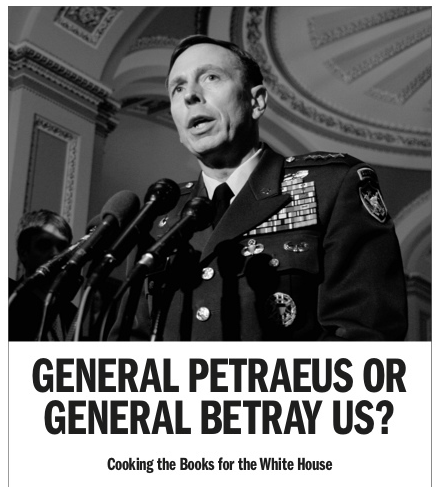
The Senate's confidence in him is well-founded, surely. And it shows a surprising ability to change opinions based on reality. I'm sure many of us remember the left-wing response to Petraeus' initial appointment:
Destroying America with Victory!


But those days might be over. Not only is this man finally getting a shred of the respect he deserves, but the US Senate is not so ideological as to shoot its own military policy in the foot to make a point. And who knows: maybe he'll come to the rescue for us once more.

China's PR Mess

China's PR machine is struggling seriously.

China killed 5 "militants" today in Xinjiang. Now, these guys might actually be bad guys, but they were not rounded up for trial, just shot. The Chinese PR machine did not make any attempts to say that the "militants" were hurting other people or even resisting arrest when shot, just that they were shot. This makes a lot of Westerners feel queasy about the state's way of dealing with its internal problems.

Now, my Chinese friends, I know you are going to say "these are our problems! You should not care about how we deal with them!" It's true there's no cassus belli for such things, but it's the sort of thing that still makes people uncomfortable. We didn't like the Soviets for starving their own Ukranians to death or slaughtering their own political dissidents, and we're not going to like wanton killing without a justice system, and we're going to reserve that right. Anyway.

China has proudly announced, further, arrests of lots of individuals trying to sabotage the Olympics. Chinese media are very short on details of the plot, of the particular crime committed (though we can guess it's conspiracy to do something). They also announced the "three evils" of "terrorism, separatism, and extremism." Now, most Westerners don't like terrorism or even extremism, but we don't tend to think of people who want their own country (that is, separatists) as necessarily evil. Terror tactics to get it? Totally. But not just standing against the unity of a set of borders described by the government. The Chinese government and media's branding of anyone-who-wants-a-different-country alongside terrorists sounds like very crude political exploitation. Using the "terorrism" brand to win US support for something hasn't worked since 2002. Using "the Olympics" as an public excuse for human rights abuses has never worked.

So I am not sure who is orchestrating the Chinese Public Relations machine. But the Chinese government clearly is in a state of reassurance to its neighbors (along with a tough stance on what it sees as threats to its own interests), but its media blunders are not helping this policy. Further, angry reactions to Western perceptions caused largely by such media blunders make the Chinese state look aggressive and adolescent.

Here at Foggofwar, we suggest finding a new PR team. Email me if you've got an offer.

Tuesday, July 8, 2008

Iraqi Timetable May Be More Than it Seems

The Surge is ending: The final brigade is on its way out of Iraq right now, after tremendous security success. For the next few months, we will have to hold our breaths and see if the situation keeps improving with fewer forces.

The Bush adminsitration has wanted a "long-term" US presence in Iraq, including permanent bases (like in Korea, Japan, Germany). Al-Maliki, the Prime Minister, has suggested a counter-proposal: A withdrawal timeline. At first glance, this would be a crippling defeat for George Bush, vindicating all of his political opponents that have been demanding such a thing for years.

But more likely, it is a compromise proposed by the administration itself, after realizing that permanent bases were not feasible. If Al-Maliki told Bush "we don't want permanent bases, and even if I did, I couldn't make them happen," then a withdrawal timeline is the immediate second choice.

Al-Maliki mentioned that the timeline would stretch until 2011 or 2012--2 or 3 years into the new presidency. At this point, I think most people in the administration are betting that Obama is going to win the election, and are hedging against him. That, or they could be trying to defeat him.

Stealing the initiative: If the Administration agrees to a 2012 withdrawal timeline and Obama wins the election, he will be hard-pressed to implement his 16-month withdrawal plan, given a previous treaty arrangement with the Iraqis (which he is bound by the Constitution to obey). If the Bush administration's war thinkers are worried about a speedy withdrawal, setting their own timeline with the Iraqis is the best way to prevent it.

Influencing the Election: This move has clear implications in the election that Obama will have to deal with very carefully. He could be caught in a double-bind. If this timeline agreement goes through, Obama will have to choose whether or not to dramatically change his policy. Should he obey the timeline, and try to delicately drop his 16-month withdrawal plan? He might draw serious criticism for flip-flopping, discourage his base, or lose his anti-war cred with moderates. Or should he defy the treaty, and stick to the plan? The Republicans may try to snatch moderates back by calling him out-of-touch, idealistic, unwilling to deal with reality, ignoring international treaties, etc. This timeline may make his Iraq stance an automatic liability, which is definitely a win for an administration that wants someone who is going to stick closer to its foreign policy aims into the future.

Whatever is happening, it is likely very thoroughly-thought long-term planning by the Bush administration. Al-Maliki is a close enough Bush ally that he almost certainly would not publicly request a request for a withdrawal timetable unless it had been already agreed-upon (or unless the administrations were at a deadlock, but it does not appear so at all). And, having been already agreed-upon, the intuitive thing for Bush to do is announce it himself, to show the public he is dedicated to changing his policy with changing times. But he gave the initiative to Al-Maliki, allowing the US press to call it a defeat for him. When he agrees to the timetable, it will appear as if he "caved to pressure." This is exactly what he wants. If it looks like he fought this timetable tooth-and-nail, then the Democrats will be politically forced to rejoice when he signs it, and won't be able to criticize it. Bush, once again, is going to get (almost) what he wants, despite a Democrat congressional majority. Sometimes, Bush is more clever than most give him credit for, and it is this very reputation for lacking subtlety that will allow him to outsmart the Democrats in congress once again.

Sunday, July 6, 2008

The Iraq-Afghanistan Contradiction

Most of the country still supports a withdrawal from Iraq on a very short timescale. Most of the country also has rather ambivalent leanings towards staying in Afghanistan "until the job is done." Why?

Iraq has shown serious progress for the last year--violence is more than 80% lower than when the surge started, the Sunnis in the west are our closest allies, Al-Qaeda in Iraq is being obliterated by the combined Sunni Awakening, Iraqi Security Forces, and Multinational Forces. The government is making slow political compromise progress, and more is likely to be made after the fall elections equalize representation in parliament. The Iraqi Army's stand-along capabilities are increasing... but the majority of forces still need training. The Iranians are finally starting to help curb the violence among Shiite militias. The American people support withdrawal.

But at the same time, Afghanistan is an increasing disaster. More and more American troops are dying each month--last month, 40 died, compared to 29 in Iraq. The Taliban's /Al-Qaeda's virtual safe haven in Northwest Pakistan makes it impossible for US troops to competently fight them; if the Pakistani government continues to be as unhelpful as they have been since 2001, there is little that US and Afghani troops can do to stifle the growth of the Taliban except try to invade Pakistan's northwest. Without help from Pakistan, this venture is becoming a complete waste of time, and a useless shooting ground for American troops. Americans support staying.

Do we think Pakistan is going to buck up and start fighting the Taliban soon? Or are we, as Americans, so wrapped up in our preconceived notions of morality that our military presence does not depend on results? The military situation in Afghanistan is bad, and getting worse--and there is little our military can do about it without violating Pakistan's sovereignty and possibly setting off another war. But in Iraq, our troops and General Petraeus have shown that smart leadership and good policy can lead to lasting results. Iraq's economy is booming, and its people feel increasingly safe. The end of a US presence in Iraq should come when the Iraqi Security Forces are able to operate independently to keep the security that the US has gained. The end of the US presence in Afghanistan is the one that shows "no end in sight," with a situation slowly and painfully degrading into oblivion.

So why the inconsistency?

Thursday, July 3, 2008

Obama "Preparing the Battlefield" for a Good Iraq Policy

Obama's earlier remarks on Iraq have been highly political and devoid of much consideration of actual military/political force in the country. His high-speed withdrawal plans came without a single conversation with a US military commander involved in the theatre, and has had no good answer (that I can find) for media that have proposed the question that a quick withdrawal may lead to a surge in violence.

But Obama his changing his tune. He actually plans to sit down with military commanders, and might "refine" his Iraq stance in light of evidence. What a novel idea!

But an idealistic young senator running for president is not going to change his long-defended Iraq stance before the election--even if it is a good idea--unless there is a public opinion reason involved. Obama's remarks are preparing the base of the Democratic party--many of them ardently opposed to any coninued US presence in Iraq--for a shift away from telling them what they want to hear, and a shift towards some deeper thought on the subject.

Is Obama trying to make sure he does not end up on the wrong side of the Iraq debate? Maybe, but polling is currently in favor of his old stance--70% of Americans either want troops removed right away or within a year.

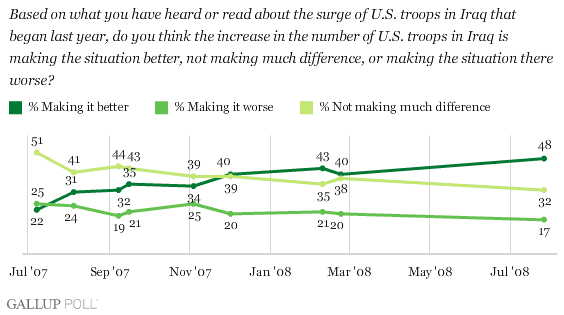
Interestingly, Americans are starting to change their idea of just how effective the surge has been:


Does this change in assessment mean a change in opinion is also coming? Why does Obama now want to soften a hard stance that has seemed to work for him so well? Is he simply looking to try to catch moderate Republicans without losing his left-wing base?

Or is he simply so confident in his victory (he shouldn't be--old "comeback McCain" still has a few tricks up his sleeve) that he can actually afford to ignore politics and pursue a more rational strategy in Iraq?

Saturday, June 28, 2008

The Wane of the Axis of Evil

Bush's controversial foreign policy may yield a curious victory when (or soon after) he leaves: the end of the Axis of Evil, both its official members and its often-called "junior" members.

The official list, if you have forgotten: Iran, Iraq, North Korea
The "Juniors": Libya, Syria

Iraq: Thanks to the so-far 5+ year war, regime change has certainly taken Iraq off the list, although it remains a different sort of problem.

North Korea: Thanks to effective carrot/stick diplomacy in six-party talks, North Korea has finally taken the first steps to denuclearizing, and may even return kidnapped Japanese to their homes. Kim Jong Il is still rather evil, but has come far enough from the 1987 terror attacks on Korean Air Flight 858 that "axis" no longer applies. Kim may have been convinced that cooperation is the best way for his country to move foward. Now that the US is taking it off the terror support list and lifting economic sanctions, it falls off the Axis.

Iran: Not off yet, but working on it. The Iranians and Americans are working on setting up diplomatic posts in each others' countires (a step down from Embassies, but not far). They have been talking quite a bit before this, but this move shows that the US is willing to hold out carrots to Iran as well as wave sticks over its nuclear program and operations within Iraq. The New Yorker is accusing the Bush administration of "preparing the battlefield" for war with Iran, but such accusations have come for years, and only diplomatic action has resulted. Iran is certainly not off the list, but is farther from the brink than before. Diplomatic pressure has worked, and Stratfor predicts they will cut a deal on their nuclear program with the next president, refusing to give Bush diplomatic credit (like between Carter and Raegan in the Embassy hostage crisis).

The little guys:

Libya: Libya has become a model of the deterrence strategy. The US showed that it meant business about dealing with WMD fears using regime change as a strategy, and the Libyan government responded by opening its operations to inspectors, and revealing a great deal of information about the Iranian, Pakistani, and North Korean programs. Libya and North Korea have been shown that past actions will be forgiven, as long as rogue nations are willing to start playing by Great Power rules.

Syria: Not yet absolved, but on its way. The US is using its presence in Turkey and Israel to influence negotiations between Israel and Syria quietly--Syria could not politically afford to admit the US is getting involved. But if Syria makes a peace deal with Israel--which will likely include a distancing from Iran and an undercutting of support for Hezbollah--it will surrender almost all issues with which the West contends. Israel is offering the Golan Heights--an important Syrian cultural site captured for strategic reasons when most of the Arab world simultaneously invaded Israel--as well as trade, and encouragement of Western powers to drop trade sanctions, in return.

Each of these five states has shown progress away from rogue behavior--Iran least. Bush has shown that his tough-guy diplomacy may fulfill many of its goals, though it has had high diplomatic, monetary, and human costs.