Showing posts with label middle east. Show all posts

Friday, April 3, 2015

Infographic: Major Conflicts in the Middle East

I decided to try my hand at an infographic to get everyone caught up in all the major mayhem in the Middle East currently going on.

If everyone likes it, more will come to try to give the big picture on some individual conflicts.

Enjoy! (Click here for bigger version of the infographic)


Tuesday, March 22, 2011

Checking In on Middle East Unrest Predictions

Never let it be said that Foggofwar doesn't hold itself accountable to its predictions. Let's go back and see how we did. For now, we won't cover everything--only the interesting ones.

Libya: Certainly the most interesting case, Libya would give Foggofwar the excuse of "intervention by the world's most powerful military alliance." Ironically, we may not even need this prediction: Protests have still not reached Tripoli, and the Rebel/NATO alliance seems to be showing a serious inability to mount an assault across the long stretch of desert, and thus won't overthrow the Gaddafi regime: the West will lose interest before Gaddafi loses will or military capability. As Predicted.

Morocco and Jordan: Protests here have died down largely due to reforms enacted by the governments that have given protesters what they wanted. As Predicted.

Syria: Protests continue to rock the country, despite (or because of) Abbas' crackdowns. Abbas has the ability to keep a lid on the populous through serious security and political liberty reforms, which he may want to do in order to court the West, anyway. But Abbas has infuriated his country and squandered a strong, loyal security establishment. Increased Risk.

Yemen: Rumors fly that the Yemenese president is working with Saudi and US allies to transition out of government... and out of the country. It's been a surprisingly long, sustained fight, but it looks like this current regime is on its way out. As Predicted.

Bahrain: Bahrain has fallen out of the news sphere as of late, as the active unrest has stopped. Interestingly, the sustained crackdown continues, trying to marginalize the supporters of the protests. The regime is safe--for now. But the Shiite majority of the country has been alienated completely. Long-term, the regime will continue to face risk. As Predicted.

Briefly speaking, no other country has surprised us yet in the magnitude of risk or, more importantly, in regime change. Overall, we've done pretty well so far.

But we're happy to be proven wrong if things change.

Friday, February 18, 2011

Middle East Protests and Regime Security as of Feb 18

As we continue to cover the Middle East crisis, I wanted to give an update as to my current understanding of regime security throughout the Middle East in light of the current protests that seem to be spreading throughout the entire region.

We've discussed briefly some of the reasons behind the protests, and these geopolitical forces will generally apply to countries besides Tunisia and Egypt.

Below, I've summarized the countries of the greater Middle East* and taken my best shot at assessing the risk to the regime based on the current level of protests and the greater structural factors behind the unrest in the country. In addition, I've color-coded the countries by risk on a map here. I'm happy to release the map into the public domain (this means you can use it as you wish, though I do appreciate credit).

The low attention span summary is that despite the protests, very few Middle Eastern countries face significant risk of regime change. Yemen is likely to see a change in government, and Algeria and Bahrain face an unclear future, but other regimes are relatively secure.


Secure Regimes, Few or No Protests:
-Saudi Arabia: I mention Saudi Arabia due to a surprising lack of unrest. As extremist violence has grown in the country, house Saud has struggled to balance its need for stability with calls for reform, but so far it has managed its oil wealth well enough (and dealt with extremism with a sufficiently fair and progressive hand) that it seems to have warded off too many fundamental causes of instability.
-Iraq: Sporadic protests have erupted in the north and the south of the country, but not in Baghdad. Ironically, the weakness of the current government (and the factious parliamentary system of the country) means that there exists neither a scapegoat (to protest against) nor a hero (to replace him).
-Turkey
-Israel
-Lebanon
-Qatar
-United Arab Emirates
-Oman
-Kuwait

Secure Regimes with Significant Protests:
-Iran: Mousavi and Kharoubi have once again emerged as leaders of the opposition movement, which is forming "green"-style rallies across Iran. Tehran's geopolitical stability is even higher than it was in 2009,

-Jordan: Jordan has often faced demographic instability (due largely to many Palestinian refugees living within its borders), but has generally handled it with some amount of grace. The king has won approval from the opposition by sacking his prime minister and cabinet, and appointing new leaders under a long-term economic and political reformist plan.

-Libya: It's tough to say just how large the protesters in Libya are; Kadafi's media control is significant. Certainly, there are protesters calling for Kadafi's removal in cities across Libya, but Tripoli seems relatively quiet compared to many other Middle Eastern capitals, and the "Day of Anger" seems to have flopped (due in part to security force intimidation). Libya is both willing to crack down hard on protesters and relatively economically secure, making overthrow unlikely.

-Syria: I am wary to group Syria into the same category as Iran and Libya, but the Syrian government has made a few concessions to a relatively small and wary group of protesters, and has also taken moves to suppress the protests that show at least some nervousness in the regime.

-Morocco: Morocco's liberalization efforts since the 1970's (including free trade agreements with the US and EU) have led to significant economic transformation in time. But Morocco's economic fates have worsened since 2008, and this stagnation hurts particularly in a country with nearly 20% youth unemployment and high illiteracy rates. Protests have sprung up, but the regime enjoys relatively wide popular support, and the success of a relatively capitalist approach in the last few decades make alternative economic models (and their standard-bearers) less attractive.

Regimes With Protests, at Risk:
-Sudan: After the Southern Sudanese secession referendum, it seemed tempting to believe that al-Bashir might consolidate power over a now-majority Arab country. Interestingly, Southern Sudan was one of the out-groups that was helping al-Bashir hold together a fragile coalition of Arab Nationalists and Islamists. Now, both Islamists and non-Arab opposition groups are emboldened and trying to push their agenda. To hold power in the short-term, al-Bashir is likely going to have to move closer to an Islamist group he's been trying to distance, which will likely pit him against the 45% non-Arab groups of his country, leading to a prolonged struggle for the future of Sudan.

-Algeria: Food price spikes have exacerbated the unemployment in Algeria, and trade unions have joined protests demanding change. Ultimately, the number of protesters has been kept small, due in large part to security force repression. But long before the Tunisian "Jasmine Revolution," president Bouteflika has faced an increasingly strong rivalry from the Directorate of Intelligence and Security (DRS) for power. The protests give the DRS, which grew powerful during the civil war against Islamist fundamentalists, an opportunity to side with "the people" and attempt a regime change similar to the military-stewarded removal of Mubarak in Egypt.

-Bahrain: Bahrain has one fundamental threat to its regime stability: demographics. Like pre-2003 Iraq, Bahrain is a majority-Shia country ruled by a Sunni dynasty. Unlike Iraq, it is an economic powerhouse with relatively low poverty rates and has been driving moderate reform since 1999. The current Shia community is demanding an end to alleged discrimination against the Shia population in both politics and employment. The situation may have remained low-risk, but Bahrain has become a battleground between Saudi Arabia and Iran, much like Iraq was during its sectarian civil war. Iran sees this as an opportunity to potentially create an ally in the region. Bahrain has reacted surprisingly desperately, violently driving protesters out of Pearl Square, killing 3 and injuring hundreds. Bahrain may have to depend on sustained security repression to keep the Pearl Square incident from leading to a backlash of even more protests.

-West Bank Abbas is highly embattled, though this is due less with the current crisis (and the socioeconomic or demographic causes behind it), and more with the Wikileaks-prompted revelation that he planned to cede significant Palestinian territory to Israel in return for state recognition. The current wave of protest has increased pressure, but has little impact on the long-term endgame of how that will play out for the current Fatah regime.

Regime Change Likely:
-Yemen: Massive protests in Yemen, supported by both an impoverished majority and a radical religious fringe, are likely to take down president Saleh. Massive unemployment, illiteracy, and general poverty (made worse by poor government economic policy) make Yemen a prime target for regime change. Saleh's promise of neither running for re-election nor passing the presidency to his son has done nothing to quell the unrest.

Regime Change Partially Occurring:
-Egypt: The military is working hard to make sure the next regime is friendly (and under the military's control), without looking like it's turning a "revolution" into a coup. Expect the new boss to be similar to the old boss, but more savvy about unemployment and monetary policy.

-Tunisia: Massive protests across Tunisia were led by the 30%-unemployed youth against a regulatory system that left them with no prospects for employment or advancement, and are largely credited as being the "spark" that has set off the current Middle East crisis. President Ben Ali resigned and fled the country, with the Speaker of the Parliament taking his place in an "interim" role. The Tunisian protests continue (in a reduced state, though many of the protesters have no work to which to return), and will likely not abate completely until a compelling plan to meet their demands is formed by the transitional government.

*Note that Afghanistan and Pakistan are left out of this analysis--the current crisis has little to do with the significant regime risk both countries face.

Monday, February 7, 2011

The Political Scientist's Approach to the Current Middle East Crisis

As a political scientist, I scrunch my eyebrows a bit at the current crisis in the Middle East. It tickles my sensibilities in the wrong way: can one man setting himself on fire in Tunis really bring down a well-established regional system of government?

Obviously, the answer is "not on its own." More deeply, the answer is, frankly, "not at all." Generally speaking, the Realist school of political science sees events like the self-immolation in Tunis as minimally significant to the broader brushstrokes of geopolitics.

What I mean is this: many folks in many countries at many times (including much of the Middle East) have set themselves ablaze, gone on hunger strike, or otherwise protested for change, and gotten nowhere. To say that the "conditions were ripe" in the Middle East under-attributes the importance of the conditions themselves.

An historical example:
After the assassination of the Archduke Franz Ferdinand, tensions were high between the Austrians and Serbs. But the Austrians and Russians were largely ready to settle on a "March to Belgrade" by the Austrians, in which they'd simply hold the Serbian capital as the internal revolts were brought under control.

Two main factors led to World War I itself: offensive war methodology (the ubiquitous and profound belief that the best defense is a good offense), and Germany's border instability and desire to create buffer zones in Central and Western Europe.

Similarly, the election of Abraham Lincoln had ultimately little to do with the start of the Civil War. The Gulf of Tonkin incident had literally nothing to do with the American intervention in Vietnam.

Ultimately, all these events were caused by broad geopolitical factors that small, relatively random (in the scope of world politics) perturbations like a sacrificial protest cannot meaningfully change.

There will always be events that could lead to a crisis. Whether such a crisis emerges depends entirely on the geopolitical conditions going in. The Middle East is no different.

The reason for the current political instability is, ultimately, financial instability caused by decades of mismanaged central planning that led to sufficient dissatisfaction with the current regimes.

Oppression and suppression of alternative political groups is not a trivial point, but traditionally has not been enough in the past forty years of the Middle East to facilitate a popular change in government.

Ultimately, yes: the same geopolitical forces that drove the beginnings of the World Wars, the fall of the Soviet Union--these, too, drive the changes we're currently seeing in the Middle East.

Thursday, July 29, 2010

Signs of a Balancing Force Against Iran

Syria often uses its relationship with Hezbollah to exert influence in Lebanon. It's a strange alliance, and it caused Syria to be close to Iran for a long time.

But Syria and Saudia Arabia recently jointly showed up to Lebanon to make it clear that Hezbollah would have no support during the UN investigation of the 2005 assassination of the Lebanese Prime Minister. According to STRATFOR, it's likely that a number of Hezbollah agents will be thrown to the wolves.

The Saudi-Syrian cooperation has been rare in the past few decades. But that it is starting back up (and that Syria is working with Turkey to try to make peace with Israel) is a sign that Syria is joining a small-but-growing anti-Iranian coalition.

The Iranian-Syrian relationship was always strange. Syria is primarily Sunni Arab; Iran is primarily Shiite Persian. A Saudi-Sryian-Egyptian relationship is much more natural (in the 1960's a Pan-Arab state was discussed, which would include Iraq, as well).

This is good news for the US, which wants enough pressure around Iran to keep it in check. In an Iran versus Israel/US world, the US would struggle. But if Iran is sufficiently isolated, there isn't too much it can do.

The long-term risk, of course, is a Turkish-Arab major coalition. It would start looking like the formidable Ottoman Empire. Subverting such a coalition is the primary reason the US wants Turkey to join the EU.

Thursday, June 10, 2010

Turkey Moves East

The EU's rejection of Turkey as a member (which was not an outright rejection, but a bureaucratic stagnation to death) has pushed Turkey towards the Arab world, away from the West. The latest evidence is in its decision to lead the Arab Free Trade Zone.

The implications are potentially large. Turkey has the potential to lead the Middle East and, as I spoke of before, unite it.

Turkish ascension to the EU probably made geopolitical sense, from a strictly national power perspective. It's not clear whether anti-Turkish racism in central Europe was the primary driver to keep Turkey out, or whether it was simply a European implosion over issues like the financial crisis.

But either way, the shift in rhetoric and action by Turkey likely suggests a long-term drift away from the West, and towards the Middle East.

Sunday, June 6, 2010

Israel's Risk to US Interests


If you're a reader of George Friedman (or other realist geopolitical academics), you'll tend towards the idea that one of the United States' paramount interests is to prevent a single geopolitical entity (or coalition) from amassing enough economic and military power to challenge it (this has been true since about the turn of the 20t century, when the US became the foremost power in the world). This was why World Wars I and II were important to the US (to stop Germany from conquering the continent), and why the Cold War was so critical (to prevent the Soviets from doing the same). Once a force amasses enough military power, it can potentially challenge US trade dominance, or even cross the ocean and challenge the US near its borders.

The US is further interested in preventing unity in the Middle East. If the Middle East united in a form similar to the Ottoman Empire, it might be powerful enough to potentially challenge the US. Not only would it be highly populous, but it would have vast oil resources and central trading position (between Europe & Asia). It would be a great strategic threat to US hegemony.

Israel, whether or not it has the moral upper-hand in the Middle East conflict, is becoming a risk to US interests due to Middle Eastern perceptions of its behavior as of late. For decades, the states of Egypt & Turkey (in particular), as well as Jordan, Kuwait, and Saudi Arabia, have recognized Israel and, generally, supported its existence (despite their populations' general distaste for the Israel/Palestine situation).

But the past few months have made these governments' support of Israel a politically risky gambit. Public outrage towards the deadly pre-election Gaza offensive, settlement-building in Jerusalem, and the recent raid on a supply flotilla trying to break the Gaza blockade have further soured perceptions of Israel. Its image as an aggressive, revisionist state is growing somewhat stronger.

The US must play carefully. If it comes out to support Israeli action, it may encourage the Arabs to unite to deter Israel from further action in Gaza, the West Bank, southern Lebanon, or (potentially) Iran. If these states united against Israel, they might start feeling strong enough to oppose the US (rather than begrudgingly embracing it). The United States' interest is in keeping the Middle East divided and internally distracted--not united and outward-looking.

If the Israeli government does not change the tenor of its policies, it may begin to become a liability to the US. The US, in response, would try to distance itself publicly, while placing pressure on Israel to move towards peace negotiations.

In the near future, look either for a major shift in Israeli policy towards Gaza and Jerusalem, or a gradual (but noticeable) distancing of relations between the US and Israel, as the US tries to prevent a unity coalition from arising in the Middle East.

Saturday, January 23, 2010

Last Decade Series: Middle Eastern States Fall in Line

Bear with me on this one, dear readers.

I know it looks like things in the Middle East are pretty bad. No doubt, they're certainly not rosy. 2001 was the beginning of the US-Jihadist war--at least, it was the year the US acknowledged it was fighting the war in full. Jihadists had been preparing to try to boot the US out of the Middle East and create a caliphate for a long time, and were certainly at war with us in the 1990's. Nevertheless, things seem to have gone downhill in the last decade, but I argue that, for the most part, the US is much more secure in its geopolitical aspirations in the Middle East now than it was in 2000.

In general, the United States has essentially eliminated or isolate its state-side enemies, and solidified its state-side allies. It is setting up a coalition of states to take over the "front-line" management of the Middle East, so the US can do what it does best--sit back and use military/economic spending and incentives to relatively cheaply and easily pull the right levers. Let's go bit by bit.

Enemies and Former Enemies of the United States

Iran: Once a very powerful influence in the Middle East, Iran has become largely isolated. Its influence has indeed grown in Iraq, but has greatly shrunk elsewhere. Syria, once Iran's pet ally, has asserted itself as an independent force, and is leaning Westward after a diplomatic push by Bush, Blair, and Sarkozy. Iran's hand in Hezbollah is much weaker than it used to be, as much of Hezbollah turns towards legitimate government. Its control of Hamas remains relatively strong, but Hamas appears relatively deradicalized--at least for now. There is little that Iran can do to grow its influence or break the influence of the US and Israel in the region, and this is in part why it has pushed so hard for its nuclear weapons program in a short time--if it can threaten nuclear deterrence, Iran can be more aggressive about pushing outward. Ultimately, its aggressive nuclear behavior has been used by the West to isolate it in its region. Even Russia and China, who see Iran as an opportunity to irritate the US, will stop short of allowing a nuclear weapons program to arise. Further, Iran's internal unrest is growing by the month, and the regime has, as a whole, lost a great deal of influence in its own borders. Iran will retreat into the future as it turns inward or goes progressive.

Syria: Once one of the "junior members" of the Axis of Evil, Syria was heavily courted by the West (in particular by some impressive Diplomacy by President Sarkozy). While not a doll of the West, Syria has largely ceased to be a problem. The Cedar Revolution of 2005 mostly booted Syria from its control of Lebanon, creating a state that the West is trying to turn into an ally. Syria has further divorced itself from Iran, hoping to be a part of the Western economy rather than an ideological empire run by Iran. Frankly, this was not a difficult win.

Iraq: While still riddled with problems, Iraq now stands as a relatively moderate country in the Middle East that will be able to eventually play balancing games between various Middle Eastern rivals. If the next election goes well, it will be a symbol of the effectiveness of US power and determination.

Afghanistan: While certainly much farther than Iraq, the Afghani Taliban are at least destabilized and desperate; a peace deal may yet be possible. Such a deal would make Afghanistan, if far from perfect, a much more acceptable risk.

The West Bank: While not quite its own state, the West Bank has grown much more moderate over time, despite Israeli-Gaza tensions and settlement/wall building by Israel in its territory. Such a moderate takeover is a significant gift to American foreign policymakers.

Libya: Once a major nuclear arms worry, Libya has quieted down significantly, largely in the hopes of regaining Western investment and trade, but largely in the hopes of staying off the United States' radar. For all the apparent recklessness of the war in Iraq, the invasion of Baghdad showed that the United States was (at least under Bush) willing to ignore international opinion and bring down the hammer of regime change to any state regime that seriously threatened US interests, even with shaky evidence. Qaddafi, in one of his wiser decisions as Brotherly Leader and Guide of the Revolution (yes, that is his title), decided to voluntarily give up his own WMD program and welcome polite UN weapons inspectors into his country, rather than American Marines. Once a "junior member" of the Axis of Evil, Libya is working on turning into a major Western trade partner.

Friends of the United States

Turkey, Egypt, Jordan, Kuwait, Saudi Arabia, Pakistan, Yemen:
These states, while also torn internally, remain steadfastly supportive of US interests in the Middle East (though not usually out of some twisted sense of altruism). But amazingly enough, the US has managed to keep the governments of these states distinctly pro-American despite overwhelming negative attitudes among the populous towards the US. Turkey is leading negotiations with non-state actors like the Palestinians, the Taliban, and Hezbollah (and is turning into, frankly, a strange Euro-Asian state that may have influence in both areas). Egypt, additionally, is keeping a lid on Gaza while trying to help negotiate a lasting peace. Saudi Arabia has fought in Iraq and is trying to stabilize Yemen (though its pro-Sunni meddling in Iraq was quite detrimental). Pakistan is (half-heartedly, at least) fighting the more dangerous Taliban on its side of the AfPak border, eliminating key support for the Afghan insurgency. These states will continue to contribute to a regional order that will allow the United States to move further and further back from the Middle East over time.

The UAE and Qatar: Worth special mention due to their (somewhat) successful adaptations of Western-style market economies. If Dubai can pull itself out of debt, these states are likely to be shining examples of how liberalism and Islam can live side-by-side (and they are unlikely to harbor anti-US terrorists, to boot).

Trouble Remains

There are certainly states of worry for the US in the Middle East. Afghanistan, Lebanon, Palestine, Yemen, Somalia, Sudan, Iran, and Turkmenistan all have major internal issues that could lead to long-term negative consequences for the US, and they are worth keeping one's eyes on.

All in all, the United States' geopolitical position in the Middle East is far from the sour position most Americans think it is in, even if it is indeed in a rather poor public image position. But such if how these things work. The US has managed to lever government loyalty with the right incentives, even if not public opinion with the right rhetoric and sympathy.

Friday, October 2, 2009

The Middle East Wrap

You'll have to accept my apologies for not writing much lately. I'll try to make up for it today by covering just about everything worth covering in the Middle East (and on Monday I'll try to update the rest of the world).

IRAN: Iran's secret nuclear facility has been exposed by intel; Iran's attempts to minimize political losses by admitting it publicly and agreeing to talks worked better than I had anticipated. Israel is currently pulling their hair out over the issue: previously, they had been mulling an airstrike on the known above-ground Iranian facility. The second, underground one has likely ruled that option out. And, as usual, Israel is not ready to depend on Western negotiations and sanctions to solve its problems.

Iran also scored a big win in getting a 2-week "deadline" for an IAEA inspection of the facility, which should allow Iran enough time to clean it up of anything obviously bomb-related (bombs require much higher-level enrichment, for example) and be ready with smiles and open doors for the IAEA inspectors. After the Iraq debacle, the West is going to be hard-pressed to listen to a US or UK insist that it has good intel about WMD operations in a Middle Eastern country without more neutral parties willing to corroborate the story. Iran is likely to manoeuvre its way out of this with limited backlash, frustrating just about everyone (Diplomacy, they say, is a bitch).

Whether that means Iran is significantly closer to the manufacture of an atom bomb is anyone's guess from outside of classified intelligence, but a declassified British report gives them a few years, where the US published a few years ago that such activities had halted in 2005. Such a disagreement in opinion is not surprising, but it does mean that public policymaking will be marred by second-guessing.

Edit: New UN report says that Iran has the "data" to make a nuclear weapon (which is not actually all that difficult, but is a significant declaration).

AFGHANISTAN: McChrystal continues to press the point of getting more troops in Afghanistan, and Obama has continued to leave the issue on the backburner, insisting on a strategic review before going ahead with the decision. As much as it frustrates me to see little action, it's probably the right move: this is key point where Obama has to decide whether to turn Afghanistan into a major hell-raising back-breaking tax-spending mess, or a defeat. Waiting on a decision is easier than reversing one (it is very hard to declare defeat without a changing of the guard--see LBJ and Nixon), but every moment of wait erodes support, as well.

I am, personally, highly torn on the decision. While I don't think there is a "Domino" style theory to be applied here, I do think surrendering Afghanistan will put Pakistan at great risk, which will be a nightmare for India, as well as the US. They do call Afghanistan the "Graveyard of Empires," but the stakes are even higher now. Will the now-well-trained, well-funded, and very spiteful Taliban continue to foster al-Qaeda to strike at the US? The likelihood of retribution the size of 2001 will be very low if NATO walks out of Afghanistan with its tail between its legs. On the other hand, Afghanistan seems more hopeless to me than ever, in particular because NATO does not have a legitimate "good guy" government to support. NATO has resigned to supporting Karzai if he stays in power, which is looking all the more likely, if for no other reason than inertia. Given clear fraud, will his win be any more legitimate than that of Mr. Ahmedinejad in Iran? Afghanis are not dumb people, and they will know and understand, especially if they voted against him. In a normal, clean election, the losing side of the electorate can say, "well, he is not who I wanted, but he is who the majority of the country wanted." If that is not something that's believed, then the bitterness of loss becomes a force for rebellion and resistance. And do you know who's the best source for such opposition? Yeah, you guessed it.

(...if you did not guess it, I am alluding here to The Taliban).

PAKISTAN: Apparently Meshud is dead, which is pretty good news for them. (If you don't know, Meshud just recently took over as head of the Pakistani Taliban, after burning a lot of bridges to do so) Without his strong arm to keep the factions (that he exacerbated) in line, might the Pakistani Taliban begin to fracture?

Swat seems to be returning to normal, but the military has not yet moved on to Waziristan, as expected. This is almost certainly due to a hasty and significant quieting of activity from the Pakistani Taliban after the Swat operation. This was likely a strategic move, designed to give the Taliban in Pakistan time to regroup and resupply from the north, all the while avoiding giving the Pakistani military the necessary public support to act.

ISRAEL/OPT: As usual, a rather hopeless-looking mess. Obama's tripatriate talks fizzled before they were even lit. Settlements continue to be built in the West Bank, and Israel has hit some tunnels and weapons facilities with airstrikes after themselves being hit by rockets. But such activity is too normal to even seriously get international attention anymore. I expect that peace talks will not resume in earnest until the next Israeli election, if then.

IRAQ: Civilian casualty numbers continue to fluctuate, though they're lower than last year. The US is taking almost zero hits, meaning that the war/occupation in Iraq is effectively over. The Arab-Kurdish split continues to grow, though, and chaos allows al-Qaeda to operate in Kiruk and Mosul even to this day. But the Iraqi Army continues to grow in size and skill; when it is powerful enough, it will become an effective bargaining tool against the Kurds, but their most-favored-minority status by the US in particular may prompt them to call victim with some gusto before giving up their bids for autonomy, power, territory, and oil.


OBAMA (in general): He is (hopefully) finding that his personality is not enough to solve the Middle East's problems, and that some serious realpolitik must be played to convince other leaders/countries to act in ways favorable to the US. After failures of overture with Iran, Russia (how many "resets" have we had since January? Seriously!?), Pakistan, and the European partners that we so desperately hoped would love us again after ushering in the new president, we're going to have to buckle down and play the game of strongmen that we apparently so very much hate ourselves for playing.

Saturday, February 28, 2009

Moderates Sidelined in Middle East Conflict

Kadima's gamble in Palestine did not pay off. It's unclear as to whether or not it backfired, but Feb. 10th elections have given Israel's right-wing a majority presence, and President Peres has asked Mr. Netanyahu to form a government, despite Likud's second-place showing in the election.

Mr. Netanyahu has hosted two rounds of negotiations with Kadima, in order to try and form a broad coalition government. But those talks appear to have collapsed, probably over Kadima's commitment to reduce settlements and pursue a US-backed two-state solution. This breakdown likely indicates that Israel is going to lean to the right in the near future.

To form a majority government in the Knesset (parliament), one needs 61 of 120 seats. We'll assume for now that Mr. Netanyahu will likely fail to woo Kadima (28 seats), the Labor Party (13 seats), United Arab List (3 seats), Balad (3 seats), or Hadash (4 seats), which together are 51 seats. To cobble 61 seats together, Mr. Netanyahu will have to appeal to the Zionist/Nationalist tendencies of many right-wing groups, including Yisrael Beytenu (15 seats), United Torah Judaism (5 seats), National Union (4 seats), The Jewish Home (3 seats). Shas (11 seats) is the wildcard--but even if Netanyahu picks them up, he has a narrow coalition indeed, and one whose weight is far to the right. Voices interested in a two-state system will be sidelined in this new government, and the Palestinian Authority will have to choose a reaction.

The PA reaction may be to entrench, but it's unclear. Mr. Abbas is having a lot of trouble forming a unity government with Hamas, largely because Hamas refuses to recognize Israel as a state. Abbas is likely to lose what ground he had in pursuing the two-state solution if Israel spends the next few years uninterested in working with him on such a plan.

Mr. Obama seems to have his work cut out for him.

Monday, January 5, 2009

Israel's Confidence is High

Israel is starting to hint that they have full intent to take down Hamas with this war in Gaza (though this has been pretty obvious for a few days now). Their confidence that they can do so is surprisingly high, as well--Israeli officials are calling Hamas "crippled" in a few ways: its physical governance infrastructure is ruined (parliament building, police buildings, etc), its leadership is dead or in hiding (having abandoned its population), and its popularity is going to drop.

Though the popularity of Hamas is currently rather high, the Israelis think it will go down significantly in the next few weeks as Palestinians wonder whether a militant anti-Israel stance is one that is going to serve them well in the future. In particular, if Hamas is unable to provide governance, order, medical supplies, etc after the war ends, then their support will erode. Pre-war, Fatah already had an edge in Gaza polls. When the Palestinians have elections, probably in April 2009, Fatah will probably have quite the edge, even in Gaza. And if it does, and if Kadima can hold on in Israel, then the whole situation in Palestine looks a lot different. Israel will probably do what it can to enforce Fatah's right to govern in Gaza Strip, and help clean the strip up before working on serious two-state talks.

Such confidence is strange, coming from an Israel that lost a 2006 war in Lebanon due to overconfidence and poorly-defined campaign goals. Israel had been showing serious conservatism in its war goals early on: the air campaign was aimed at reducing rocket attacks, not even eliminating them. While Israel is not saying that they have changed their goals to the toppling of Hamas, they are certainly saying that it's likely that they will, and that they're quite happy for it. This means one of two things:

1) Israel's government did not learn a lesson from its tough defeat, even though I was able to graft that lesson from my seat in Cambridge, or,

2) Israel is actually well and truly crushing Hamas' governance and combat capabilities.

Occam's Razor says it's probably the latter.

Despite confidence, Israel remains conservative. They have not given in to goading and luring on the part of Hamas to enter Gaza City or other urban areas for street fighting. They have kept their total military casualties to one, suffered on the first night of entry. Israel's targets have been picked with deliberate caution, as well: Palestinian medical authorities have reported only 16 children dead, despite a strong incentive to over-report. Hamas has claimed that half of the over-500 killed in Gaza are civilians, but there is a strong incentive to over-report here, as well: Hamas loses face by reporting its own fighters killed, and gains support by claiming that Israel has killed civilians. Given how informally one can join the Hamas paramilitary, it will be impossible for these figures to ever be confirmed beyond academic estimates.

So things seem to be going well for Israel so far. They have a lot of work to do, and in particular, Israel must keep up strong diplomacy with Jordan, Egypt, and Lebanon, in order to keep its free military reign in Gaza. But such support should have wavered days ago if it was going to. Israel appears to have a serious shot at crippling Hamas for good and, despite the cries of many protesters to the contrary, contribute to long-term peace in the Middle East.

Saturday, December 13, 2008

On The MedU Solar Plan

For your reading pleasure, a paper I wrote for a grad class this semester (Politics and Conflict in the Middle East) that goes a bit outside my normal subject material. I explore the political/economic/social feasibility of the Mediterranean Union's plan to drop down a bunch of solar thermal plants in the Middle East/ North Africa (MENA) region. The idea would have 4 potential benefits:

1) Help the EU meet its carbon reduction goals for 2020 and 2050.
2) Reduce European dependence on Russian gas and oil; The EU favors North African politics to Russian.
3) Develop the economies of North African countries.
4) Kick-start solar thermal economy by introducing economy of scale, allowing it to become competitive with fossil fuels. This would allow countries with lots of desert to start producing competitive electricity, and hedge energy needs from oil (which is volatile in price, vulnerable in transport to pirates and the like) to something more stable.

I'm not planning on publishing it, so the paper is accessible here. It is still copyrighted, and all rights are reserved. Some notes are below.

There are some serious issues with the plan, including the fact that it predicts that oil prices will stay the same or go up--if there is a sudden increase in electrical supply, then the price of oil is likely to drop--simple economics. China and India will happily slurp up this cheap oil to power their own economies, and then the EU's hopes of reducing carbon emissions might be undercut. Instead, this project is simply likely to subsidize India and China's industrial development on the backs of European taxpayers. At least it's not me.

Nonetheless, other goals are likely to be met. Europeans will indeed hedge their dependence from Russia and towards North Africa. The economy of scale is likely to allow wealthy nations like the US (with lots of desert of its own) to build its own solar thermal industry, and the EU and US can then supply to areas like the Arabian Penninsula, India, and Mexico. Finally, as long as trade deals are carefully sculpted by the EU, North African countries will likely benefit from the foreign investment. If the trade deals are poorly or sloppily formed, then solar power could become a "new oil"--a cheap source of revenue for tinpot dictators or ineffectual republics that encourages inefficiency, bureaucracy, and central planning. The trade deals will be the most important part.

Tuesday, July 15, 2008

The Good Cop/Bad Cop Game in the Middle East

There is a pattern to policies in the Middle East going on, and it is beginning to look like the work of not competing polities struggling for power, but a quiet agreement and cooperation that looks primed to make peace in the Middle East look like a vague possibility for the the first time in a long time. I believe that Bush, Sarkozy, and Brown are playing a Good Cop/Bad Cop game with respect to Iran and all important regional players involved, that might just get things to go their way.

We should note that Iran's most significant lever of power is through its support of regional terrorist/political organizations: In Iraq, Al-Sadr and Shiite militias. In Lebanon, Hezbollah. In Palestine, Hamas. Iran's primary polity ally in the region continues to be Syria, which still exercizes great influence over Lebanon. Iran does have long-range missiles, but Israel is their only possible target, and Israel is bristling with anti-missile interceptor technology. Iran can't afford to start an air-war with Israel--the combined Israeli-US air forces are not accessible to Iran by land or sea, and would be able to retaliate--with terrifying effects--mostly unadultered. If Iran was actually going to fire its missiles at Israel, it might have to be prepared to try to invade Iraq.

But Iran's primary lever of power has taken serious blows lately. In Iraq, Al-Sadr and other Shiite groups are at peace with the central government after months of raids and negotiations. Iran is trying to rein them in, because it is seeing it is unlikely to win the victory it wants in Iraq, so it is likely taking the victory it can get--a democratic, but Shiite-dominated state. The US and Iran are likely to open diplomatic posts in each others' countries, but mostly as signs of goodwill in their Iraq negotiations. Iraq, believe it or not, is mostly in cleanup-mode at this point.

Syria is primed to jump Iran's ship--its inclusin into Club Med, peace talks with Israel, and ambassadorial relationship with Lebanon means it is suddenly reaching in a very pro-West manner, after decades of jihadist rhetoric and isolation, not to mention support of anti-Israeli terror groups and former invasions of Israel. It looks like all of this is about to change. And that means...

Hezbollah will lose one of its primary benefactors. Syria's lack of cooperation will even make it difficult for Iran to support the southern-Lebanese terror group, and Syrian support for the current Lebanese government will likely decrease the popularity of Hezbollah as a political force.

Syria's recognition of Israel, and peace with it, will strike another blow to the legitimacy of the Hamas terror front's fight for a Palestinian state that replaces the entire Israeli one. The more that the Middle East lines up behind Abbas and the two-state strategy, the more hopeless Hamas' political goals will become, and they will be relegated to the realm of extremists in the minds of fellow Muslim Arabs, causing them to lose cash and political support.

All this means that Iran will have very little to threaten Western interests with, if it all works out. A weak Hamas, Hezbollah, and Iraq Shiite movement will mean it can't threaten to shake up Israel, Lebanon, or Iraq at a moment's notice. Without that power, Western and pro-Western states will raise eyebrows when Iran uses brinksmanship instead of cooperation as its means of convincing other states to do what it wants. This is certainly the "good" scenario of the current situation, but how did we get here?

Bad Cop: Of course, George Bush, doing what he does best, has put a lot of fear into a lot of folks that might otherwise feel comfortable. For example: although war with Iran has now become more clearly a psychological tactic to cause the Iranians to lose confidence in their president, this years-long psywar has fooled even the American media into worrying that US troops were about to leap into Iran (even though the military deployment in Iraq and carrier deployment around the world showed no evidence of that ever being the case). Conservatives and moderates in Iran, alike, have started to get very worried bout their president's brinksmanship with an American president known for making quick decisions and sending military forces against good advice. Even now, Israeli planes are flying over the mediterranean and over Iraq, making clear that they are practicing for a strike on Iran. Bush is leading calls for sanctions against Iran in the UN. Bush's hard line against anything resembling terror has lost him respect, but has made those that support terror think twice.

Good Cop: Nicholas Sarkozy, great French diplomat, president of the EU. His elaborate diplomatic blitz early in his career patched up relations with the US, UK, and Germany in a very short period of time. Even the Russians are a bit warm to him, even if the Chinese aren't. He is now courting the Syrians--who are probably the biggest remaining key to the entire situation in Israel/Lebanon/Palestine--in a truly fantastic, Romanesque way. He has invited them to Club Med, given his support to peace talks with Israel, and even held the Syrian president as a guest of honor at Bastille Day, depsite the fact that this raised a few eyebrows in his own country. Syria is responding well to Sarkozy's courting, and if Syria acts well, the dominoes may begin to fall.

Where does Brown fit into all this? By giving his goodwill. The UK's massive military and political power could be put to use here, but they are mostly being kept in check. The UK doesn't want to play bad cop, and can't afford to play good cop due to having so many troops in Iraq. Brown likely gave his permission for Club Med, and is likely exercizing his political strengh to silence people like Merkel, who are most likely to object. The Big Three are working in concert, as they had the potential to as soon as the French and British elections had happened, and each his doing his own part.

Sarkozy's carrots to Bush's sticks are making cooperation a very tempting alternative. One can imagine Assad's eyes light up during his visit to France on Bastille Day, when Sarkozy told him "This is what the cool kids get."

Thursday, July 10, 2008

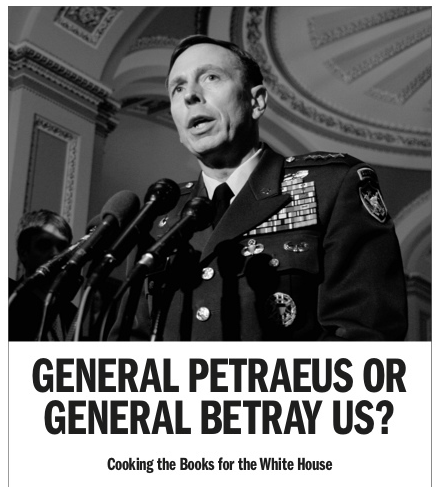
Petraeus to the Rescue Again

The Senate confirmed General Petraeus to lead Central Command (covering the entire Middle East), 95-2. His deputy General, Lt. Gen. Ray Ordierno, has been promoted to General of Iraq operations, ensuring that Petraeus will have a strong say and a competent, experienced sidekick for the US' biggest war since Vietnam.
Going to Save All Our Other Messes, Too

I'll bet that the Senate is hoping, like I am, that Petraeus has enough magic in his bag of tricks that he can pull Afghanistan out of the terrible mire it's run into, just as he did Iraq. It will be harder, much harder. For all that Bush complains of Iran's intervention in Iraq, they are a stable state with control that can rein in their own hounds--and they largely have. Pakistan has no power over the Northwest, and won't let the US operate there. The Taliban literally have an impervious fortress from which to operate in Pakistan's northwest. I don't know how Petraeus plans to deal with this.

The Superhero Cred


But Petreaus now also gets to watch over Iran. His recent successes do not prove that he knows how to manage Iran's entire repritoire of threats and irritations, but he has certainly beefed up the US Army's credibility against insurgent warfare that Iran can't depend on Hezbollah or its other Shiite puppets for free pecking of US interests any longer.

The Senate's confidence in him is well-founded, surely. And it shows a surprising ability to change opinions based on reality. I'm sure many of us remember the left-wing response to Petraeus' initial appointment:
Destroying America with Victory!


But those days might be over. Not only is this man finally getting a shred of the respect he deserves, but the US Senate is not so ideological as to shoot its own military policy in the foot to make a point. And who knows: maybe he'll come to the rescue for us once more.

Sunday, June 1, 2008

Iraq is Very Quiet

You know what hasn't been in the news in the past many weeks? Iraq. I'm sure you can guess exactly why:

That's right, because there's nothing bad to report. Finally, today, BBC published an article (which hasn't made the front page), noting that coalition troop deaths in May were their lowest since the war began in 2003. Civilian deaths have dropped by half from the months of March and April--much of this is due to a truce signed with Al-Sadr and other Shiite Militias. I'm not sure it will hold, but every day of calm gives the Iraqi government more time to solidify its daily civil functions--power, water, trash collection, etc.

Elections in the fall will be critical--whether they lead to better power-sharing in the government (the Sunnis have been underrepresented due to their own boycott) or to voilence as Shiites try to resist losing power is unsure.

I don't have too much analysis about these figures that I haven't already given you before. But in this particular post, I just wanted to report the news as I've seen it, because CNN sure as hell won't.

As a post-script, icasualities is a pretty reliable source for death trends in Iraq, should you want it: http://icasualties.org/oif/

Friday, February 22, 2008

Al-Sadr Has a Hitchcock-Like Flair for Suspense

Cleric Moqtada Al-Sadr (that handsome gentleman pictured below) has extended his ceasefire in a most last-minute way today. With the previous ceasefire with US and Iraqi forces (set six months ago) due to expire Sunday, the Cleric was making very few noises as to whether or not he would continue it further. US Analysts were baffled as to whether he would continue the ceasefire or not... in large part due to the fact that nobody is quite sure what Al-Sadr wants. But extend it he did, and there are lessons to be drawn from today's news.


Al-Sadr seems to have first declared a ceasefire because the Mahdi Army (his personal militant group) was in trouble. They had started fighting with other Shiite groups, and got pretty beat up in the process, back in July. He hoped to reorganize, regroup, and bring a newfound discipline to the army before deciding what to do next.

At the time, it seemed that he wasn't prepared to start working together with American or pro-American elements in Iraq. His rhetoric remained strong. Despite this, American military and political officials praised his decision, and (sortof) implicitly pardoned the Mahdi Army (though there have since been arrests, much to Al-Sadr's chagrin). The current extension comes with little public reasoning, other than commitments to peaceful vanquishing of Allah's enemies (the US), as well as the intruders (US), invaders (US), infidels (yeah, you get the idea), and the like.

The US army is extremely appreciative of the move. With sharp positive trends in Iraqi security over the past six months, Al-Sadr's ceasefire has given the Multi-National Force and Iraqi Army time to build infrastructure, to consolidate security in other hot spots, and, most importantly, win the support and trust of Iraqi civilians. If Al-Sadr's army, presumably rebuilt, resumed operations, much of the "delicate" (as Gen. Petraeus consistently calls it) progress could start to fall apart.

Why did Al-Sadr extend the ceasefire, particularly if it helps the United States' goals? These are some of my speculations, but it is likely to be one or more of these:

1) The US is giving him immunity in return. With US and Iraqi troop levels still high, an end to peace could do more damage to the Mahdi army than to the US. American troop levels are likely to decline after the summer, and Al-Sadr may try to be patient and take better opportunities, later. In addition, the US is respecting the ceasefire, and may have even decided not to arrest or kill him if given the opportunity, which will largely allow him to power-grab in the Shiite regions of Iraq unmolested.

2) The Mahdi army is not yet rebuilt.
It's possible Al-Sadr is dissatisfied with the progress of the last six months, and thinks the next six months will bring about more. Alliances or deals with other groups may still be in the works. Either way, it's possible he is anticipating the Army's strength growing.

3) Al-Sadr's plan has backfired, and he has lost support. This is the most interesting possibility. The Mahdi army did very well in part due to the fact that it could provide security when American and Iraqi forces could not; Mahdi Army agents patrolled neighborhoods and protected civilians in return for monetary or other support. Because Al-Sadr declared a ceasefire during the surge, security improved very quickly as US troops became more present in urban neighborhoods. With the Mahdi army gone and US and Iraqi troops happy to provide security (and effectively) for free, support for the Mahdi army among many of their former patrons may have declined. Radical Shiites may not amongst themselves own enough resources to make the Mahdi army as strong as it once was. Given this, extended peace may be Al-Sadr's only good plan.

Lessons: What US policymakers should learn from this move is that militant groups can be dealt with in ways other than military. Al-Sadr may not be in much contact with Multi-National Forces, but there is some, and communication between both groups has passed through public hearings and press conferences; Al-Sadr may have to talk tough, but the careful listener can often hear where he is willing to make deals.

Sometimes, making deals with militant groups is key; fighting them all at once has proven impossible in Iraq, and similar efforts will yield similar results in future conflicts. We have learned that some Muslim extremists are more reasonable than others; some have real, tangible political goals, and those goals can be bargained with, like with any political group with an army. We must distinguish between Al-Qaeda-like groups (whose goals, like "Death to America," cannot be discussed or bargained), and groups like the Mahdi Army, whose political goals may cost us less to help than to hinder.

Hopefully, this cease-fire will help Petraeus and the Multi-National Forces shore up the security situation in Iraq over the next six months. Now, we just have to wait for the Iraqi parliament to start meeting more of those benchmarks.

Tuesday, February 19, 2008

Pakistan's Democracy Finally Works

I am both shocked and jubilant. In the days leading to Pakistan's parliamentary elections, I assumed (like many Pakistanis, apparently) that President Musharraf's military and political allies would successfully rig the parliamentary elections to help him stay in power. But, for some reason or another, he didn't. Perhaps he was looking to simply survive (he has even more angry militant enemies than Bhutto did), or maybe he simply has spent the last 8 years doing what he thought was right, even if, from here, his actions looked like purely personal power-grabbing. But Musharraf has shocked me (and others) in letting the elections happen in what international observers have said was accurate and fair.

In this election, 242 seats were up for contest. Of these, early returns show the Pakistan People's Party (ala Bhutto) winning ~80, Pakistan Muslim League-N (ala Sharif) winning ~66, and Pakistan Muslim League-Q (ala Musharraf) winning only 38. The outcome is promising--past Pakistani opposition has traditionally been dominated by highly religious parties, but the People's Party is secularist, and Muslim League-N is a moderate group with highly competent leadership.


People's Party and Muslim League-N have been in coalition talks for months, and are in them again already. Should such a coalition emerge, they could theoretically run a government without any other parties involved (particularly, the Muslim League-Q). They'd also be able to impeach Musharraf if their members voted in force, and I believe they are likely to do so. While Ms. Bhutto had been willing to work with Musharraf, Sharif was so opposed to the idea that he was threatening parliamentary boycott. With Ms. Bhutto dead (and her son leading her party), Sharif emerged as the single most experienced and respected politician in Pakistan, and is likely to have a great deal of influence over the People's Party's leadership. Furthermore, the coalition would have a large enough parliamentary majority that they would have no need to hold on to Mr. Musharraf, unless he can propose to them some sort of favors that a replacement president would not be able to provide. But for the most part, he is at the mercy of the new coalition.

Interestingly, these results may show that Al-Qaeda militancy in the northwest may have gained them local ground, but it has still created vast secular and moderate cohesion against them in the rest of Pakistan, even among the majority that oppose Musharraf's aggressive anti-militant activities. Pakistan avoided a religious uprising or conservative backlash--they voted out Musharraf's party and replaced it with liberal-secular options, which should long-term be beneficial to the United States, should Bush manage to not screw up the early relationship with the new government. Remember that Ms. Bhutto had said that she was willing to work with the United States in the war against Al-Qaeda in the northwest of Pakistan, and her victorious People's Party won by carrying on the bulk of her policy ideas.

New cohesion and better competence in government is going to bring great domestic change to Pakistan, and hopefully, the new government will find a way to finally deal with the northwestern frontier. I am indeed holding my breath; I believe that the Pakistani battleground is at a critical point, and could well fall to the United States' primary enemy. On the other hand, should the new government succeed in rooting out Al-Qaeda, the citizens of the United States will be safer than they have been since the early 1990's. Furthermore, if Al-Qaeda falls, restoring Afghanistan to order will become a possibility in the medium-term future. Karachi's government is in need of relief from militants; they are making gains in the business of terror.

So I am full of hope, and apprehension. If this new government cannot solve the Al-Qaeda problem, I do not know who will be able to do so.

Thursday, February 14, 2008

Keep an Eye on Hezbollah

Some of my more reputable intelligence sources (Stratfor, Global Security) have been hinting for a few months about the threat of a revived Israeli-Hezbollah war in northern Israel and southern Lebanon. Stratfor suggested that both sides were waiting for a spark; that Hezbollah had been rallying support after its surprising defence against Israel in 2006, and Israel has almost certainly been designing a new war plan to avoid a possibly humiliating repeat of 2006.

The spark has come, and both sides are on edge. After a well-placed bomb exploded under the car of infamous Hezbollah terrorist Imad Mughniyeh in Damascus, Hezbollah media has been quick to blame Israel's Mossad... and they might not be wrong, even if Israel is denying responsibility.


Mughinyeh, unlike Bin Laden, did not make media statements, but stayed in the shadows during his heyday in the 1980's and early 1990's, where he hijacked multiple planes, bombed multiple embassies, and bombed a US Marine base in Saudi Arabia, killing 241 marines: all this according to the US DoD. The US and Israel are certainly happy to see him go, even if he has not been active for some time.

Hezbollah is taking his death extremely seriously. Its leadership is not only blaming Israel for the attack, but has nearly declared war: Hezbollah chief Nasrallah said, "With this murder, its timing, location and method — Zionists, if you want this kind of open war, let the whole world listen: Let this war be open."

Given preparations by Hezbollah and Israel, war may soon break out. If Hezbollah carries through its threats to retaliate, the Israelil military is likely to make some sort of strike against Hezbollah positions (most likely starting with rocket-firing points).

But given the bitterness of the 2006 war, and Hezbollah's continued trouble-making for both Israel and Lebanon's pro-western elements, Israel may be hoping to break Hezbollah's militant force once and for all. With pro-western elements (largely) in charge, secret agreements might possibly have been made for Israeli forces to "breach and clear" southern Lebanon before the Lebanese military occupies and enforces law there... but this was tried in 2006, and with Hezbollah still a powerful force in the Lebanon parliament, decisive action will be difficult, at best.

But keep your eyes on Hezbollah and Israel. Fighting may ensue and escalate in the very near future, and this could lead to the biggest mess Israel has has on its hands in years.

Thursday, February 7, 2008

Why is Gaza Broken?

My first warning on this post is I really have no idea what the answer is. But there are a few points worth noting, that bring up a few questions.

1) The Hamas Coup. Still acting like a terror cell as much as a political party, Hamas' violent purging of Fatah in the Gaza Strip (as soon as it had a big enough advantage in firepower) has shown complete disregard for the creation of a stable independent state... but this is not surprising. The party officially still insists on the dissolution of Israel before peace is possible. How do you fix a region run like this? Not sure.


2) Geography. Making a country that is split by its greatest security threat (Gaza Strip and West Bank split by Israel) seems stupid, and it is. Germany hated Poland long before 1939 because of the Danzig Corridor, and an independent Palestine would have serious trouble maintaining administration, security, and trade unless Israel was willing to allow free flow, through Israel, between the two regions. Unfortunately, because of 50 years of constant terror and military threats from the Palestinian regions, such free flow is almost certainly politically infeasible (and probably not actually a great idea).

3) The Security Dilemma. Neither side (Israel or Palestine) is willing to promise peace without security assurances, and neither side can give these assurances, largely because of Hamas and other terror organizations. Israel could try to be the "grown-up," given its military strength, give Palestine its political and security concessions, wait for peace, and then get its own concessions later, but while Olmert and Abbas might be willing to work with this plan, non-state actors in Palestine (particularly Hamas-type fanatics) are impossible for the Palestinian state to effectively control, and they would likely continue to use terror to increase their political gains, as they have done in the past. Therefore, Abbas cannot possibly make security promises to Israel, and therefore, Israel cannot (in its own interest) let Palestine yet have a free state. Again, I do not know how to fix this dilemma.

4) The Arab States' lack of help. Well, some are helping. Egypt is trying, but Gazan refugees are starting to pour into Egypt, and the Egyptian PM is literally threatening to break legs. Egypt's cooperation with the Israeli blockade is somewhat rare. Iran's Hezobllah militants in Lebanon seem to be vying for another war with Israel, and Syria has refused to help make peace in the Palestine issue until gives back the Golan Heights--a mountain range through which Syria invaded Israel multiple times.

5) Israel's Inconsistency. Israel has been inconsistent about its responses against terror attacks by Gazan militants. Israel forced its settlers from Gaza (which was, in general, the right thing to do) amid uncharacteristically high terror attacks, which may have made Hamas think such terror attacks would win political victories... even now, Israel's military responses range from lackluster to extreme, and Palestinian civilians cannot be clear on what kind of behavior will bring them peace and prosperity. Palestine is much like a colony of Israel, and Israel will have to take care of the Palestinian people or let them be free... doing neither will only create more resentment.

But we are certainly stuck. Israel and Palestine both need promises of security before political progress can be made, and this makes one think "UN Intervention," but that's unlikely to happen anytime soon (and we see it failed rather miserably in the 2006 Israeli-Lebanon war).

I would love comments from readers on creative peace-making ideas.