With Musharraf resigned, Pakistan's coalition is back to bickering--this time, over who will succeed him. The coalition had little in common besides a disdain for Mr. Musharraf--it seems they need a common enemy to survive, and somehow, the Taliban is not that common enemy.
Sadly, this fracturing is a sign that Pakistan's ruling coalition is going to be weak and stay weak, and is not able to press forward and root out the Taliban in its northwest now that Musharraf is out of the way.
Now we understand the Bush administration's insistence on holding onto Mr. Musharraf as an ally--the alternatives will not be able to help in the War on Terror. What happens to Pakistan at this point is unsure--but it will continue to decline into a teeming mess before it gets better.
Showing posts with label Musharraf. Show all posts
Showing posts with label Musharraf. Show all posts
Saturday, August 23, 2008


Saturday, August 16, 2008
The Middle East Wrap (or, the Weekly Falafel)
Well, we've been all excited about the Russians this week, and ignoring a few important issues in the Middle East. I present a quick recap:
Musharraf is resigning before his impeachment... probably. What's this mean for the War on Terror?
It gives Gilani and the ruling coalition a shot in hell at winning the favor of the Army. If Musharraf resigns voluntarily, it will be a sign that he approves in some way of the democratic process that took power from him--and so his loyalists may resign themselves for supporting it, as well.
In other news, the Syrians and Lebanese have in fact followed through with their Club Med promises and have begun demarcating their border, exchanging ambassadors, and formal recognition, which will officially leave the Syrians an inch closer to a pro-Western stance. Syria looks committed--Mideast peace now (probably) hinges Assad's willingness to speed-negotiate with Olmert (though, honestly, the terms should be pretty simple) for formal recognition and peace with Israel.
Given the mounting pressure, Hamas is responding as predicted--they are looking to get along with moderate factions that might be able to keep them afloat. They have turned away from their angered isolationism and seek the approval of Jordan and Fatah. Fatah has consolidated its power in the West Bank, and Hamas controls only the tiny strip of Gaza--a region very easy for the Israelis to police. Reconciliation with Fatah in a national PA union might be the only way they prevent themselves from being choked off. In addition, The West Bank's eastern neighbor of Jordan is restoring relations with Hamas after refusing to speak with them due to their terrorist tendencies. These are both big steps for Hamas, given the West's (and particularly president Bush's) support for Jordan and Fatah. Should Hamas require the support of the Arab League for survival, it will have to behave and stay privy to the whims of pro-Western states like Lebanon, Jordan, Egypt, Iraq, Kuwait, and Saudi Arabia, lest they again become pariahs.
In Iraq, news of bombings against Shiite pilgrims is indeed tragic, but hope can be read into it--specifically, that there are no anti-Sunni reprisals. These kinds of attacks are clearly designed to provoke a renewed sectarian war, but they continue to fail. Now, unlike a four-year-old, extremists like Al-Qaeda in Iraq (most likely responsible for the violence) are not simply going to stop throwing sand when ignored (despite many folk theories to the contrary). But, if they are not able to instill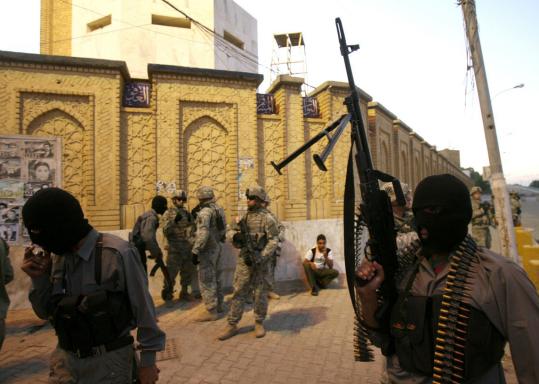 sectarian violence, they will die. If the Shiites don't attack the Sunnis in response, then the Sunnis have no reason to feel threatened. If they don't feel threatened, then your average Mohammed is not going to give his hard-earned money to thugs with guns to stay safe (as was the problem in 2004-2007). Without money, Al-Qaeda is going to struggle to fund further suicide bombings, pay for adequate supplies for insurgents to go full-time, etc. As we've mentioned before, Al-Qaeda in Iraq is desperate, and exhausting itself to try and provoke any violence it can. Its continued failure, along with the Iraqi Army's maturation, makes it clear that Iraq is in cleanup mode. Now we need only wait for elections in October.
Musharraf is resigning before his impeachment... probably.
What's this mean for the War on Terror?It gives Gilani and the ruling coalition a shot in hell at winning the favor of the Army. If Musharraf resigns voluntarily, it will be a sign that he approves in some way of the democratic process that took power from him--and so his loyalists may resign themselves for supporting it, as well.
In other news, the Syrians and Lebanese have in fact followed through with their Club Med promises and have begun demarcating their border, exchanging ambassadors, and formal recognition, which will officially leave the Syrians an inch closer to a pro-Western stance. Syria looks committed--Mideast peace
now (probably) hinges Assad's willingness to speed-negotiate with Olmert (though, honestly, the terms should be pretty simple) for formal recognition and peace with Israel.Given the mounting pressure, Hamas is responding as predicted--they are looking to get along with moderate factions that might be able to keep them afloat. They have turned away from their angered isolationism and seek the approval of Jordan and Fatah. Fatah has consolidated its power in the West Bank, and Hamas controls only the tiny strip of Gaza--a region very easy for the Israelis to police. Reconciliation with Fatah in a national PA union might be the only way they prevent themselves from being choked off. In addition, The West Bank's eastern neighbor of Jordan is restoring relations with Hamas after refusing to speak with them due to their terrorist tendencies. These are both big steps for Hamas, given the West's (and particularly president Bush's) support for Jordan and Fatah. Should Hamas require the support of the Arab League for survival, it will have to behave and stay privy to the whims of pro-Western states like Lebanon, Jordan, Egypt, Iraq, Kuwait, and Saudi Arabia, lest they again become pariahs.
In Iraq, news of bombings against Shiite pilgrims is indeed tragic, but hope can be read into it--specifically, that there are no anti-Sunni reprisals. These kinds of attacks are clearly designed to provoke a renewed sectarian war, but they continue to fail. Now, unlike a four-year-old, extremists like Al-Qaeda in Iraq (most likely responsible for the violence) are not simply going to stop throwing sand when ignored (despite many folk theories to the contrary). But, if they are not able to instill
sectarian violence, they will die. If the Shiites don't attack the Sunnis in response, then the Sunnis have no reason to feel threatened. If they don't feel threatened, then your average Mohammed is not going to give his hard-earned money to thugs with guns to stay safe (as was the problem in 2004-2007). Without money, Al-Qaeda is going to struggle to fund further suicide bombings, pay for adequate supplies for insurgents to go full-time, etc. As we've mentioned before, Al-Qaeda in Iraq is desperate, and exhausting itself to try and provoke any violence it can. Its continued failure, along with the Iraqi Army's maturation, makes it clear that Iraq is in cleanup mode. Now we need only wait for elections in October.
Tuesday, July 29, 2008
India, and Pakistan's Control Problems
The Pakistani civilian government is weak. It has the support of most people, but not the support of many of Pakistan's hardline military forces, and not the peace with militants in its country that it has hoped to gain. It would surely like ot have the overwhelming force to deal with its militants, but it doesn't.
One of these reasons is India. Pakistan and India have been enemies since 1947, during the first of three wars of Independence. They have quarreled over Kashmir for decades, and a ceasefire was enacted in 2003. Nonetheless, each side has had to keep large military forces on their borders, more concerned with each other than the movements of potential militants through the sparsely-populated region.
This has escalated the India problem. Bombs in Bangalore and Ahmedabad are being blamed on Pakistani militant groups, and unexploded bombs were found in Surat of similar type. If more bombs begin to rip through Indian cities, the Indian government will face growing pressures and mandates to act--but the problem lies within Pakistan's borders.
A bomb in Kabul's Indian Embassy is being blamed on the Pakistani Intelligence Service--indicating that the Pakistani government still does not have control of its military.
Furthermore, and most worryingly for the Pakistani civilian government: A twelve-hour gun battle between Indian and Pakistani troops erupted along the Line of Control in Kashmir.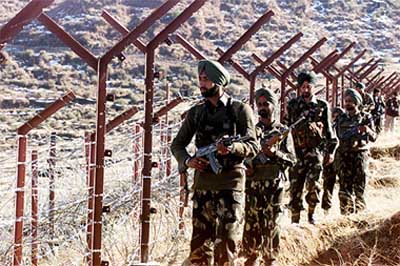 A few men died on each side, and it seems relatively small, in comparison to many of the other issues surrounding Pakistan, but hard-line elements in Pakistan may take this as a sign that they need to launch attacks. All this is sign to the Indians that they must beef up their border security even more--which means even more troops that could be used in counter-terror missions in Pakistan must be used to defend from India. A security spiral is forming--each side, seeing a threat in border instability, is arming itself, and in doing so, making the other side less secure.
But Pakistan has more problems from India than simply a forced shift in military resources. India is now starting to face some of the dilemma that Afghanistan has faced--if it leaves Pakistan alone, it will continue to be attacked by militants (or in India's case, even Pakistani regulars) from inside Pakistan's borders. If the Pakistani civilian military cannot control its own military, on top of not being able to stop militants, then diplomacy becomes useless. No amount of agreement with a head of state can fix a problem that he has no control over. And militants and hard-line military units don't care for diplomacy, they quite like the situation they have now.
If Pakistani-caused problems in India and Afghanistan persist, it will be very tempting for Singh and Karzai to be convinced by the Bush administration that the best option will be to send troops into Pakistan to deal. More interestingly, the weak civilian government still has a pro-Bush wild card in their midst--if the Bush administration tells Musharraf that his only chance at not losing power is to rally troops loyal to him in a NATO/Indian/Afghan alliance to drive out anyone standing between the alliance and the end of Pakistani militants, then war in Pakistan would look like the best option.
Nobody is rattling too many sabres. But when sabres are being rattled, it's a warning. Who is there to warn in Pakistan? Would threat of invasion make the hard-liners and militants any less aggressive? Certainly not. Would it give the weak civilian government more power to act? No. It would only warn them that such an invasion might be coming, which can do nothing but make that possible invasion harder--it cannot be used as a diplomatic chip.
That is the most frustrating realization in Pakistan, and maybe the reason Gilani was willing to visit Bush in DC--because he knew that he had no choice but to show he had some sort of control over his country, or else the largest military alliance in the world might decide that dealing with him is a complete waste of time. Nobody is seriously considering invasion yet, but the conditions are becoming such that the Global War on Terror coalition may have no other good options left. And if this invasion does happen, it will be the first ever invasion of an openly nuclear state. NATO uncertainty over whose finger is on the nuclear trigger in Pakistan may be the only thing between Gilani and a nightmare.
One of these reasons is India. Pakistan and India have been enemies since 1947, during the first of three wars of Independence. They have quarreled over Kashmir for
decades, and a ceasefire was enacted in 2003. Nonetheless, each side has had to keep large military forces on their borders, more concerned with each other than the movements of potential militants through the sparsely-populated region.This has escalated the India problem. Bombs in Bangalore and Ahmedabad are being blamed on Pakistani militant groups, and unexploded bombs were found in Surat of similar type. If more bombs begin to rip through Indian cities, the Indian government will face growing pressures and mandates to act--but the problem lies within Pakistan's borders.
A bomb in Kabul's Indian Embassy is being blamed on the Pakistani Intelligence Service--indicating that the Pakistani government still does not have control of its military.
Furthermore, and most worryingly for the Pakistani civilian government: A twelve-hour gun battle between Indian and Pakistani troops erupted along the Line of Control in Kashmir.
A few men died on each side, and it seems relatively small, in comparison to many of the other issues surrounding Pakistan, but hard-line elements in Pakistan may take this as a sign that they need to launch attacks. All this is sign to the Indians that they must beef up their border security even more--which means even more troops that could be used in counter-terror missions in Pakistan must be used to defend from India. A security spiral is forming--each side, seeing a threat in border instability, is arming itself, and in doing so, making the other side less secure.But Pakistan has more problems from India than simply a forced shift in military resources. India is now starting to face some of the dilemma that Afghanistan has faced--if it leaves Pakistan alone, it will continue to be attacked by militants (or in India's case, even Pakistani regulars) from inside Pakistan's borders. If the Pakistani civilian military cannot control its own military, on top of not being able to stop militants, then diplomacy becomes useless. No amount of agreement with a head of state can fix a problem that he has no control over. And militants and hard-line military units don't care for diplomacy, they quite like the situation they have now.
If Pakistani-caused problems in India and Afghanistan persist, it will be very tempting for Singh and Karzai to be convinced by the Bush administration that the best option will be to send troops into Pakistan to deal. More interestingly, the
weak civilian government still has a pro-Bush wild card in their midst--if the Bush administration tells Musharraf that his only chance at not losing power is to rally troops loyal to him in a NATO/Indian/Afghan alliance to drive out anyone standing between the alliance and the end of Pakistani militants, then war in Pakistan would look like the best option.Nobody is rattling too many sabres. But when sabres are being rattled, it's a warning. Who is there to warn in Pakistan? Would threat of invasion make the hard-liners and militants any less aggressive? Certainly not. Would it give the weak civilian government more power to act? No. It would only warn them that such an invasion might be coming, which can do nothing but make that possible invasion harder--it cannot be used as a diplomatic chip.
That is the most frustrating realization in Pakistan, and maybe the reason Gilani was willing to visit Bush in DC--because he knew that he had no choice but to show he had some sort of control over his country, or else the largest military alliance in the world might decide that dealing with him is a complete waste of time. Nobody is seriously considering invasion yet, but the conditions are becoming such that the Global War on Terror coalition may have no other good options left. And if this invasion does happen, it will be the first ever invasion of an openly nuclear state. NATO uncertainty over whose finger is on the nuclear trigger in Pakistan may be the only thing between Gilani and a nightmare.
Thursday, February 28, 2008
Bush is Squandering an Opportunity in Pakistan
By continuing to throw support to President Musharraf, Bush is alienating the Pakistani people, and thus the new ruling coalition that is likely to oust Bush's ally. Bush cannot be said to lack loyalty, but unfortunately, he can certainly be said to lack common sense. If this stance is not voluntarily and quickly reversed, it will result in--as a loyal reader of mine said when she pointed me to the article--"Failboat."
Pakistan is the primary front in the War on Terror, and is a battle that the United States must take a subordinate role in. I am ending this day, unfortunately, with frustration.
Pakistan is the primary front in the War on Terror, and is a battle that the United States must take a subordinate role in. I am ending this day, unfortunately, with frustration.
Monday, February 25, 2008
Musharraf Might be Bowing Out
We've already talked about the possibility of impeachment of Musharraf by an alliance in parliament by the People's Party and Muslim League-N in Pakistan. At this point, it appears as if Musharraf may try to preempt them and step down himself.
Musharraf has made no overt signs that he is going to resign, but different sources (particularly Stratfor) have been talking a bit about signs they have seen: The Telegraph (UK) has quoted anonymous top aides as saying that the President may be stepping down in a matter of days. Stratfor claims that some of President Bush's senior advisers are investigating the most elegant way for Musharraf to leave.
While Musharraf has seemed to fight tooth-and-nail to hold on to his power in the past, he may have not realized that there is none left for him to hold on to. If the Bush administration is successfully aiding the power transition to a Sharif-led government, Washington's relationship with Pakistan may indeed remain strong, in large part thanks to the political power of the Pakistani Army (a highly pro-Global War on Terror entity).
The US should continue helping Musharraf move out, and both welcome and support the new government, in hopes that US-supported Pakistani anti-terror operations are not hindered. In fact, as we've speculated on earlier, a more widely-supported coalition may reduce political support for the Taliban in the northwest, as they will no longer represent an anti-Musharraf institution, but instead an anti-state one.
Musharraf has made no overt signs that he is going to resign, but different sources (particularly Stratfor) have been talking a bit about signs they have seen: The Telegraph (UK) has quoted anonymous top aides as saying that the President may be stepping down in a matter of days. Stratfor claims that some of President Bush's senior advisers are investigating the most elegant way for Musharraf to leave.
While Musharraf has seemed to fight tooth-and-nail to hold on to his power in the past, he may have not realized that there is none left for him to hold on to. If the Bush administration is successfully aiding the power transition to a Sharif-led government, Washington's relationship with Pakistan may indeed remain strong, in large part thanks to the political power of the Pakistani Army (a highly pro-Global War on Terror entity).
The US should continue helping Musharraf move out, and both welcome and support the new government, in hopes that US-supported Pakistani anti-terror operations are not hindered. In fact, as we've speculated on earlier, a more widely-supported coalition may reduce political support for the Taliban in the northwest, as they will no longer represent an anti-Musharraf institution, but instead an anti-state one.
Tuesday, February 19, 2008
Pakistan's Democracy Finally Works
I am both shocked and jubilant. In the days leading to Pakistan's parliamentary elections, I assumed (like many Pakistanis, apparently) that President Musharraf's military and political allies would successfully rig the parliamentary elections to help him stay in power. But, for some reason or another, he didn't. Perhaps he was looking to simply survive (he has even more angry militant enemies than Bhutto did), or maybe he simply has spent the last 8 years doing what he thought was right, even if, from here, his actions looked like purely personal power-grabbing. But Musharraf has shocked me (and others) in letting the elections happen in what international observers have said was accurate and fair.
In this election, 242 seats were up for contest. Of these, early returns show the Pakistan People's Party (ala Bhutto) winning ~80, Pakistan Muslim League-N (ala Sharif) winning ~66, and Pakistan Muslim League-Q (ala Musharraf) winning only 38. The outcome is promising--past Pakistani opposition has traditionally been dominated by highly religious parties, but the People's Party is secularist, and Muslim League-N is a moderate group with highly competent leadership.

People's Party and Muslim League-N have been in coalition talks for months, and are in them again already. Should such a coalition emerge, they could theoretically run a government without any other parties involved (particularly, the Muslim League-Q). They'd also be able to impeach Musharraf if their members voted in force, and I believe they are likely to do so. While Ms. Bhutto had been willing to work with Musharraf, Sharif was so opposed to the idea that he was threatening parliamentary boycott. With Ms. Bhutto dead (and her son leading her party), Sharif emerged as the single most experienced and respected politician in Pakistan, and is likely to have a great deal of influence over the People's Party's leadership. Furthermore, the coalition would have a large enough parliamentary majority that they would have no need to hold on to Mr. Musharraf, unless he can propose to them some sort of favors that a replacement president would not be able to provide. But for the most part, he is at the mercy of the new coalition.
Interestingly, these results may show that Al-Qaeda militancy in the northwest may have gained them local ground, but it has still created vast secular and moderate cohesion against them in the rest of Pakistan, even among the majority that oppose Musharraf's aggressive anti-militant activities. Pakistan avoided a religious uprising or conservative backlash--they voted out Musharraf's party and replaced it with liberal-secular options, which should long-term be beneficial to the United States, should Bush manage to not screw up the early relationship with the new government. Remember that Ms. Bhutto had said that she was willing to work with the United States in the war against Al-Qaeda in the northwest of Pakistan, and her victorious People's Party won by carrying on the bulk of her policy ideas.
New cohesion and better competence in government is going to bring great domestic change to Pakistan, and hopefully, the new government will find a way to finally deal with the northwestern frontier. I am indeed holding my breath; I believe that the Pakistani battleground is at a critical point, and could well fall to the United States' primary enemy. On the other hand, should the new government succeed in rooting out Al-Qaeda, the citizens of the United States will be safer than they have been since the early 1990's. Furthermore, if Al-Qaeda falls, restoring Afghanistan to order will become a possibility in the medium-term future. Karachi's government is in need of relief from militants; they are making gains in the business of terror.
So I am full of hope, and apprehension. If this new government cannot solve the Al-Qaeda problem, I do not know who will be able to do so.
In this election, 242 seats were up for contest. Of these, early returns show the Pakistan People's Party (ala Bhutto) winning ~80, Pakistan Muslim League-N (ala Sharif) winning ~66, and Pakistan Muslim League-Q (ala Musharraf) winning only 38. The outcome is promising--past Pakistani opposition has traditionally been dominated by highly religious parties, but the People's Party is secularist, and Muslim League-N is a moderate group with highly competent leadership.
People's Party and Muslim League-N have been in coalition talks for months, and are in them again already. Should such a coalition emerge, they could theoretically run a government without any other parties involved (particularly, the Muslim League-Q). They'd also be able to impeach Musharraf if their members voted in force, and I believe they are likely to do so. While Ms. Bhutto had been willing to work with Musharraf, Sharif was so opposed to the idea that he was threatening parliamentary boycott. With Ms. Bhutto dead (and her son leading her party), Sharif emerged as the single most experienced and respected politician in Pakistan, and is likely to have a great deal of influence over the People's Party's leadership. Furthermore, the coalition would have a large enough parliamentary majority that they would have no need to hold on to Mr. Musharraf, unless he can propose to them some sort of favors that a replacement president would not be able to provide. But for the most part, he is at the mercy of the new coalition.
Interestingly, these results may show that Al-Qaeda militancy in the northwest may have gained them local ground, but it has still created vast secular and moderate cohesion against them in the rest of Pakistan, even among the majority that oppose Musharraf's aggressive anti-militant activities. Pakistan avoided a religious uprising or conservative backlash--they voted out Musharraf's party and replaced it with liberal-secular options, which should long-term be beneficial to the United States, should Bush manage to not screw up the early relationship with the new government. Remember that Ms. Bhutto had said that she was willing to work with the United States in the war against Al-Qaeda in the northwest of Pakistan, and her victorious People's Party won by carrying on the bulk of her policy ideas.
New cohesion and better competence in government is going to bring great domestic change to Pakistan, and hopefully, the new government will find a way to finally deal with the northwestern frontier. I am indeed holding my breath; I believe that the Pakistani battleground is at a critical point, and could well fall to the United States' primary enemy. On the other hand, should the new government succeed in rooting out Al-Qaeda, the citizens of the United States will be safer than they have been since the early 1990's. Furthermore, if Al-Qaeda falls, restoring Afghanistan to order will become a possibility in the medium-term future. Karachi's government is in need of relief from militants; they are making gains in the business of terror.
So I am full of hope, and apprehension. If this new government cannot solve the Al-Qaeda problem, I do not know who will be able to do so.
Friday, November 30, 2007
The Storm Clouds Begin to Break in Pakistan... Revealing More of the Same
Much to my surprise, Musharraf has followed through on his promise to step down from his position as head of the military, ending 8 years of military rule.
He is promising an end to emergency rule by the 16th of December. 3 weeks later, he says he plans to hold democratic parliamentary elections, "by the constitution."
Unfortunately, this won't be enough to appease much of his opposition into playing nice. Sharif is still calling for his party to boycott parliamentary elections. While I think such action is numbingly unwise (Sunni boycotts of parliamentary elections in 2004 left them without representatives in a parliament that chugged on without them; the boycott is blamed as one of the reasons anti-Shiite violence exploded in that year, and is a point of regret for many Sunnis that have since decided to work with the government), it could derail the legitimacy of a government that is already standing on shaky legs. While Sharif's political frustration is understandable, my primary concern in Pakistan is its ability to provide internal security, and the robustness of its government against extremist incursion.
Pakistan is still probably the front line in the war on terror. American front pages may not be carrying much about Waziristan, but it is currently largely under Taliban occupation (this after many elements of the Taliban fled from Tora Bora in early 2002), and Musharraf seems to have stepped up attacks against the region during Pakistan's Emergency Rule... but to questionable effect. The Taliban is trying to establish Islamic rule in the area (and probably spread it from there). But don't worry--we know how well that's working for our friends in Sudan.
I'm still not sure how the Waziristan problem can be put down for good. US airstrike-supported large-scale attacks by Pakistan's capable army could have even greater success than NATO's Afghani attacks in 2001 and 2002--the Pakistani army knows the Waziristan region better than NATO knew Afghanistan, and if the Taliban were to try and flee, they would escape into the rifles of waiting Canadian troops. I'm not sure why this option hasn't been played out, except perhaps for the political instability of the government and the stationing of so many troops in India.
Musharraf has a long way to go before Pakistan's political situation is secure. He will have to convince some of his toughest opponents to participate in parliamentary elections this January--but if his power-holding deal with pro-American Bhutto works out, they may be able to unite a large majority in Pakistan that will bring the government the stability it needs to deal with the Taliban once and for all.
He is promising an end to emergency rule by the 16th of December. 3 weeks later, he says he plans to hold democratic parliamentary elections, "by the constitution."
Unfortunately, this won't be enough to appease much of his opposition into playing nice. Sharif is still calling for his party to boycott parliamentary elections. While I think such action is numbingly unwise (Sunni boycotts of parliamentary elections in 2004 left them without representatives in a parliament that chugged on without them; the boycott is blamed as one of the reasons anti-Shiite violence exploded in that year, and is a point of regret for many Sunnis that have since decided to work with the government), it could derail the legitimacy of a government that is already standing on shaky legs. While Sharif's political frustration is understandable, my primary concern in Pakistan is its ability to provide internal security, and the robustness of its government against extremist incursion.
Pakistan is still probably the front line in the war on terror. American front pages may not be carrying much about Waziristan, but it is currently largely under Taliban occupation (this after many elements of the Taliban fled from Tora Bora in early 2002), and Musharraf seems to have stepped up attacks against the region during Pakistan's Emergency Rule... but to questionable effect. The Taliban is trying to establish Islamic rule in the area (and probably spread it from there). But don't worry--we know how well that's working for our friends in Sudan.
I'm still not sure how the Waziristan problem can be put down for good. US airstrike-supported large-scale attacks by Pakistan's capable army could have even greater success than NATO's Afghani attacks in 2001 and 2002--the Pakistani army knows the Waziristan region better than NATO knew Afghanistan, and if the Taliban were to try and flee, they would escape into the rifles of waiting Canadian troops. I'm not sure why this option hasn't been played out, except perhaps for the political instability of the government and the stationing of so many troops in India.
Musharraf has a long way to go before Pakistan's political situation is secure. He will have to convince some of his toughest opponents to participate in parliamentary elections this January--but if his power-holding deal with pro-American Bhutto works out, they may be able to unite a large majority in Pakistan that will bring the government the stability it needs to deal with the Taliban once and for all.
Monday, November 5, 2007
Pakistan On the Brink
It seems Musharraf has shown his true colors.
Musharraf has suspended the constitution, declared a state of emergency, and arrested his political opposition. Now, with no functioning supreme court, his recent electoral victory is unable to be confirmed, and former Prime Minister Bhutto's party has had its legs cut out. The optimism Pakistan seemed to have for the Musharraf-Bhutto power-sharing plan may collapse.
What next, then? Will parliamentary elections be pushed back? Does Musharraf plan for them to happen at all? His allies in the military make him strong enough to possibly keep his hold over the country indefinitely. But without allies among the populace, he won't be able to defeat the growing Islamic Extremism in his country, as he is promising to do.
And should this crisis not be averted, should the United States look to finding a new ally in Pakistan? The United States supported many brutal, doomed dictators during the Cold War to try and push back Communism-- are we doomed to repeat that mistake in the war on Al Qaeda?
Most importantly for the US, Pakistan's stability is at grave risk. If Musharraf does not soon bring Pakistan back from the brink, his loyal military forces may be so busy keeping average citizens at bay that they will not be able to keep the growing Al Qaeda influence in check.
Musharraf has suspended the constitution, declared a state of emergency, and arrested his political opposition. Now, with no functioning supreme court, his recent electoral victory is unable to be confirmed, and former Prime Minister Bhutto's party has had its legs cut out. The optimism Pakistan seemed to have for the Musharraf-Bhutto power-sharing plan may collapse.
What next, then? Will parliamentary elections be pushed back? Does Musharraf plan for them to happen at all? His allies in the military make him strong enough to possibly keep his hold over the country indefinitely. But without allies among the populace, he won't be able to defeat the growing Islamic Extremism in his country, as he is promising to do.
And should this crisis not be averted, should the United States look to finding a new ally in Pakistan? The United States supported many brutal, doomed dictators during the Cold War to try and push back Communism-- are we doomed to repeat that mistake in the war on Al Qaeda?
Most importantly for the US, Pakistan's stability is at grave risk. If Musharraf does not soon bring Pakistan back from the brink, his loyal military forces may be so busy keeping average citizens at bay that they will not be able to keep the growing Al Qaeda influence in check.
Subscribe to:
Posts (Atom)